Backup Chiller Solutions for UAE Commercial Facilities
Commercial facilities in the UAE depend heavily on reliable cooling. Offices, hotels, shopping centres, healthcare facilities, data centres, warehouses, retail properties, industrial buildings, and other large facilities can experience serious operational problems when their main cooling system cannot maintain the required indoor or process conditions. This is where backup chiller solutions for UAEcommercial facilities become […]
Commercial facilities in the UAE depend heavily on reliable cooling. Offices, hotels, shopping centres, healthcare facilities, data centres, warehouses, retail properties, industrial buildings, and other large facilities can experience serious operational problems when their main cooling system cannot maintain the required indoor or process conditions.
This is where backup chiller solutions for UAEcommercial facilities become important. A backup chiller is additional cooling capacity that can be brought into operation when the primary chiller system is unavailable, overloaded, undergoing maintenance, or unable to meet the facility’s current cooling demand.
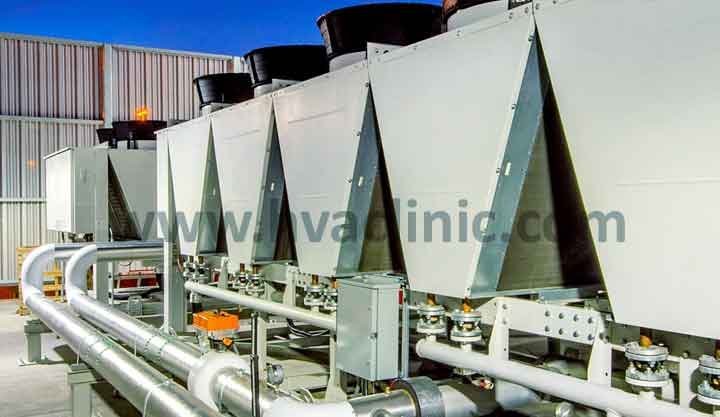
Backup cooling does not necessarily mean installing an identical permanent chiller beside the existing plant. Depending on the facility, the solution may involve a standby chiller, redundant chiller capacity, a temporary rental chiller, HVAC or a complete temporary cooling package containing chillers, pumps, hoses, controls, and other connection equipment.
The basic objective is straightforward: maintain sufficient cooling when the primary system cannot provide it.
This approach is particularly relevant in the UAE because the country’s summer climate creates substantial cooling requirements. UAE government climate information describes the country as having a desert climate, with average temperatures during the hot months of April through September generally around 30°C to 40°C, while maximum temperatures can exceed 49°C in some areas during summer. Humidity can also become very high, particularly in coastal areas.
For a commercial facility, therefore, a cooling failure is not simply an inconvenience. The consequences can include uncomfortable indoor conditions, disruption to business operations, risks to temperature-sensitive areas, production interruptions, or pressure on other building systems.
What Are Backup Chiller Solutions?
A backup chiller solution is a planned method of providing alternative cooling capacity when the facility’s normal chiller plant cannot satisfy its cooling requirement.
The backup arrangement can take different forms depending on the building and its risk profile.
A large commercial building may have multiple permanent chillers so that one or more units can be taken offline while the remaining machines continue supplying chilled water. This is a form of redundancy.
Another facility may keep connections and infrastructure ready for a temporary rental chiller. If a primary chiller fails, a temporary unit can be delivered and connected to the chilled-water system.
Some facilities may use additional temporary cooling capacity during planned maintenance or periods of unusually high demand rather than waiting for a complete failure.
Current UAE chiller-rental providers describe similar applications, including emergency breakdown support, planned maintenance, peak-load support, temporary project cooling, and replacement of failed equipment.
Therefore, backup chiller solutions are better understood as a continuity strategy rather than simply another piece of HVAC equipment.
Why Do UAE Commercial Facilities Need Backup Cooling?
The need for backup cooling starts with the relationship between outdoor conditions and building cooling demand.
The UAE experiences very high temperatures during summer. Government climate data records maximum temperatures above 49°C in some parts of the country during the summer period, while humidity can also be significant.
Commercial buildings must therefore remove substantial amounts of heat to maintain acceptable indoor conditions.
If a major chiller suddenly stops operating during a high-demand period, the remaining cooling equipment may not have enough capacity to compensate. Even when the building has more than one chiller, a failure can reduce available capacity below the facility’s actual requirement.
Backup cooling provides another layer of protection.
For example, a facility may use backup capacity during:
- Unexpected chiller breakdowns
- Compressor or major component failures
- Planned chiller maintenance
- Chiller replacement projects
- HVAC upgrades
- Seasonal peak cooling demand
- Temporary increases in occupancy
- Building expansion
- Commissioning and construction periods
- Temporary plant shutdowns
UAE rental providers specifically identify planned maintenance, emergency breakdowns, seasonal demand, temporary projects, and failed chillers among the common reasons businesses require temporary cooling.
How Does a Backup Chiller System Work?
The exact arrangement depends on whether the facility uses permanent redundancy or temporary equipment, but the underlying cooling principle remains similar.
A conventional mechanical-compression chiller transfers heat from chilled water to another medium and ultimately rejects that heat outside the building.
The U.S. Department of Energy describes the basic mechanical-compression cycle through four principal components: the evaporator, compressor, condenser, and expansion device.
1. Chilled Water Returns From the Building
The building’s air-handling units, fan-coil units, or other cooling loads transfer heat into the circulating chilled water.
The warmer return water then travels back toward the chiller plant.
2. The Evaporator Removes Heat
Inside the evaporator, refrigerant absorbs heat from the chilled-water circuit.
The chilled water becomes cooler and is then sent back toward the building.
The refrigeration cycle therefore allows the chiller to remove heat from the water that is being used for building cooling.
3. The Compressor Raises Refrigerant Pressure
The refrigerant vapour leaving the evaporator enters the compressor.
The compressor raises the refrigerant’s pressure and temperature, preparing it for heat rejection in the condenser.
4. The Condenser Rejects Heat
The hot refrigerant reaches the condenser, where heat is transferred away from the refrigerant.
In an air-cooled chiller, fans move ambient air across the condenser coils. In a water-cooled arrangement, condenser water carries the heat toward a heat-rejection system such as a cooling tower.
5. The Expansion Device Reduces Pressure
The high-pressure liquid refrigerant passes through the expansion device.
Its pressure and temperature are reduced before it returns to the evaporator.
The refrigeration cycle then repeats.
This basic cycle is why a backup chiller can perform the same fundamental role as a permanent chiller when correctly connected to the facility’s chilled-water system.
How Does Backup Cooling Connect to a Commercial Facility?
The chiller itself is only one part of a backup cooling arrangement.
Before a temporary or standby chiller can provide useful cooling, engineers need to determine how the equipment will connect to the existing system.
Important considerations can include the available chilled-water connections, supply and return temperatures, required water flow, electrical supply, available space, pipe routes, access for delivery equipment, and the required cooling load.
UAE rental providers describe site assessment and system compatibility as important parts of selecting a temporary chiller. Al Shola, for example, identifies cooling load, leaving-water temperature, ambient conditions, electrical supply, pumping arrangement, pipe route, and operating period as factors used to assess a rental requirement.
This means a facility should not select a backup chiller simply because its nameplate capacity appears large enough.
The entire temporary or standby cooling arrangement needs to match the site’s operating conditions.
What Equipment Can Be Included in a Backup Chiller Solution?
A backup cooling package can contain more than the chiller itself.
Depending on the facility and connection method, equipment may include:
- Chiller units
- Chilled-water pumps
- Flexible hoses
- Temporary pipework
- Electrical cables
- Control panels
- Distribution equipment
- Valves and connection accessories
- Air-handling units where required
- Cooling towers for suitable water-cooled arrangements
- Monitoring and control equipment
Current rental providers describe complete packages that can include chillers, air handlers, pumps, hoses, installation, commissioning, and technical support. Andrews Sykes, for example, describes rental packages combining chillers with air handlers and ductwork, as well as installation, commissioning, servicing, and backup support.
The exact equipment should therefore be determined after reviewing the facility rather than assuming every commercial building requires the same package.
Permanent Backup Chiller vs Temporary Backup Chiller
There are two broad approaches to backup cooling.
Permanent Redundancy
A commercial facility can install additional permanent chiller capacity as part of its HVAC plant.
For example, instead of relying on a single chiller, a facility may operate several units so that one can be unavailable while the others continue operating.
The advantage is that the backup capacity is already integrated into the building’s infrastructure.
However, installing additional permanent equipment requires capital expenditure, plant-room space, electrical capacity, mechanical infrastructure, controls, maintenance, and long-term planning.
Temporary Backup Cooling
A temporary chiller can provide alternative capacity without permanently expanding the facility’s cooling plant.
This approach can be useful when a facility needs additional cooling for a defined period.
Typical situations include a failed chiller awaiting repair, a planned maintenance shutdown, a chiller replacement project, seasonal peak demand, or a temporary increase in cooling requirements.
UAE rental companies currently market temporary and emergency chillers for precisely these applications.
The appropriate option depends on how frequently backup capacity is required, the consequences of cooling failure, the available infrastructure, and the facility’s long-term plans.
Air-Cooled or Water-Cooled Backup Chiller?
Backup systems can use different chiller configurations.
Air-Cooled Chillers
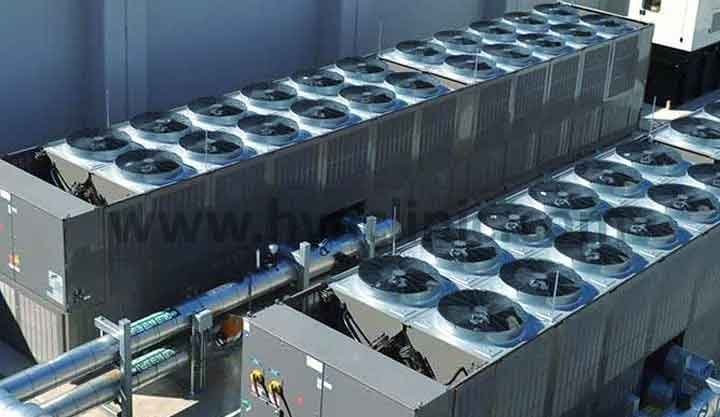
Air-cooled chillers reject heat directly to ambient air through condenser coils and fans.
This can simplify temporary deployment because the system does not require a separate cooling tower and condenser-water loop.
Current UAE rental providers commonly offer air-cooled chillers for temporary and emergency applications. Al Shola, for example, lists air-cooled chillers for temporary, process, commercial, and emergency cooling applications.
However, outdoor ambient conditions matter. Because the condenser rejects heat directly to the surrounding air, equipment selection must account for the site’s expected temperature and operating conditions.
Water-Cooled Chillers
Water-cooled chillers use a condenser-water circuit to remove heat from the refrigerant.
This type of arrangement can involve additional equipment, such as condenser-water pumps and cooling towers.
The U.S. Department of Energy’s description of a typical water-cooled chiller plant shows separate chilled-water and condenser-water circuits connected to the chiller and cooling tower.
For a temporary commercial facility requirement, the decision between air-cooled and water-cooled equipment should therefore consider the existing infrastructure, available water systems, space, cooling load, ambient conditions, and installation requirements.
How Is a Backup Chiller Sized?
Correct sizing is one of the most important parts of a backup cooling strategy.
The required size should be based on the actual cooling requirement rather than simply selecting the biggest available chiller.
The assessment can consider:
Cooling load: How much heat must be removed from the facility?
Required chilled-water temperatures: What supply and return water temperatures does the existing system require?
Water flow: Can the existing pumps and piping provide the flow required by the backup equipment?
Ambient conditions: What outdoor temperatures will the chiller experience?
Electrical supply: Does the site have sufficient electrical capacity for the proposed equipment?
Connection arrangement: Where will the temporary equipment connect to the existing chilled-water system?
Operating duration: Is the backup needed for a few hours, several days, several weeks, or longer?
Access: Can the chiller and supporting equipment physically reach the required installation area?
UAE rental providers specifically state that final chiller selection should be based on factors such as cooling load, temperatures, flow, ambient conditions, electrical supply, site access, and connection requirements.
This is why a proper site assessment is more useful than selecting a backup chiller based only on tonnage.
What Happens During a Main Chiller Failure?
A well-planned backup strategy is intended to reduce the time between primary-system failure and restoration of sufficient cooling.
The process can vary considerably between facilities.
A building with permanently installed redundant chillers may automatically or manually bring another chiller online.
A facility relying on temporary rental equipment has a different process.
First, the cooling failure or capacity shortage is identified.
The facility team then determines the required temporary cooling capacity and available connection points. The backup equipment is selected according to the site’s requirements.
The equipment is transported to the facility, positioned, connected, tested, and commissioned.
Once the system is operating correctly, the temporary chiller can provide cooling while the permanent system is repaired, replaced, or returned to service.
Current UAE rental providers describe this general sequence as site assessment, equipment selection, deployment and installation, commissioning, and operational support.
When Should Commercial Facilities Consider Backup Chiller Solutions?
Backup cooling is particularly valuable when the consequences of cooling loss are high.
During Planned Maintenance
A commercial facility may need to take a primary chiller offline for inspection, servicing, component replacement, or major maintenance.
A temporary backup chiller can help maintain cooling while the permanent equipment is unavailable.
During Chiller Replacement
Large chillers cannot always be replaced immediately.
The removal of an old unit, delivery of the replacement, installation, testing, and commissioning can create a period during which normal cooling capacity is reduced.
Temporary cooling can bridge that gap.
During Unexpected Breakdowns
A compressor failure, electrical problem, refrigerant issue, control fault, or other major problem can remove a significant amount of cooling capacity.
Emergency chiller support can provide an alternative source of cooling while permanent repairs are underway.
During Peak Demand
A facility may have enough installed capacity for normal conditions but insufficient capacity during periods of exceptionally high demand.
Additional temporary capacity can help cover a short-term requirement.
Commercial rental providers currently identify peak-load management and seasonal demand as common applications for temporary chillers.
During Construction or Expansion
A building expansion can increase cooling requirements before the permanent HVAC plant is fully completed.
Temporary chillers can provide an interim cooling solution while permanent systems are being installed or commissioned.
Which UAE Facilities Can Benefit From Backup Chillers?
Backup cooling is not limited to one type of commercial property.
Offices
Large office buildings require consistent cooling for occupied spaces, meeting rooms, server areas, and common areas.
A significant loss of cooling during UAE summer can quickly affect occupants and business operations.
Hotels
Hotels need cooling across guest rooms, restaurants, kitchens, meeting spaces, lobbies, and other areas.
A major chiller failure can therefore affect a large portion of the property.
Rental cooling providers specifically identify hotels and restaurants among the applications for temporary chiller systems.
Shopping Malls
Malls contain large occupied areas and multiple commercial tenants.
Cooling interruptions can affect comfort, retail operations, food outlets, and other services.
Healthcare Facilities
Hospitals and healthcare environments can have areas where temperature control is particularly important.
For such facilities, cooling redundancy should be considered as part of broader operational and engineering planning rather than treated simply as an equipment rental decision.
Data Centres
Data centres have continuous cooling requirements and can be particularly sensitive to cooling interruptions.
Backup cooling planning can therefore form part of a wider resilience strategy.
Industrial Facilities
Industrial operations may require cooling for buildings, processes, machinery, storage environments, or production areas.
Rental providers in the UAE also identify process cooling and industrial applications among their chiller requirements.
What Are the Main Benefits of Backup Chiller Solutions?
The primary benefit is cooling continuity.
Instead of allowing a failed chiller to leave the entire facility without sufficient cooling, an alternative cooling source can reduce the duration and impact of the interruption.
Backup solutions can also provide flexibility.
A company may not need to permanently purchase additional chiller capacity if its requirement is limited to a maintenance period or temporary project.
Temporary equipment can also provide a bridge during a chiller replacement, allowing the facility to continue operating while the permanent system is restored.
Another benefit is scalability. Depending on the available fleet and project requirements, businesses can arrange additional capacity for seasonal peaks or temporary increases in cooling demand. UAE providers currently advertise temporary chillers for both short-term and longer-duration applications.
What Should Facility Managers Check Before Using a Backup Chiller?
Facility managers should establish the backup strategy before an emergency occurs.
Important information includes the existing chiller capacity, normal operating temperatures, chilled-water flow requirements, available electrical supply, pipe connection points, physical access, and the areas that must remain cooled if the primary plant fails.
The facility should also determine whether the backup strategy is intended to replace the full cooling load or only maintain critical areas.
This distinction can significantly affect the required equipment capacity.
For example, a facility may decide that critical areas must remain fully operational while non-essential zones can operate with reduced cooling during an emergency.
The backup plan should therefore define the priority cooling loads before equipment is required.
Why Site Assessment Matters for Backup Chillers in the UAE
A backup chiller is not a plug-and-play appliance in the same sense as a small portable air conditioner.
Large commercial cooling systems involve water flow, electrical power, pipework, controls, heat rejection, and physical access.
A site assessment helps establish whether the proposed equipment can actually work with the existing system.
Current UAE suppliers specifically describe site assessment as part of the process for determining cooling load, system compatibility, available power, connection points, access, and operating conditions.
This is particularly important in the UAE because high ambient temperatures can affect cooling equipment performance and because commercial facilities can have significant differences in their existing HVAC infrastructure.
Backup Chillers and Energy Efficiency
Backup equipment should not be selected on capacity alone.
Energy consumption is also relevant, especially when backup equipment will operate for extended periods.
The UAE has mandatory technical regulations concerning energy-consumption efficiency requirements for air-conditioning equipment. Cabinet Resolution No. 157 of 2025 establishes technical regulations for energy-consumption efficiency requirements for low- and large-capacity air conditioners in the UAE.
For facility managers, this reinforces the importance of considering equipment efficiency alongside capacity, operating conditions, and system compatibility.
However, energy efficiency should not be considered separately from reliability. A backup system that cannot provide the required cooling capacity under the facility’s actual operating conditions is not an effective backup system.
The objective is to find the appropriate balance between capacity, reliability, operating conditions, and energy performance.
Are Temporary Chillers Only for Emergencies?
No.
Although emergency breakdowns are an important application, temporary chillers can also be useful for planned situations.
For example, a facility may arrange temporary cooling before taking an existing chiller offline for major maintenance.
This is generally more controlled than waiting until the permanent system fails.
Temporary cooling can also support:
- Planned shutdowns
- Chiller replacement
- HVAC upgrades
- Building extensions
- Commissioning
- Seasonal capacity increases
- Temporary facilities
- Industrial process requirements
- Events and exhibitions
UAE chiller providers currently advertise temporary equipment for both emergency and planned applications.
How Long Can a Backup Chiller Be Used?
There is no single standard duration.
A backup chiller may be required for a short emergency period, a maintenance shutdown, several weeks during equipment replacement, or a much longer temporary project.
Rental companies in the UAE offer both short-term and long-term arrangements. For example, current providers describe applications ranging from emergency and short-duration requirements to long-term industrial and process cooling.
The appropriate rental period should be based on the expected duration of the permanent cooling problem or project rather than an arbitrary timeframe.
Backup Chiller Solutions vs Emergency Chiller Rental
These terms are related but not identical.
Backup chiller solutions describe the broader strategy used to maintain cooling when primary equipment is unavailable or insufficient.
Emergency chiller rental is one method of implementing that strategy.
For example, a commercial facility might maintain permanent redundant chillers as its primary backup strategy and keep a rental supplier available for additional emergency capacity.
Another facility may have no permanent spare chiller and instead rely on a pre-planned temporary rental connection.
This distinction is useful because it prevents businesses from treating backup cooling as simply a rental purchase. The real objective is business continuity through reliable cooling capacity.
How Can Businesses Prepare a Backup Chiller Plan?
The best time to plan backup cooling is before the primary chiller fails.
A facility can start by identifying its critical cooling loads and documenting the existing HVAC system.
The engineering team can record chiller capacities, chilled-water supply and return temperatures, flow requirements, electrical requirements, connection points, plant-room access, and other relevant information.
The facility can then determine how much cooling is required if one or more primary chillers are unavailable.
If temporary equipment may be needed, the facility can also identify a suitable area for positioning the equipment and determine how temporary pipework, cables, hoses, and other connections could reach the existing system.
This turns an emergency from an improvised response into a predefined contingency plan.
What Makes a Reliable Backup Chiller Solution?
A reliable backup solution is more than a high-capacity machine.
It should be correctly sized, compatible with the existing cooling system, suitable for the expected ambient conditions, supported by the necessary electrical and hydraulic infrastructure, and capable of being installed safely and efficiently.
The supplier’s technical support is also important.
Current UAE rental providers commonly include installation, commissioning, monitoring, maintenance, and technical support as part of managed temporary cooling solutions.
For critical facilities, businesses should therefore evaluate the complete solution rather than comparing chiller capacity alone.
Frequently Asked Questions About Backup Chiller Solutions in the UAE
What is a backup chiller?
A backup chiller is additional cooling equipment used to provide chilled-water capacity when a primary chiller is unavailable, undergoing maintenance, overloaded, or unable to satisfy the facility’s cooling requirement.
Why are backup chillers important in the UAE?
The UAE experiences very high summer temperatures, with maximum temperatures exceeding 49°C in some areas according to government climate information. High cooling demand makes continuity planning important for commercial facilities that depend on mechanical cooling.
Can a rental chiller be used as backup cooling?
Yes. Temporary rental chillers can provide backup capacity during emergencies, planned maintenance, equipment replacement, peak demand, and other temporary requirements. UAE rental providers specifically advertise these applications.
How does a chiller produce cooling?
A conventional mechanical-compression chiller uses a refrigeration cycle involving an evaporator, compressor, condenser, and expansion device. Heat is absorbed from chilled water in the evaporator and rejected through the condenser.
What information is needed to select a backup chiller?
The selection process can require information about cooling load, chilled-water temperatures, water flow, electrical supply, connection points, site access, ambient conditions, and the expected operating period.
Are air-cooled chillers suitable for temporary backup cooling?
Air-cooled chillers are widely used for temporary and emergency cooling because they reject heat directly to ambient air and do not require the same cooling-tower arrangement as water-cooled systems. However, equipment selection should account for the site’s load and ambient operating conditions. UAE providers offer air-cooled equipment for temporary, commercial, industrial, and emergency applications.
Can backup chillers support a facility during planned maintenance?
Yes. Temporary cooling can be arranged before a primary chiller is taken offline, allowing the facility to maintain cooling while maintenance or replacement work is performed. Planned maintenance is specifically identified as an application by UAE chiller-rental providers.
Do backup chiller systems need pumps and hoses?
Not every installation is identical, but temporary cooling packages can require supporting equipment such as pumps, flexible hoses, temporary pipework, electrical connections, controls, and other accessories. The required configuration depends on the facility’s existing system and the selected chiller.
Conclusion
Backup chiller solutions for UAE commercial facilities provide a practical way to reduce the operational impact of cooling failures, planned maintenance, peak demand, and temporary HVAC requirements.
The solution can range from permanent redundant chiller capacity to a temporary rental chiller connected to the existing chilled-water system. In either case, the central objective is the same: maintain sufficient cooling when the primary system cannot meet the facility’s requirements.
The UAE’s demanding summer climate makes this planning particularly important. Government climate information confirms that summer temperatures can exceed 49°C in some parts of the country, while humidity can also be substantial.
A successful backup cooling strategy therefore starts with understanding the facility’s cooling load, existing infrastructure, critical areas, electrical capacity, water flow, connection points, and expected operating conditions.
For commercial facility managers, the most effective approach is not simply to ask, “Which backup chiller should we use?” The better question is, “How much cooling does our facility need if the primary system is unavailable, and how quickly can that capacity be restored?”
Answering that question before a failure occurs can make the difference between a controlled cooling contingency and a major operational disruption.
Looking for Rental Cooling?
Engineered temporary cooling solutions across Dubai, Abu Dhabi, Sharjah, and Northern Emirates. High-efficiency air-cooled and water-cooled rental chillers from...