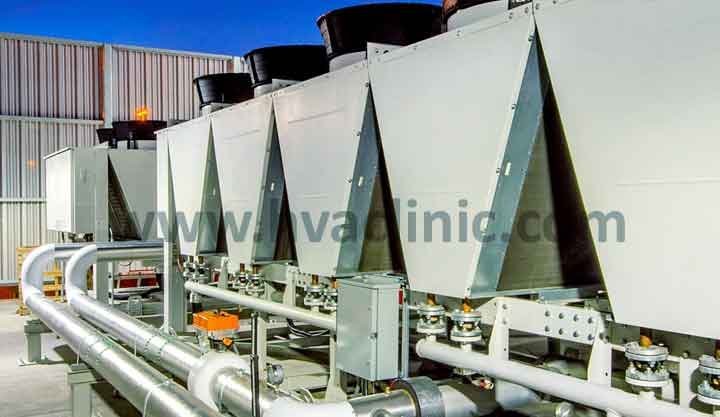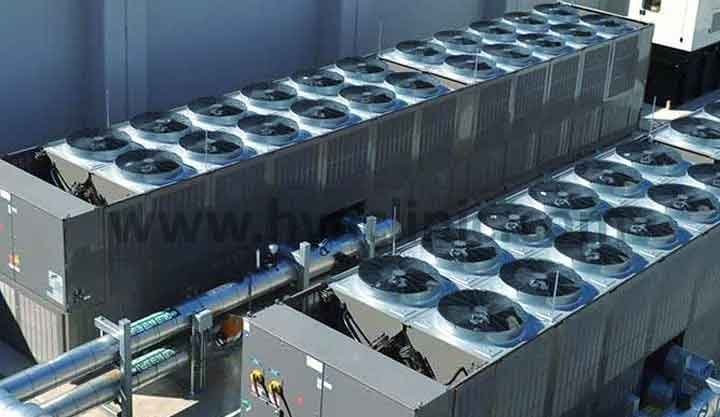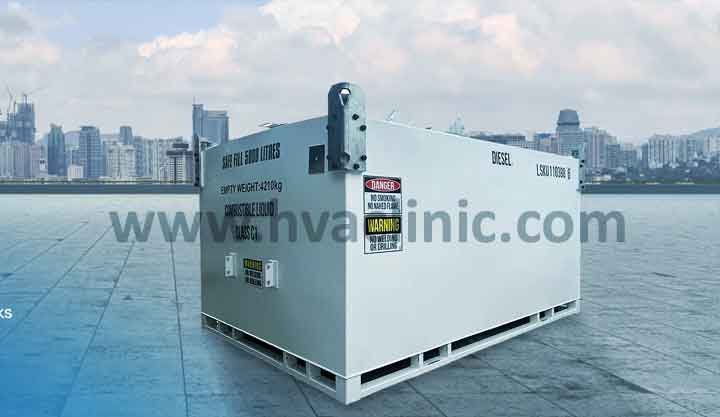
Emergency Chiller Rental Services for UAE Businesses
For businesses operating in the UAE, reliable cooling is more than a comfort requirement. Commercial buildings, hotels, warehouses, factories, healthcare facilities, data centres, retail properties and other temperature-sensitive operations can depend on continuous cooling to maintain suitable working and operating conditions. The need becomes particularly urgent when a central chiller suddenly stops working, when planned […]
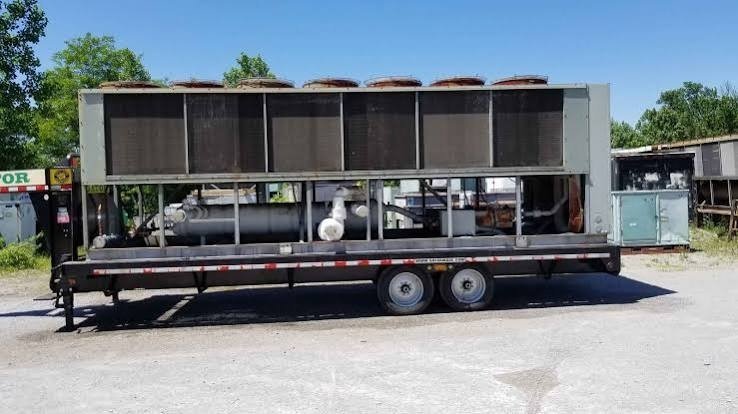
For businesses operating in the UAE, reliable cooling is more than a comfort requirement. Commercial buildings, hotels, warehouses, factories, healthcare facilities, data centres, retail properties and other temperature-sensitive operations can depend on continuous cooling to maintain suitable working and operating conditions.
The need becomes particularly urgent when a central chiller suddenly stops working, when planned maintenance requires equipment to be taken offline, or when an existing cooling system cannot meet a temporary increase in demand. In these situations, emergency chiller rental services for UAE businesses can provide temporary cooling capacity while the permanent system is repaired, maintained, upgraded or replaced.
The UAE’s climate makes cooling reliability especially important. Government climate information describes the country as having a hot desert climate, with average temperatures during the hotter months generally around 30-40°C and summer humidity reported at 60-100. A UAE government climate statement also notes that summer temperatures can rise above 45°C.
That means a major cooling failure during a hot period can become a business continuity problem rather than simply an HVAC maintenance issue.
So, when do UAE businesses actually need emergency chiller rental services? The answer depends on the condition of the existing cooling plant, the importance of cooling to the operation, the expected repair period and the consequences of losing cooling.
What Is Emergency Chiller Rental?
Emergency chiller rental is the temporary deployment of a commercial or industrial chiller when a business needs additional or replacement cooling capacity on short notice.
Instead of waiting for a failed permanent chiller to be repaired before cooling is restored, a rental unit can be installed temporarily to support the facility. Depending on the application, the rental setup may involve the chiller itself together with pumps, hoses or temporary pipework, air-handling equipment, electrical connections and other accessories.
Current UAE rental providers describe emergency and temporary chillers as solutions for unexpected breakdowns, planned maintenance, seasonal demand, construction requirements and temporary capacity shortages.
The exact arrangement is not the same for every facility. A business with an existing chilled-water network may require a different connection arrangement from a site that needs a more self-contained temporary cooling system.
This is why emergency chiller rental should be treated as an engineering requirement rather than simply hiring a machine based on a tonnage number.
When Does a UAE Business Need an Emergency Chiller?
The most obvious situation is an unexpected chiller breakdown. However, emergency rental cooling can be useful in several other circumstances.
A business may need temporary cooling when its primary chiller fails completely, when a compressor or another major component requires extensive repair, when several chillers are unavailable, when cooling demand temporarily exceeds installed capacity, or when a planned shutdown cannot be completed without alternative cooling.
In other words, an emergency does not always mean that the entire cooling system has failed. It can also mean that the available cooling capacity has fallen below what the facility requires.
1. When the Main Chiller Suddenly Breaks Down
A major chiller failure is one of the clearest reasons to consider emergency chiller rental in the UAE.
A commercial cooling plant can experience failures involving compressors, pumps, electrical components, controls, heat-transfer equipment or other parts of the system. The actual cause and repair time will depend on the equipment and failure.
If the permanent chiller cannot be returned to service quickly, the business may need temporary cooling while technicians complete diagnosis and repair.
UAE rental providers specifically identify unexpected chiller breakdowns and failed cooling equipment as common reasons for temporary emergency cooling.
The important point is that rental cooling does not necessarily replace the permanent repair. Instead, it can bridge the period between the failure and restoration of the primary system.
For example, a commercial facility may continue operating with temporary cooling while the failed compressor is being repaired or replacement equipment is being sourced.
2. When Chiller Repairs Will Take Several Days
Not every chiller failure can be fixed immediately.
Some faults can be resolved relatively quickly, while major component failures, specialist parts, extensive mechanical work or complicated commissioning can take longer.
If the affected building can tolerate only a short period without adequate cooling, waiting for the permanent repair may not be practical.
This is where temporary chiller rental UAE solutions can become useful. A rental chiller can provide temporary capacity during the repair period, allowing the business to maintain cooling while the permanent equipment remains out of service.
The rental duration can be matched to the project requirement. UAE rental providers describe short-term arrangements for emergencies and maintenance as well as longer-term arrangements for industrial and project applications.
3. During Planned Chiller Maintenance
Emergency chiller rental is not limited to unexpected breakdowns.
Businesses sometimes know in advance that their main cooling equipment needs to be taken offline for inspection, servicing, refurbishment or other maintenance.
Taking a chiller offline without an alternative cooling strategy can be difficult for facilities that need continuous temperature control.
A temporary rental chiller can act as a bridge during the maintenance window.
This approach can be particularly relevant when the facility cannot simply stop operations while the cooling plant is being serviced.
The distinction is important: planned rental cooling is not necessarily an emergency, but arranging the temporary system before the shutdown can prevent the maintenance activity from becoming an operational emergency.
Several UAE providers identify planned maintenance as a typical application for rental chillers.
4. When Existing Cooling Capacity Is Not Enough
A facility does not always need a rental chiller because its existing system has completely failed.
Sometimes the installed cooling plant is operating, but the building or process temporarily requires more capacity than the available system can provide.
This can happen during periods of unusually high demand, temporary changes in occupancy, production increases, additional equipment loads or other operational changes.
In this situation, an additional rental chiller can supplement the permanent system.
The objective is not necessarily to replace the existing cooling plant. Instead, the rental unit provides additional capacity for the period in which the normal system is insufficient.
UAE rental providers specifically describe seasonal demand and temporary peak loads as applications for rental cooling systems.
5. During the UAE’s Peak Summer Conditions
The UAE’s climate places considerable demands on cooling infrastructure.
The UAE government describes the country’s climate as desert, with hot-month average temperatures of approximately 30–40°C and high summer humidity in some areas. Another government source notes that temperatures can exceed 45°C during summer.
This does not mean that every business automatically needs a rental chiller during summer.
However, it does mean that facility managers need to take cooling reliability seriously when ambient conditions are demanding.
A chiller that is already experiencing mechanical problems or operating close to its required capacity may leave little margin for unexpected events.
Temporary cooling can therefore be considered as part of a business continuity strategy, particularly for facilities where loss of cooling could affect operations, equipment, inventory or occupants.
6. When a Hotel or Hospitality Facility Loses Cooling
Hotels and hospitality facilities can be particularly sensitive to cooling interruptions because they have multiple occupied areas and often operate continuously.
A cooling failure can affect guest rooms, restaurants, kitchens, meeting spaces, common areas and other parts of a property.
A complete emergency chiller rental setup may not always be required. The appropriate response depends on the affected areas, existing HVAC arrangement and available cooling capacity.
Where a significant portion of the building depends on chilled water, temporary rental chillers can provide an alternative source of cooling while the permanent equipment is repaired.
UAE rental companies list hospitality and commercial facilities among the applications for temporary chiller systems.
7. When a Shopping Mall or Commercial Building Has a Cooling Failure
Large commercial properties can have substantial cooling requirements.
A sudden reduction in chiller capacity may affect tenant areas, common spaces and building operations. In a large facility, restoring cooling can involve more than simply bringing in a chiller; the temporary equipment must be compatible with the site’s hydraulic, electrical and air-side requirements.
For this reason, a commercial chiller rental assessment should consider how the temporary equipment will connect to the existing system.
The rental provider may need information about the existing chilled-water system, available connection points, required flow, electrical supply, physical access and cooling load.
Al Shola, for example, states that rental packages are planned around factors including cooling load, temperature, water flow, power, access and connection routes.
8. When an Industrial Process Depends on Cooling
Industrial facilities may require cooling not only for comfort but also for production processes or equipment.
If cooling is directly connected to a production process, an unexpected chiller failure can create operational consequences that are different from those of an ordinary office building.
The correct temporary solution depends on the process.
A rental chiller may need to support process cooling temperatures, flow rates and operating conditions rather than simply maintaining room temperature.
This is why industrial chiller rental UAE requirements should be assessed based on the actual process rather than selecting a unit from a generic capacity chart.
Current UAE rental providers identify industrial and process cooling as applications for temporary chillers.
9. When a Data Centre or Technical Facility Needs Cooling Continuity
Technical facilities can have limited tolerance for cooling interruptions.
A data centre, control room or other critical technical environment may depend on cooling to maintain appropriate operating conditions for its equipment.
The exact cooling requirements vary by facility, redundancy strategy and equipment design. Therefore, emergency chiller rental should not be treated as a universal replacement for the site’s permanent cooling architecture.
Instead, it can serve as temporary capacity when existing equipment is unavailable or additional cooling is required.
Rental Power and other UAE providers identify data centres and critical technical environments among applications where temporary or emergency cooling may be required.
10. When a District Cooling Interruption Affects a Facility
District cooling is an important part of the UAE’s cooling infrastructure.
Abu Dhabi’s Department of Energy regulates the district cooling sector under a framework covering technical, legal and economic aspects. The Department explains that district cooling uses centralised cooling production and distribution through chilled-water networks serving multiple buildings.
If a building depends on district cooling and experiences an interruption or temporary loss of cooling supply, the appropriate response depends on the building’s design, connection arrangement and available backup options.
In certain circumstances, temporary chiller capacity can be considered as a bridge solution.
However, businesses should coordinate with the relevant district cooling provider, building management and qualified HVAC professionals before connecting temporary equipment.
The temporary system must be compatible with the building’s hydraulic and control requirements.
How Do You Know Whether You Actually Need an Emergency Chiller?
The first question is not “How many tons should we rent?”
The better first question is: What cooling capacity is currently available, what capacity is required, and how long will the shortage last?
A facility manager should establish the affected area, current cooling output, required indoor or process conditions, existing chiller capacity, operating status of the remaining equipment and expected repair period.
The business should also identify whether the requirement is for comfort cooling, process cooling, equipment protection or another specific application.
Once those factors are known, a qualified rental provider can determine what type and size of temporary equipment may be appropriate.
UAE suppliers note that chiller selection depends on factors such as cooling load, temperature, flow, ambient conditions, application and site requirements rather than capacity alone.
Why Chiller Capacity Matters in an Emergency
One of the biggest mistakes during an urgent cooling requirement is assuming that a larger chiller is automatically the better choice.
Oversizing can increase equipment, installation and operating requirements without solving the underlying connection or load problem.
Undersizing can be even more problematic because the temporary system may not deliver enough cooling to maintain the required conditions.
For this reason, emergency chiller rental should involve a proper technical assessment.
Rental Power provides illustrative ranges for different applications but notes that actual sizing requires assessment. Al Shola likewise states that final selection depends on factors including load, temperature, flow and ambient conditions.
What Information Should a Business Give the Rental Provider?
When a cooling emergency occurs, having the correct technical information can make the assessment easier.
The rental provider may need the facility location, application, existing chiller capacity, number of chillers, chilled-water supply and return temperatures, flow information, available electrical supply, connection arrangements and the required rental duration.
Site access is also important.
A large temporary chiller may require suitable vehicle access, lifting arrangements, space for positioning and appropriate routes for temporary hoses or pipework.
If the business already has drawings, equipment schedules or chiller specifications, these can help the engineering team understand the requirement more accurately.
What Does an Emergency Chiller Rental Setup Usually Include?
There is no single package that applies to every UAE business.
Depending on the project, the rental arrangement can include the chiller, pumps, flexible hoses, temporary pipework, air-handling equipment, electrical equipment and technical installation support.
Some projects may require a temporary generator or other supporting equipment if sufficient electrical capacity is unavailable at the site.
Rental Power describes turnkey temporary cooling arrangements that can include chillers, pumps, air-handling units and power-generation equipment depending on the site.
The important consideration is whether the complete system—not just the chiller—is capable of delivering the required cooling.
Air-Cooled or Water-Cooled Chiller for Emergency Rental?
The choice between an air-cooled and water-cooled rental chiller depends on the application and site.
Air-cooled chillers can be attractive for temporary applications because they do not require the same cooling-tower arrangement as a water-cooled system.
UAE rental providers advertise air-cooled rental chillers across a range of capacities. Al Shola, for example, currently lists air-cooled rental chillers from 50 TR to 400 TR and states that its equipment is designed for high-ambient GCC conditions.
Water-cooled systems may be appropriate for certain larger or specific applications where the required infrastructure is available.
The correct selection should therefore be based on the site’s cooling load, available utilities, space, connection requirements and operating conditions.
Why UAE Businesses Should Consider High-Ambient Equipment
A rental chiller intended for a mild climate should not automatically be assumed to perform the same way under UAE summer conditions.
Ambient temperature affects air-cooled equipment performance, so equipment selection should consider the actual expected operating environment.
Some UAE rental providers specifically market equipment for high-ambient GCC conditions. Al Shola states that its air-cooled rental chillers are designed to operate in ambient temperatures up to 55°C.
That figure is a manufacturer’s or supplier’s stated equipment capability, not a guarantee that every rental chiller will deliver the same performance at every ambient temperature.
Businesses should ask the rental provider for the actual operating performance and conditions applicable to the proposed equipment.
How Emergency Chiller Rental Helps Reduce Business Disruption
The biggest benefit of temporary cooling is continuity.
A rental chiller can potentially allow a facility to maintain cooling while permanent equipment is repaired or replaced.
For a commercial building, this can help maintain suitable indoor conditions.
For an industrial facility, it may help maintain a production process.
For a technical facility, it can provide temporary cooling capacity while the permanent system is restored.
For a hotel or retail property, it can help reduce disruption to occupants and customers.
The value therefore comes from maintaining the required cooling function during a temporary period—not simply from renting equipment.
Emergency Chiller Rental vs Buying a New Chiller
Buying a new permanent chiller may be appropriate when a business has a long-term need for additional or replacement capacity.
But a permanent purchase is not always the most practical response to a short-term emergency.
If the existing chiller can be repaired, purchasing another permanent unit may create unnecessary capital expenditure for a temporary problem.
Rental provides an alternative when cooling is required for a limited period.
The right choice depends on the expected equipment life, repair timeline, future cooling demand, capital budget and operational requirements.
Rental providers specifically position temporary chillers as a solution for short-term requirements, maintenance, seasonal demand and unexpected breakdowns.
How Long Should an Emergency Chiller Be Rented?
There is no universal emergency rental period.
A business may need a rental chiller for several days while a repair is completed, several weeks during a major refurbishment, or longer when a permanent cooling project is delayed.
The rental period should be based on the expected duration of the cooling requirement rather than choosing the shortest possible contract.
It is also sensible to consider some contingency if the permanent repair schedule is uncertain.
Current UAE providers offer short-term, monthly and longer-term rental arrangements depending on the application.
What Affects Emergency Chiller Rental Cost in the UAE?
Emergency chiller rental pricing is not normally a single UAE-wide fixed rate.
The cost can vary according to cooling capacity, equipment type, rental duration, delivery distance, installation complexity, connection requirements, accessories, electrical requirements and technical support.
HVACLINIC’s current UAE rental guidance similarly identifies cooling capacity, rental duration, chiller type, installation requirements, location and technical support as factors affecting rental cost.
This means businesses should compare complete project quotations rather than comparing only a daily equipment rate.
A lower equipment price may not represent the lower overall project cost if additional pumps, hoses, installation work, transport or power requirements are excluded.
How Fast Can Emergency Chiller Rental Be Deployed?
Deployment time depends on equipment availability, location, capacity, site access, connection requirements and the complexity of the installation.
Some UAE providers advertise rapid emergency deployment and 24/7 support. For example, HVACLINIC currently advertises a 4–6 hour emergency response window in Dubai and rapid dispatch to other Emirates, while another HVACLINIC emergency service page advertises an under-four-hour response SLA. These are provider-specific claims and should not be treated as a universal UAE industry standard.
For a real emergency, businesses should confirm the actual availability and estimated installation time for the required capacity before accepting a quotation.
What Should Businesses Check Before Renting an Emergency Chiller?
Before approving an emergency rental, the facility team should confirm that the proposed equipment is suitable for the required cooling load and site conditions.
The business should also confirm the connection method, power requirement, operating temperatures, water flow, physical footprint, access requirements, installation responsibilities and technical support arrangement.
The quotation should clearly state what is included.
This is particularly important during emergencies because rushed decisions can lead to misunderstandings about transport, installation, accessories or operating support.
Emergency Chiller Rental Should Be Part of a Cooling Contingency Plan
Businesses that cannot tolerate cooling downtime should not wait until a major chiller failure occurs before thinking about temporary cooling.
A basic contingency plan can identify critical cooling loads, available backup capacity, emergency contacts, equipment information and possible connection points for temporary equipment.
Facility teams can also keep records of chiller model numbers, capacities, chilled-water temperatures and other relevant information.
This information can reduce the amount of time required to understand the site during an emergency.
The goal is not necessarily to keep a rental chiller permanently on standby. It is to make sure the business understands what it would need if its primary cooling system became unavailable.
How Emergency Chiller Rental Fits Into UAE Business Continuity
Cooling can be a critical utility for many UAE businesses.
The UAE’s government has highlighted the importance of cooling to the country’s energy system, noting that cooling is one of the country’s most energy-intensive sectors.
Abu Dhabi’s district cooling framework also places emphasis on safe, efficient and reliable cooling services and on energy efficiency within the cooling sector.
For individual businesses, this means cooling should be considered as part of wider operational continuity planning.
An emergency chiller is one possible temporary measure when permanent cooling capacity is unavailable.
It does not replace preventive maintenance, equipment redundancy or proper HVAC design. Instead, it can provide an additional layer of resilience when an unexpected problem occurs.
A Practical Example of When Emergency Chiller Rental Makes Sense
Consider a commercial facility operating in Dubai during a period of high ambient temperatures.
The facility has multiple chillers, but one major unit develops a serious mechanical fault. The remaining chillers continue operating, but their combined capacity is no longer sufficient to maintain the required conditions throughout the building.
The permanent repair may take several days.
In this situation, waiting for the repair could leave the building operating with inadequate cooling.
A temporary rental chiller may provide the missing capacity during the repair period.
The engineering team would first assess the building’s load and existing chilled-water infrastructure, determine the required temporary capacity, confirm available power and connection points, select suitable equipment and arrange installation and commissioning.
Once the permanent chiller has been restored and the temporary capacity is no longer required, the rental unit can be removed.
This is the basic role of emergency chiller rental: bridge the cooling gap until the permanent solution is available.
What Businesses Should Not Do During a Cooling Emergency
A cooling emergency can create pressure to choose the first available equipment.
However, a business should avoid selecting a rental chiller based only on the advertised tonnage.
The equipment must be appropriate for the actual load and operating conditions.
Businesses should also avoid assuming that every temporary chiller can connect directly to an existing HVAC system.
Hydraulic connections, flow rates, temperatures, electrical supply, physical access and controls can all affect whether a temporary system will work as intended.
A qualified HVAC team should assess the site before commissioning the temporary system.
Frequently Asked Questions
When do UAE businesses need emergency chiller rental services?
Businesses may need emergency chiller rental when a primary chiller fails, when repairs will take time, when planned maintenance requires the existing cooling system to be shut down, when temporary capacity is needed during peak demand, or when a facility requires cooling while permanent HVAC equipment is being installed or replaced.
Is emergency chiller rental only for complete chiller breakdowns?
No. Emergency or temporary rental cooling can also be used when available cooling capacity is insufficient, when major equipment is being repaired, during temporary increases in demand or when a facility needs additional cooling capacity for a defined period. UAE rental providers list breakdowns, maintenance, seasonal demand and temporary projects among their rental applications.
Can a rental chiller replace a failed permanent chiller?
It can provide temporary replacement cooling while the permanent chiller is being repaired, serviced or replaced. The rental system should be appropriately sized and compatible with the facility’s existing cooling infrastructure.
How is an emergency chiller sized?
Sizing depends on the actual cooling load, required temperatures, chilled-water flow, application, ambient conditions, available equipment and connection arrangement. A simple building-size calculation is not sufficient for many commercial or industrial applications.
Are rental chillers suitable for UAE summer conditions?
Suitable equipment can be selected for high-ambient UAE conditions, but businesses should confirm the equipment’s published operating limits and expected performance at the site’s ambient temperatures. Some UAE suppliers specifically offer equipment designed for high-ambient GCC operation.
Can businesses rent a chiller during planned maintenance?
Yes. Planned maintenance is one of the commonly identified applications for temporary chiller rental. A rental unit can provide cooling while the primary equipment is taken offline.
How long can an emergency chiller be rented?
The rental period depends on the business requirement. Short-term, monthly and longer-term arrangements are available in the UAE market, depending on the provider and application.
How much does emergency chiller rental cost in the UAE?
There is no single fixed price for every emergency chiller rental. Capacity, equipment type, rental duration, delivery, installation, accessories, power requirements and technical support can all affect the quotation.
Can an emergency rental chiller work with an existing chilled-water system?
It can in suitable applications, but compatibility must be assessed. The engineering team should check connection points, flow, supply and return temperatures, pressure, controls and other site requirements before installation.
Do emergency chillers require additional equipment?
Depending on the application, a temporary setup may require pumps, hoses, temporary pipework, air-handling units, electrical equipment or other accessories. The required equipment depends on the facility and the connection method.
Which UAE businesses commonly use temporary or emergency chillers?
Potential applications include commercial buildings, hotels, industrial facilities, construction projects, data centres, district cooling applications and other facilities where temporary cooling capacity is required. UAE rental providers currently advertise these applications.
Is emergency chiller rental better than buying a new chiller?
Not in every situation. Rental can make sense for temporary requirements, unexpected breakdowns, maintenance periods or short-term capacity shortages. Buying may be more appropriate when a business has a permanent long-term need for additional or replacement cooling capacity.
Final Thoughts
UAE businesses do not need emergency chiller rental simply because they operate in a hot climate. The real need arises when cooling capacity becomes unavailable, insufficient or temporarily required and the business cannot afford to wait for the permanent solution.
The most common situations include unexpected chiller breakdowns, lengthy repairs, planned maintenance, seasonal peak demand, temporary capacity shortages, construction and fit-out requirements, industrial process cooling and certain critical-facility applications.
The UAE’s hot desert climate makes reliable cooling particularly important, while the country’s extensive commercial, industrial and district cooling infrastructure means that cooling requirements can vary significantly between facilities.
For businesses considering emergency chiller rental UAE solutions, the most important step is to assess the actual cooling requirement before selecting equipment. Capacity, application, chilled-water temperatures, flow, power, site access, connection arrangements and expected rental duration all matter.
A properly planned temporary cooling system can bridge the gap between a chiller failure and permanent restoration, helping businesses maintain operations without committing to an unnecessary permanent equipment purchase.
For businesses that regularly depend on critical cooling, emergency chiller rental should also be considered as part of a broader cooling contingency and business continuity plan rather than treated only as a last-minute response to equipment failure.
Looking for Rental Chiller in UAE?
Engineered temporary cooling solutions across Dubai, Abu Dhabi, Sharjah, and Northern Emirates. High-efficiency air-cooled and water-cooled rental chillers from...