What to Check Before Choosing the Right Rental Chiller
Absolutely. I researched current UAE/Dubai rental-chiller guidance from established rental and HVAC providers before writing this, focusing on cooling load, chiller capacity, water flow, operating temperatures, ambient conditions, electrical requirements, installation, site access, support, and rental terms. What to Check Before Choosing the Right Rental Chiller When a commercial building, industrial facility, hotel, warehouse, event […]
Absolutely. I researched current UAE/Dubai rental-chiller guidance from established rental and HVAC providers before writing this, focusing on cooling load, chiller capacity, water flow, operating temperatures, ambient conditions, electrical requirements, installation, site access, support, and rental terms.
What to Check Before Choosing the Right Rental Chiller
When a commercial building, industrial facility, hotel, warehouse, event venue, or production site suddenly needs additional cooling, renting a chiller can be a practical way to maintain operations without investing in permanent equipment. Rental chillers are commonly used during equipment breakdowns, planned maintenance, seasonal demand, temporary projects, and periods when a facility needs extra cooling capacity.
However, choosing a rental chiller is not simply about selecting the largest available unit. The right equipment needs to match the actual cooling requirement, operating conditions, available power, water flow, installation space, and project duration. Industry rental providers recommend assessing these factors before equipment is selected and delivered.
Start With Your Actual Cooling Requirement
The first thing to check is why you need the rental chiller and how much cooling your application actually requires.
A chiller supporting an office during a temporary HVAC shutdown will have different requirements from one supplying process cooling to a manufacturing facility. Hotels, shopping facilities, hospitals, warehouses, construction projects, and industrial plants can all have very different heat loads.
Before requesting a quotation, identify the areas or processes that need cooling, the current cooling problem, the required indoor or process temperature, and whether the rental unit will operate as a replacement, backup, or additional capacity.
A proper site assessment is particularly useful when the required capacity is not already known. Rental specialists commonly review the load, operating conditions, existing infrastructure, and connection requirements before recommending equipment.
Check the Required Cooling Capacity
Cooling capacity is one of the most important factors when selecting a rental chiller. It is commonly expressed in tons of refrigeration, or TR, and may also be stated in kW of cooling capacity.
Choosing a unit that is too small can leave the facility without sufficient cooling, while selecting significantly more capacity than necessary can increase rental and operating costs. The correct capacity should therefore be based on the actual heat load rather than simply choosing the biggest chiller available.
The heat load can be influenced by building size, insulation, occupancy, equipment, machinery, lighting, outdoor conditions, and the type of process being cooled. For this reason, published capacity ranges should be treated as equipment information rather than a substitute for project-specific sizing.
Check Chilled Water Temperature and Flow
Capacity alone does not tell you whether a chiller will work correctly with your existing system.
Before renting, check the required chilled-water supply and return temperatures as well as the required water flow rate. These details help determine whether the selected equipment can operate properly with the building’s existing HVAC system, process equipment, air handling units, or temporary cooling loop.
Flow and temperature requirements are particularly important for industrial and process applications, where cooling conditions may be more specific than standard comfort cooling.
A rental chiller provider may also need information about existing pipework, connection points, pumps, hoses, valves, and other accessories before installation.
Decide Between Air-Cooled and Water-Cooled Chillers
The type of chiller should match the site and available infrastructure.
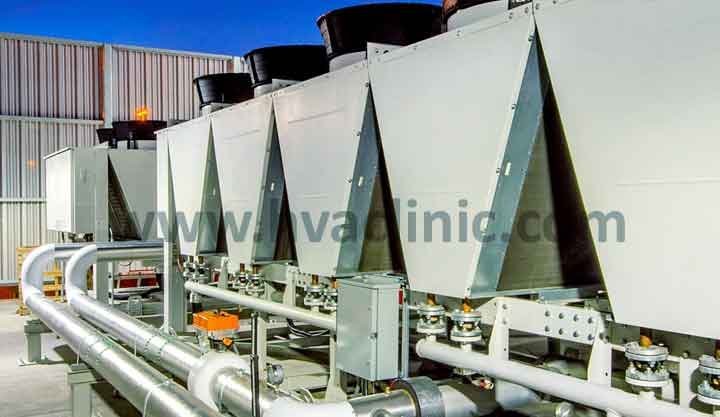
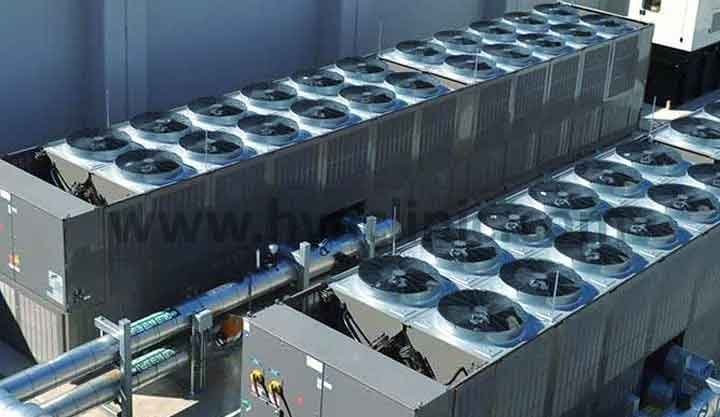
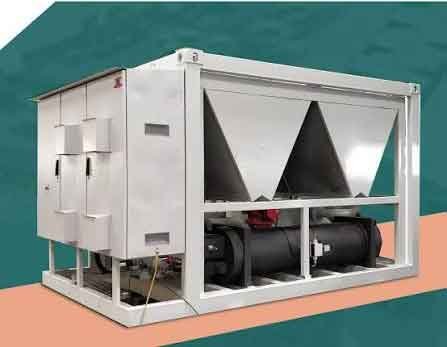
Air-cooled chillers are often useful for temporary applications because they can be deployed outdoors without the same cooling-tower arrangement required by a conventional water-cooled system. This can make them suitable for emergency cooling, construction sites, events, temporary HVAC systems, and locations where suitable condenser-water infrastructure is unavailable.
Water-cooled chillers can be appropriate for larger installations where the required cooling infrastructure is already available and the application suits this configuration. However, the associated cooling tower, condenser-water system, pumps, and connections need to be considered as part of the complete installation.
The best choice depends on the application, available infrastructure, required capacity, installation conditions, and rental duration rather than simply the chiller type.
Consider Dubai’s Outdoor Conditions
Dubai’s climate makes operating conditions an important consideration when selecting temporary cooling equipment.
The chiller needs to be suitable for the expected outdoor ambient conditions at the site. High ambient temperatures can affect equipment performance, so businesses should confirm the manufacturer’s operating limits and the capacity available at the expected design conditions rather than relying only on a nominal rating.
This is especially important when equipment will be installed outdoors and expected to operate continuously during periods of high cooling demand.
A professional rental provider should be able to recommend equipment based on the site’s operating environment and required performance. UAE rental fleets specifically advertise equipment designed for high-ambient regional conditions. (Al Shola)
Check Available Electrical Power
Before delivery, confirm whether the site has sufficient electrical capacity for the selected chiller and its supporting equipment.
The rental provider may need information about the available voltage, phase, connection point, electrical distribution equipment, and other site limitations. If the required power is not available, a generator or additional electrical equipment may need to be included in the temporary solution.
This check should happen before the equipment arrives. Discovering an electrical limitation after delivery can delay commissioning and increase project costs.
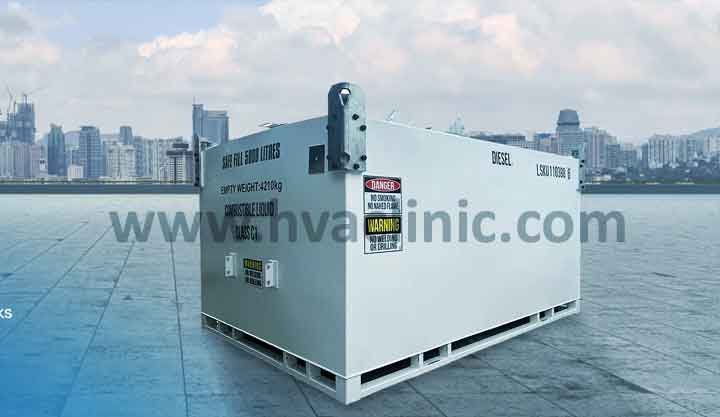
For sites that require both temporary power and cooling, some rental providers can coordinate generator and chiller requirements as part of the same project.
Measure the Available Installation Space
A chiller may have the required cooling capacity but still be unsuitable if there is not enough room to install and operate it safely.
Check the proposed installation area, access route, ground conditions, ventilation requirements, and clearance around the equipment. Also consider whether delivery vehicles, lifting equipment, cranes, or other machinery will be needed.
The route from the delivery point to the installation area should be reviewed before the rental equipment is dispatched. Site surveys are commonly recommended because the position of the chiller, air handlers, fan coils, pipework, and connection points can affect the overall temporary cooling arrangement.
Check What Accessories Are Included
A rental chiller is not always a complete cooling system by itself.
Depending on the project, you may require pumps, flexible hoses, temporary pipework, buffer tanks, heat exchangers, air handling units, fan coil units, electrical equipment, monitoring systems, or other accessories.
Ask the rental company exactly what is included in the quotation and what will be charged separately. This makes it easier to compare suppliers based on the complete installed solution rather than only the advertised chiller rental price.
For complex commercial or industrial applications, the accessories and connection arrangement can be just as important as the chiller itself.
Consider How Long You Need the Chiller
Your rental period can influence the equipment choice and overall cost.
A short emergency rental may require rapid deployment, while a project lasting several months may benefit from a different rental arrangement. Temporary cooling can be used for planned maintenance, emergency breakdowns, seasonal capacity increases, construction, commissioning, and temporary production requirements.
Tell the supplier whether you need the chiller for a few days, several weeks, a season, or a longer project. Also ask about extension terms if your project schedule changes.
Ask About Installation and Commissioning
A good rental service should cover more than equipment delivery.
Depending on the project, the supplier may provide site assessment, transportation, installation, connection, commissioning, monitoring, maintenance, and removal after the rental period.
Before signing the rental agreement, clarify who is responsible for installation and testing. The commissioning process should confirm that the chiller is operating correctly and that the temporary system is delivering the required cooling before the facility relies on it.
Check Maintenance and Technical Support
Temporary cooling can become critical when a permanent chiller has failed or when a facility cannot afford downtime.
For this reason, technical support should be considered alongside equipment specifications. Ask how maintenance is handled, who responds if the chiller develops a fault, whether replacement equipment is available, and what support is provided outside normal working hours.
For critical applications such as industrial processes, hospitals, data-related facilities, hotels, and large commercial buildings, response time can be particularly important.
Some established rental providers offer monitoring and technical support throughout the rental period rather than simply delivering the equipment and leaving the site.
Compare the Complete Rental Cost
The cheapest advertised daily rate is not necessarily the lowest overall cost.
Your final rental cost can depend on cooling capacity, rental duration, transportation, installation complexity, accessories, hoses, pumps, electrical requirements, technician support, and site access.
Ask for an itemized quotation that clearly explains what is included. This makes supplier comparisons easier and reduces the chance of unexpected charges later. UAE rental providers identify capacity, duration, logistics, accessories, and installation requirements among the factors that can influence the final rental price.
Ask About Delivery Time
If you need emergency cooling, delivery speed can be as important as the equipment specification.
A chiller breakdown can affect occupant comfort, production, equipment, and business operations. In these situations, ask the rental provider how quickly the required equipment can be mobilized and whether installation support is available.
For planned maintenance or temporary projects, early planning gives the supplier more time to assess the site, confirm equipment availability, arrange transportation, and prepare the required accessories.
Check the Supplier’s Experience
Finally, look beyond the chiller itself.
An experienced rental provider should be able to understand your application, assess the cooling load, recommend suitable equipment, plan the installation, and provide technical support throughout the rental period.
This is particularly important for complicated temporary cooling projects where the chiller must integrate with existing HVAC or process systems. A complete rental solution can reduce installation problems and help keep the temporary system operating reliably.
Final Thoughts
Choosing the right rental chiller requires more than comparing tonnage and rental prices. Before making a decision, check your cooling load, required water temperatures, flow rate, chiller type, ambient conditions, electrical supply, installation space, accessories, rental duration, technical support, and complete project cost.
For businesses in Dubai, these checks are especially important when cooling is required during high-demand periods or when a permanent system is unavailable.
The best rental chiller is not necessarily the largest or cheapest unit. It is the one that matches your actual cooling requirement, site conditions, infrastructure, operating schedule, and budget while providing reliable support throughout the rental period.
A proper site assessment and a complete quotation from an experienced rental provider can help you avoid incorrect sizing, unnecessary costs, installation delays, and cooling problems.
I kept the article informational but commercially useful, without making unsupported fixed claims about chiller sizes or rental prices. The technical points are based on current rental-provider guidance and established HVAC rental practices.
Looking for Rental Chiller in UAE?
Engineered temporary cooling solutions across Dubai, Abu Dhabi, Sharjah, and Northern Emirates. High-efficiency air-cooled and water-cooled rental chillers from...