Emergency HVAC & Chiller Rental Services UAE
Cooling is an essential part of operating many commercial, industrial, hospitality, healthcare, construction, and technology facilities in the UAE. When a central air-conditioning system or chiller suddenly fails, waiting for a permanent repair can leave a building or process without the cooling capacity it needs. Emergency HVAC and chiller rental services provide a temporary way […]
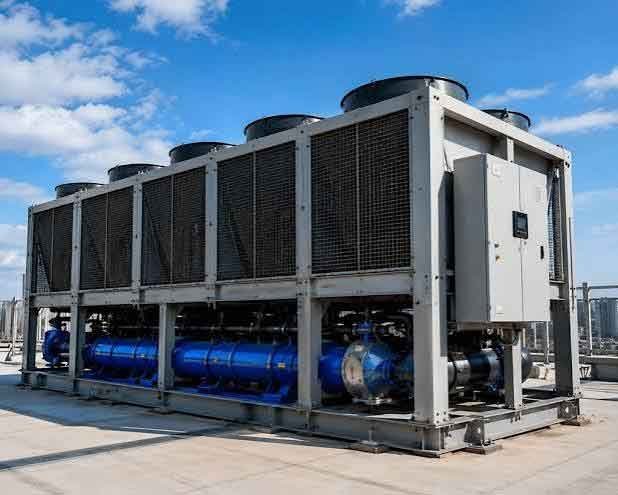
Cooling is an essential part of operating many commercial, industrial, hospitality, healthcare, construction, and technology facilities in the UAE. When a central air-conditioning system or chiller suddenly fails, waiting for a permanent repair can leave a building or process without the cooling capacity it needs. Emergency HVAC and chiller rental services provide a temporary way to restore or supplement cooling while the permanent system is repaired, replaced, or returned to normal operation.
A rental chiller is not simply a machine delivered to a site. A proper temporary cooling solution involves selecting suitable equipment, checking the required cooling load, confirming electrical and hydraulic connections, transporting the equipment, installing it, commissioning the system, and providing technical support during the rental period. UAE rental providers commonly describe this as a managed process rather than equipment-only hire.
The need for these services is particularly relevant to the UAE because cooling demand can be substantial in commercial and industrial environments. Dubai Electricity and Water Authority explains that chillers use a refrigeration cycle to cool water, which then provides cooling through air-side equipment. DEWA also distinguishes air-cooled chillers, which reject heat through air, from water-cooled chillers, which reject heat through water.
This guide explains what emergency HVAC and chiller rental services are, how they work, when businesses use them, what equipment may be required, how a temporary system connects to a facility, and what businesses should consider before arranging emergency cooling in the UAE.
What Are Emergency HVAC & Chiller Rental Services in the UAE?
Emergency HVAC and chiller rental services provide temporary cooling equipment and associated technical services when a permanent HVAC or chilled-water system cannot provide the required cooling.
The requirement may arise from an unexpected chiller breakdown, compressor failure, planned maintenance, equipment replacement, a temporary increase in cooling demand, construction activity, or another situation where existing cooling capacity is unavailable or insufficient.
Instead of waiting for a permanent chiller to be repaired or purchasing another permanent unit, a business can bring in rental equipment for the period required. UAE rental providers commonly offer temporary chillers for emergency breakdowns as well as planned shutdowns, peak-load support and temporary projects.
The rental arrangement can include more than the chiller itself. Depending on the application, the temporary cooling package may require chilled-water pumps, flexible hoses, electrical cables, control equipment, air-handling units, packaged air-conditioning equipment, or other accessories.
The exact configuration depends on the facility, cooling requirement, available infrastructure, equipment location, and connection method.
How Does Emergency Chiller Rental Work?
The basic principle is straightforward: temporary cooling equipment is brought to the facility and connected to the appropriate part of the existing cooling system or used as a temporary standalone arrangement.
However, the engineering process behind that connection is important.
A typical emergency chiller rental project follows several stages.
1. The Cooling Emergency Is Assessed
The first step is understanding why temporary cooling is required.
A facility may report a complete chiller failure, reduced cooling capacity, planned shutdown, equipment replacement, or an increase in cooling demand. The rental provider needs enough information to understand the application and determine what type of temporary equipment may be appropriate.
Important information can include the facility location, application, required cooling capacity, existing system arrangement, chilled-water temperatures, available electrical supply, connection points, access restrictions, and required rental period.
Al Shola, for example, states that chiller requirements are assessed using factors such as cooling load, leaving-water temperature, ambient conditions, electrical supply, pumping arrangements, pipe routes, and operating period.
2. Cooling Capacity Is Determined
Choosing a temporary chiller is not simply a matter of matching the size of the failed machine.
The required cooling capacity depends on the actual heat load and the conditions under which the replacement equipment must operate.
For a commercial building, the load may be affected by occupied areas, building envelope characteristics, equipment, lighting, ventilation, and outdoor conditions. For an industrial application, process equipment and production requirements can have a major influence on the cooling requirement.
Rental Power similarly identifies space, heat generated by equipment or occupancy, and application type as factors used when determining chiller capacity.
This is why a proper assessment is important before selecting the rental equipment.
3. The Chiller Type Is Selected
Emergency cooling does not always require the same type of chiller.
The two common categories are air-cooled and water-cooled chillers.
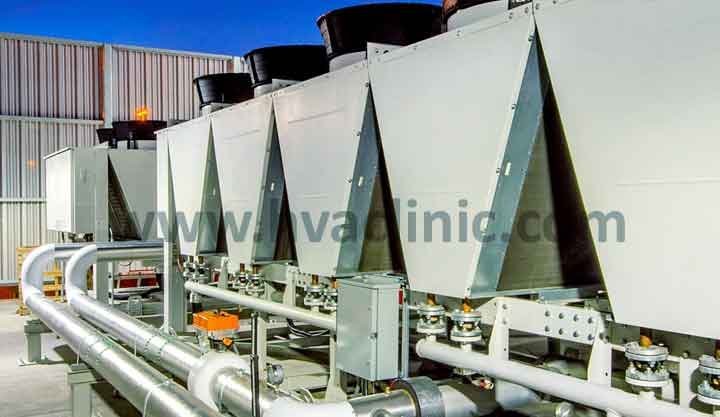
An air-cooled chiller rejects heat directly to the surrounding air. A water-cooled chiller rejects heat through a water-based condenser system. DEWA’s energy-efficiency handbook describes the same distinction and explains that both types use the refrigeration cycle to produce chilled water for cooling.
Air-cooled chillers can be particularly useful for temporary applications where a cooling tower and associated water system are not practical. Water-cooled equipment may be appropriate where suitable condenser-water infrastructure is available and the project requirements justify that configuration.
The choice should therefore be based on the facility’s engineering conditions rather than simply choosing the largest available rental chiller.
What Happens During Emergency Chiller Installation?
Once the appropriate equipment has been selected, the next stage is deployment and installation.
A temporary chiller may need to be positioned outside the building or in another suitable service area. The installation team must consider access for delivery, equipment placement, ventilation, electrical connections, chilled-water connections, pipe routing, pumps, and safe operating clearances.
Stout Energy describes its rental process in three broad stages: site assessment, deployment and installation, followed by operation and support.
Depending on the facility, the installation can involve several supporting components.
Chilled-Water Hoses and Pipe Connections
The temporary chiller needs a suitable path for chilled water to reach the building or process that requires cooling.
Flexible hoses or temporary pipework can be used where appropriate, depending on the equipment and site configuration. The connection must be compatible with the required flow, pressure, temperature and connection points.
Pumps
A temporary cooling arrangement may require pumps to circulate chilled water between the rental equipment and the building or process system.
The pumping arrangement needs to be considered during the engineering assessment because the chiller’s cooling capacity alone does not determine whether the overall temporary system will operate correctly.
Electrical Supply
Rental chillers require an appropriate electrical supply unless the particular equipment is designed for another power arrangement.
The available power capacity, voltage, connection arrangement, cable routing, protection and site conditions need to be reviewed before commissioning.
This is one reason why emergency chiller rental should be treated as a system-level requirement rather than simply hiring a cooling machine.
Air-Handling Units and Other HVAC Equipment
Not every emergency HVAC requirement is solved by a chiller alone.
Some facilities may require temporary air-handling units, packaged air conditioners, portable air-conditioning equipment or other air-side equipment. Al Shola’s UAE rental range, for example, includes air-cooled chillers, air-handling units, packaged AC systems and portable AC equipment for different temporary cooling requirements.
The appropriate arrangement depends on whether the facility needs chilled water, conditioned air, localized cooling, or a combination of these.
How Does a Rental Chiller Produce Cooling?
A chiller uses a refrigeration cycle to remove heat from water.
The U.S. Department of Energy’s chiller evaluation protocol describes the chiller plant as including the chiller and associated auxiliary equipment. It explains that the vapor-compression refrigeration cycle cools water in the chilled-water loop by absorbing heat and rejecting it either to a condenser-water loop in a water-cooled system or directly to ambient air in an air-cooled system.
The chilled water can then circulate through the facility’s air-side equipment or process equipment.
In a building HVAC application, air-handling equipment can use the chilled water to remove heat from air before that conditioned air is distributed through the building.
In process applications, chilled water may instead be used to control the temperature of industrial equipment or a manufacturing process.
This makes rental chillers useful beyond conventional office air conditioning. Chillers can support commercial buildings, industrial facilities, data centres, construction projects, events, warehouses and other applications where temporary chilled-water capacity is required. UAE rental providers list these types of applications across their current service offerings.
When Do Businesses Need Emergency HVAC Rental?
Emergency HVAC rental can be required whenever existing cooling equipment cannot maintain the required environmental conditions.
One common situation is an unexpected chiller breakdown.
A major component failure can remove a significant amount of cooling capacity from a facility. If a permanent repair requires time for diagnosis, parts, specialist technicians or equipment replacement, temporary cooling can bridge that period.
Emergency rental can also be useful during:
- Major chiller repairs
- Planned maintenance shutdowns
- HVAC equipment replacement
- Temporary increases in cooling demand
- Construction and fit-out projects
- Facility expansions
- Seasonal capacity requirements
- Events and temporary structures
- Industrial process cooling
- Critical facility cooling
- District cooling interruptions
Current UAE rental providers specifically identify emergency breakdowns, planned shutdowns, peak-load support, temporary projects and equipment replacement among the common reasons for temporary chiller rental.
Why Is Emergency Cooling Important in the UAE?
Cooling plays a major role in UAE buildings and facilities.
Dubai’s building regulations include requirements relating to health, safety, welfare, environmental impact and sustainable building design, while DEWA publishes guidance on cooling systems and energy conservation.
For businesses, however, the issue is not only occupant comfort.
Cooling can also support equipment, production processes, temperature-sensitive environments and other operational requirements. A loss of cooling can therefore have consequences beyond the temperature inside an office.
The UAE’s established district-cooling infrastructure also illustrates the importance of chilled-water systems in large developments. DEWA describes district cooling as the distribution of chilled water to groups of buildings, while its information on Empower notes the role of centralized cooling plants and distribution networks in Dubai.
For facilities dependent on chilled water, temporary rental equipment can therefore act as a bridge when normal cooling capacity is unavailable.
Emergency Chiller Rental for Commercial Buildings
Commercial buildings can experience cooling problems for many reasons, including equipment failure, maintenance, upgrades or changes in occupancy and cooling demand.
Offices, retail facilities, hotels, malls and other commercial properties may use central chilled-water systems serving multiple air-handling units or other air-side equipment.
A temporary chiller can provide additional chilled-water capacity while the permanent system is unavailable.
The rental configuration must be matched to the building’s cooling distribution system. Simply supplying a chiller with an adequate nominal capacity does not automatically mean it can be connected to every building.
Engineers need to consider chilled-water temperatures, flow requirements, connection locations, pump requirements, electrical supply and the physical route from the temporary equipment to the building system.
Emergency Chiller Rental for Industrial Facilities
Industrial cooling requirements can be more complex because cooling may be directly linked to production processes.
A factory may require chilled water for manufacturing equipment, process temperature control, product-related applications or facility HVAC.
A temporary cooling solution can provide capacity during maintenance, equipment replacement or unexpected failure.
For these applications, the rental provider needs information about the process requirements rather than relying solely on the capacity of the failed chiller.
The required supply temperature, return temperature, flow rate, process load, operating schedule and available infrastructure can all influence equipment selection.
This is why industrial chiller rental providers commonly describe site assessment and application-specific sizing as part of their process.
Emergency HVAC Rental for Hotels and Hospitality Facilities
Hotels and hospitality properties have cooling requirements that can vary according to occupancy, facilities and operating schedules.
A cooling failure can affect guest areas, kitchens, meeting spaces, back-of-house areas and other parts of the property.
Temporary HVAC equipment can be used during major maintenance or when permanent cooling equipment has failed.
Depending on the building, the required solution may involve a chiller, air-handling units, packaged AC systems or portable units.
The equipment should be selected according to the areas affected and the existing HVAC configuration rather than assuming that one equipment type is suitable for the entire property.
Emergency Cooling for Data Centres and Critical Facilities
Some facilities have cooling requirements that are directly connected to equipment operation.
Data centres are one example. The U.S. Department of Energy identifies data centres among facilities that can have process cooling loads requiring chiller systems.
For these environments, emergency cooling planning needs to consider more than the nominal cooling capacity.
The facility may require redundancy, appropriate connection arrangements, continuous monitoring and a carefully planned transition between the permanent and temporary systems.
Rental providers serving critical cooling applications therefore often provide equipment, installation, monitoring and maintenance as part of a managed temporary cooling arrangement.
Air-Cooled vs Water-Cooled Chiller Rental
Choosing between an air-cooled and water-cooled chiller depends on the application and site infrastructure.
Air-Cooled Chillers
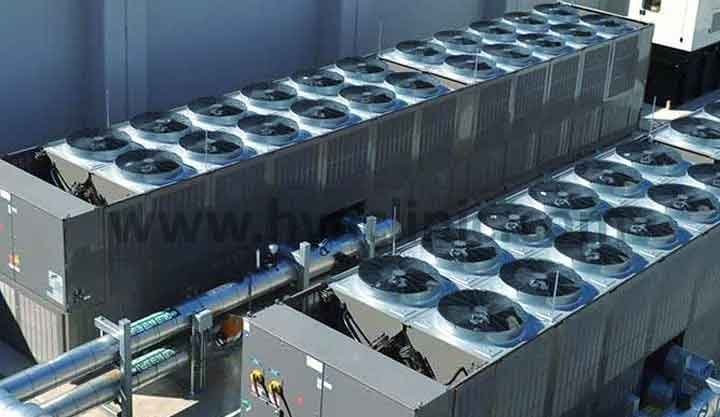
Air-cooled chillers reject condenser heat directly to ambient air.
They can be useful for temporary applications because they do not require the same cooling-tower arrangement associated with water-cooled systems.
UAE rental companies currently advertise high-ambient air-cooled chiller fleets for commercial, industrial, construction, event and emergency applications. Al Shola, for example, lists air-cooled rental chillers from 50 TR to 400 TR and states that its high-ambient units are designed for GCC conditions.
Water-Cooled Chillers
Water-cooled chillers reject heat through a condenser-water system.
They can be suitable for facilities with the necessary water-side infrastructure, but the complete temporary arrangement can require additional equipment and planning.
The U.S. Department of Energy distinguishes water-cooled chillers from air-cooled chillers according to how heat is rejected from the refrigeration cycle.
The correct choice therefore depends on the facility, available utilities, required capacity, operating conditions and temporary installation arrangement.
How Is the Right Chiller Size Selected?
Chiller capacity is commonly expressed in tons of refrigeration, or TR.
However, selecting a rental chiller should not be based only on the tonnage of the existing machine.
A proper assessment considers the actual cooling load and the operating conditions.
Important factors can include:
Cooling load: The facility or process determines how much heat must be removed.
Supply and return temperatures: The required chilled-water temperature conditions affect equipment selection.
Water flow: The system needs sufficient water flow for the required cooling duty.
Ambient conditions: Outdoor conditions influence air-cooled equipment performance.
Electrical availability: The site must have an appropriate power supply for the selected equipment.
Application: Comfort cooling, process cooling and critical cooling can have different requirements.
Connection arrangement: The temporary equipment must be capable of connecting to the facility’s existing system.
UAE rental providers specifically identify cooling load, temperatures, flow, power availability, connection points, access and rental duration as information used to plan temporary cooling systems.
What Equipment May Be Included in an Emergency Cooling Package?
A temporary cooling project may require more than one piece of equipment.
Depending on the site, the package can include:
Rental Chiller
The chiller produces chilled water for the building or process.
Chilled-Water Pumps
Pumps circulate chilled water through the temporary and existing system.
Flexible Hoses or Temporary Pipework
These provide the physical connection between the rental equipment and the facility.
Air-Handling Units
AHUs can distribute conditioned air to areas that require temporary HVAC capacity.
Electrical Cables and Distribution Equipment
Temporary electrical infrastructure may be required depending on the equipment and site arrangement.
Controls and Monitoring Equipment
Control and monitoring systems help operators observe system operation and respond to abnormal conditions.
The exact package should be determined through an engineering assessment. Rental providers commonly describe accessories such as pumps, hoses, cables and other supporting equipment as part of temporary chiller installations.
What Is the Emergency Chiller Rental Process?
Although the exact procedure varies by provider, a typical process can be divided into six stages.
Stage 1: Initial Requirement
The facility provides information about the cooling problem, location, application and required duration.
Stage 2: Technical Assessment
Engineers establish the cooling requirement and review the available infrastructure.
Stage 3: Equipment Selection
A suitable chiller and supporting equipment are selected based on capacity, temperatures, power, connection requirements and site conditions.
Stage 4: Delivery and Positioning
The equipment is transported to the site and positioned in an appropriate location.
Stage 5: Installation and Commissioning
Technicians complete the necessary chilled-water and electrical connections, test the system and commission it before normal operation.
Stage 6: Operation and Support
The temporary system remains in operation for the agreed rental period, with technical support and maintenance provided according to the rental arrangement.
Stout Energy describes a comparable process consisting of site assessment, deployment and installation, followed by operation, monitoring and maintenance.
What Should Businesses Prepare Before Emergency Chiller Delivery?
Preparation can reduce delays during an emergency.
A facility manager should ideally have information about the existing cooling system available before contacting a rental provider.
Useful information includes the existing chiller capacity, required chilled-water temperatures, supply and return pipe sizes, connection points, electrical supply, available installation area, site access and expected rental duration.
Photographs of the existing plant room, connection points and proposed outdoor equipment location can also help engineers understand the site before arrival.
Where possible, businesses should also identify access restrictions, lifting requirements, security procedures and any site-specific safety requirements.
The more complete the technical information, the easier it is for a rental provider to determine the appropriate equipment configuration.
How Long Can a Business Rent a Chiller?
Rental duration depends on the application.
Emergency cooling may only be required until a failed chiller is repaired. Planned maintenance projects may require cooling for several days or weeks. Construction, seasonal requirements and long-term temporary capacity can require equipment for much longer periods.
UAE rental providers advertise both short-term and long-term arrangements, including daily, weekly, monthly and extended rental periods depending on the project.
The rental period should be agreed according to the expected duration of the cooling requirement, with enough flexibility to account for repair or project delays where necessary.
What Factors Affect Emergency Chiller Rental Cost in the UAE?
There is no single emergency chiller rental price that applies to every project.
The cost depends on the equipment and services required.
Common factors include:
Cooling capacity: Larger cooling requirements generally require larger or multiple units.
Rental period: Short-term and long-term rental arrangements can have different commercial structures.
Chiller type: Air-cooled and water-cooled systems have different equipment and infrastructure requirements.
Delivery distance: Transportation requirements depend on the site location.
Installation complexity: A straightforward connection can differ significantly from a project requiring extensive temporary pipework or electrical infrastructure.
Accessories: Pumps, hoses, cables, AHUs and other equipment can affect the overall package.
Technical support: Monitoring, operation and maintenance requirements can influence the rental arrangement.
Rental Power lists capacity, rental duration, delivery distance, hoses and accessories, power source and installation complexity among the factors that affect rental chiller pricing.
For this reason, project-specific quotations are generally more meaningful than a generic advertised rental rate.
Emergency Chiller Rental vs Permanent Chiller Replacement
Emergency rental and permanent replacement serve different purposes.
A permanent chiller replacement is intended to become part of the facility’s long-term cooling infrastructure. It can involve equipment selection, engineering, procurement, installation, testing and commissioning over a longer project timeline.
Emergency rental is intended to provide temporary cooling while another solution is being implemented.
For example, a business might experience a major chiller failure. Instead of keeping the facility without cooling while a replacement unit is procured and installed, it could use temporary rental equipment during the interim period.
The rental system therefore acts as a bridge rather than necessarily replacing the permanent system.
Emergency Chiller Rental During Planned Maintenance
Emergency cooling is not limited to unexpected failures.
Businesses can also use temporary chillers during planned maintenance.
When a major chiller or cooling plant must be shut down for inspection, repair, upgrade or replacement, temporary cooling can maintain some or all of the required capacity during the work.
This approach can allow facility operators to schedule major maintenance without completely removing cooling from the building or process.
Rental providers in the UAE explicitly identify planned maintenance shutdowns and equipment upgrades among the applications for temporary chiller rental.
Temporary Cooling During HVAC Replacement Projects
Replacing a large HVAC system can take time.
The old equipment may need to be removed before the new system can be installed and commissioned. During this transition, the facility can experience a gap in cooling capacity.
A temporary chiller or HVAC rental system can fill that gap.
The temporary system can be sized around the areas or processes that must remain operational during the replacement period.
This can be especially useful for commercial buildings, industrial facilities, hotels, warehouses and other sites where completely shutting down operations is difficult.
Emergency Cooling and District Cooling Interruptions
District cooling is an important part of Dubai’s cooling infrastructure.
DEWA describes district cooling as a system in which chilled water is supplied to multiple buildings through distribution infrastructure.
DEWA has also described district cooling services as an important regulated part of Dubai’s energy and cooling infrastructure.
Where a facility depends on centralized chilled-water supply, an interruption can create an urgent requirement for temporary cooling capacity.
A rental system may be considered as a temporary contingency depending on the building’s connection arrangement and the nature of the interruption.
What Makes Emergency HVAC Rental Different From Normal HVAC Rental?
The equipment may be similar, but the response requirements are different.
Normal HVAC rental can often be planned in advance. The business knows the project dates, expected load and installation requirements.
Emergency HVAC rental is usually driven by an unexpected failure or urgent cooling requirement.
That means the rental provider may need to coordinate equipment availability, transportation, site assessment, installation and commissioning within a compressed timeframe.
Current UAE providers market emergency rental specifically around rapid deployment, breakdown support and temporary replacement capacity.
However, the exact response time depends on equipment availability, site location, technical requirements, access and installation complexity. Businesses should therefore confirm the expected deployment timeline with the rental provider rather than assuming that every emergency system can be installed within the same period.
How Can Businesses Prepare an Emergency Cooling Plan?
Waiting until a major chiller fails can make the response more difficult.
A business can prepare by documenting its existing cooling infrastructure and identifying the information a rental provider would need during an emergency.
This can include:
- Existing chiller capacity
- Chilled-water supply and return temperatures
- Flow requirements
- Electrical supply information
- Pipe and connection details
- Plant-room access
- Outdoor equipment placement areas
- Available lifting and access routes
- Critical areas that must remain cooled
- Contact details for facility and engineering teams
A predefined emergency cooling plan can make it easier to communicate requirements and identify connection points when a failure occurs.
This is particularly useful for facilities where cooling is connected to production, sensitive equipment, occupied areas or other critical operations.
How to Choose an Emergency HVAC & Chiller Rental Provider in the UAE
Businesses should look beyond the equipment list when evaluating a rental provider.
The provider should be able to understand the facility’s cooling requirement and explain how the temporary system will be integrated.
Important questions include:
Does the provider have suitable equipment available?
Check whether the provider has the required chiller type and capacity for the application.
Can the provider handle installation?
A temporary cooling project may require more than delivery. Confirm whether engineering, connection, commissioning and removal are included.
Can supporting equipment be supplied?
Ask whether pumps, hoses, cables, AHUs and other required accessories are available.
Is technical support available during the rental?
Emergency cooling may need ongoing monitoring and maintenance.
Can the equipment operate under the site’s conditions?
For UAE projects, the equipment’s operating envelope and expected ambient conditions should be considered.
Does the provider understand the application?
Commercial comfort cooling, industrial process cooling and critical facility cooling can require different approaches.
Is the quotation clear?
Ask for the equipment, transportation, installation, accessories and support to be clearly identified.
These questions help businesses evaluate the complete temporary cooling solution rather than selecting a rental chiller based only on advertised capacity.
What Are the Main Benefits of Emergency HVAC & Chiller Rental?
The primary benefit is temporary access to cooling capacity when permanent equipment is unavailable or insufficient.
Other potential advantages include avoiding the need to purchase a permanent replacement immediately, supporting planned maintenance, providing additional capacity during peak demand and helping facilities continue operating while permanent repairs are completed.
Rental can also provide flexibility because equipment can be used for the duration required rather than becoming a permanent asset.
UAE providers describe temporary rental as useful for emergencies, planned maintenance, seasonal demand, construction and temporary capacity requirements.
However, rental is not automatically the right solution for every situation. The equipment still needs suitable space, power, connections and operating conditions, and the temporary system must be engineered appropriately for the application.
Why Site Assessment Matters Before Emergency Chiller Installation
Site assessment is one of the most important parts of temporary cooling planning.
A chiller with sufficient nominal capacity may still be unsuitable if the site cannot provide the required electrical supply, chilled-water flow, connection arrangement or installation access.
The physical location also matters.
The equipment may need sufficient clearance, ventilation and access for delivery and maintenance. Temporary pipework needs a practical route to the building or process. Electrical cables need safe routing and suitable connection points.
UAE providers such as Al Shola and Stout Energy specifically describe site assessment and system compatibility as part of their chiller rental process.
This engineering step reduces the risk of selecting equipment that cannot be integrated effectively with the facility.
Emergency HVAC & Chiller Rental Across the UAE
Temporary cooling requirements can occur in different emirates and across different facility types.
Rental providers operating in the UAE advertise services covering locations including Dubai and Abu Dhabi as well as wider UAE requirements. HVAC Clinic states that it provides rental chiller services across all seven Emirates, while other UAE providers advertise coverage across multiple emirates.
The logistics of an emergency installation can vary depending on location, equipment availability, road access, site restrictions and the technical complexity of the project.
For this reason, businesses should provide the exact site location and application details when requesting an emergency cooling solution.
Frequently Asked Questions
What is emergency chiller rental?
Emergency chiller rental is the temporary provision of cooling equipment when a permanent chiller or HVAC system fails, is undergoing maintenance, or cannot provide enough cooling capacity. The rental service can include equipment delivery, installation, commissioning and technical support.
How does a temporary chiller connect to an existing HVAC system?
A temporary chiller generally connects through suitable chilled-water connections, temporary pipework or flexible hoses and associated pumping equipment. The exact connection depends on the building’s existing system and the rental equipment selected.
Can I rent an air-cooled chiller for emergency cooling in the UAE?
Yes. UAE rental providers advertise air-cooled chillers for emergency, commercial, industrial, construction and temporary cooling applications. Equipment capacity and suitability should be confirmed against the actual site requirements.
Can water-cooled chillers be rented for temporary cooling?
Yes. Rental providers offer water-cooled as well as air-cooled equipment for temporary applications. A water-cooled configuration requires consideration of the condenser-water arrangement and other supporting infrastructure.
How quickly can an emergency chiller be installed?
The installation time depends on equipment availability, site location, cooling capacity, access, electrical requirements, connection arrangements and project complexity. Some UAE providers advertise rapid emergency response, but the actual deployment schedule should be confirmed for each site.
Can emergency chiller rental support planned maintenance?
Yes. Temporary chillers are commonly used during planned maintenance and equipment upgrades so that cooling capacity can remain available while the permanent system is offline.
What information is required to rent an emergency chiller?
Useful information includes the site location, cooling requirement, chiller capacity if known, supply and return temperatures, water flow, available power, connection points, application, access conditions and required rental duration.
Does emergency HVAC rental include air-conditioning units as well as chillers?
It can. Temporary HVAC rental may include chillers, air-handling units, packaged AC units and portable AC equipment. The appropriate combination depends on the size and type of cooling requirement.
Is emergency chiller rental only for commercial buildings?
No. Temporary chillers can be used for commercial buildings, industrial facilities, construction projects, warehouses, events, data centres and other applications requiring temporary cooling.
What affects the cost of emergency chiller rental in the UAE?
Capacity, rental duration, equipment type, delivery distance, installation requirements, supporting accessories, power requirements and technical support can all affect the overall rental cost.
Final Thoughts
Emergency HVAC and chiller rental services provide a temporary cooling option for UAE businesses dealing with unexpected equipment failures, planned shutdowns, HVAC replacement, temporary capacity requirements and other cooling challenges.
The process involves considerably more than delivering a rental chiller. A suitable solution requires assessment of the cooling load, selection of the appropriate equipment, review of electrical and hydraulic requirements, delivery, installation, commissioning and technical support.
Air-cooled and water-cooled chillers can serve different applications, while supporting equipment such as pumps, hoses, electrical infrastructure and air-handling units may be required depending on the facility.
For businesses in the UAE, the most important step is to treat emergency cooling as an engineered temporary system. Providing accurate information about the existing HVAC infrastructure, cooling load, temperatures, flow, power and site conditions allows the rental provider to identify equipment that can work with the facility rather than simply supplying a unit based on nominal capacity.
A well-planned emergency cooling arrangement can provide a practical bridge while permanent HVAC equipment is repaired, maintained, replaced or upgraded. The final equipment selection and installation should always be confirmed by qualified HVAC professionals based on the actual site and operating requirements.
Looking for Rental Chiller in UAE?
Engineered temporary cooling solutions across Dubai, Abu Dhabi, Sharjah, and Northern Emirates. High-efficiency air-cooled and water-cooled rental chillers from...