What to Consider Before Choosing a Rental Chiller in Dubai
Choosing a rental chiller in Dubai requires more than comparing cooling capacity and rental prices. The right equipment must match the project’s cooling load, chilled-water temperatures, operating conditions, available power, site limitations, and expected rental period. This is particularly important in Dubai’s climate. The Dubai Government describes summers as extremely hot and humid, with average […]

Choosing a rental chiller in Dubai requires more than comparing cooling capacity and rental prices. The right equipment must match the project’s cooling load, chilled-water temperatures, operating conditions, available power, site limitations, and expected rental period.
This is particularly important in Dubai’s climate. The Dubai Government describes summers as extremely hot and humid, with average summer highs around 41.8°C. These conditions can significantly influence chiller performance and cooling requirements.
Whether the requirement is for an industrial facility, commercial building, construction project, event, hotel, data centre, or emergency replacement, several technical and commercial factors should be evaluated before selecting a rental chiller.
1. Calculate the Required Cooling Capacity
The first consideration is the actual cooling load.
Rental chillers are commonly specified in tons of refrigeration (TR) or kW of cooling capacity. However, selecting a machine simply because it has a higher tonnage is not necessarily the right approach.
ASHRAE explains that accurately determining the required chiller capacity is one of the most important aspects of chiller selection. It also warns that unnecessary oversizing can increase equipment and operating costs and may create operational problems at low loads.
The required cooling capacity can depend on:
Building or process size
Indoor temperature requirements
Outdoor ambient conditions
Occupancy
Lighting and equipment heat
Machinery and process loads
Existing HVAC capacity
Operating hours
Peak cooling demand
Required chilled-water temperatures
Before requesting a quotation, provide the rental company with as much information about the actual cooling requirement as possible.
2. Consider the Application
The right rental chiller for a commercial building may not be appropriate for an industrial process.
For example, temporary cooling may be required for:
Office buildings
Hotels and resorts
Shopping facilities
Construction sites
Manufacturing plants
Warehouses
Data centres
Events and exhibitions
Cold-storage applications
Planned HVAC maintenance
Emergency chiller replacement
The application determines the required capacity, temperature conditions, operating hours, controls, redundancy and installation configuration.
For process cooling, temperature stability can be particularly important. A chiller should therefore be selected according to the actual process requirements rather than based only on the available equipment inventory.
3. Check Chilled-Water Supply and Return Temperatures
Cooling capacity is only one part of chiller selection.
Before renting equipment, establish the required:
Chilled-water supply temperature
Chilled-water return temperature
Temperature differential (Delta T)
Water flow rate
Operating pressure
Connection requirements
ASHRAE’s chiller guidance shows that published chiller capacity and power performance depend on operating conditions such as chilled-water temperature and condenser conditions.
This means two chillers with similar advertised capacities may not perform identically under the same operating conditions.
Providing the rental supplier with the existing system’s design conditions can help prevent compatibility problems after installation.
4. Choose Between Air-Cooled and Water-Cooled Chillers
The type of chiller can have a major impact on installation and operation.
Air-Cooled Chillers
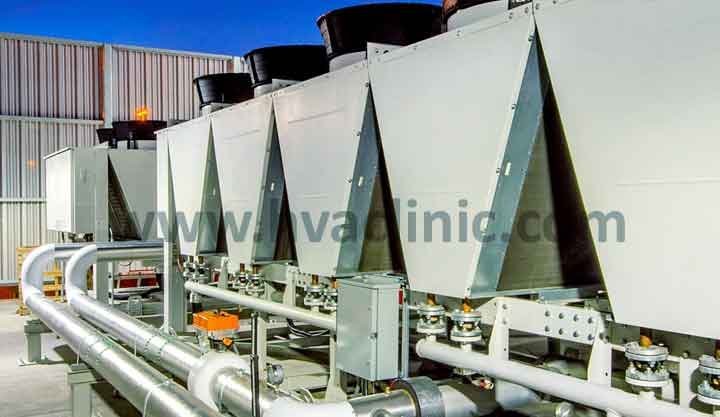
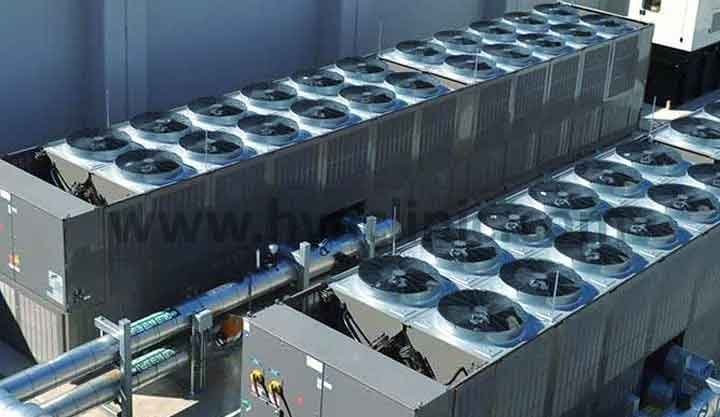
Air-cooled chillers reject heat directly to the surrounding air. They can be useful for temporary applications where a cooling tower or condenser-water system is not available.
However, outdoor ambient conditions are important because chiller capacity and power consumption can change with operating temperatures. ASHRAE identifies outdoor dry-bulb temperature as an important operating input for air-cooled chillers.
Water-Cooled Chillers
Water-cooled chillers reject heat through condenser water and typically require additional equipment such as cooling towers, pumps and associated water circuits.
They can be suitable for larger cooling requirements where the required infrastructure is available, but temporary installation becomes more complex.
The choice should therefore be based on the project’s cooling requirement, site infrastructure, installation period and operating conditions.
5. Evaluate Dubai’s Ambient Conditions
A chiller operating in Dubai must be capable of handling the local environment.
Dubai experiences very hot summers and relatively high humidity.
For an air-cooled rental chiller, high outdoor temperatures can affect heat rejection and operating efficiency. ASHRAE notes that chiller power consumption increases as condensing temperature rises, making operating conditions an important factor in equipment selection.
When requesting a quotation, ask the supplier to confirm the expected cooling capacity and performance under the actual site conditions rather than relying exclusively on nominal or laboratory ratings.
6. Check Electrical Requirements
A technically suitable chiller may still be unsuitable if the site cannot provide the required electrical supply.
Confirm details such as:
Voltage
Phase
Frequency
Connected load
Starting requirements
Available electrical capacity
Generator compatibility, if applicable
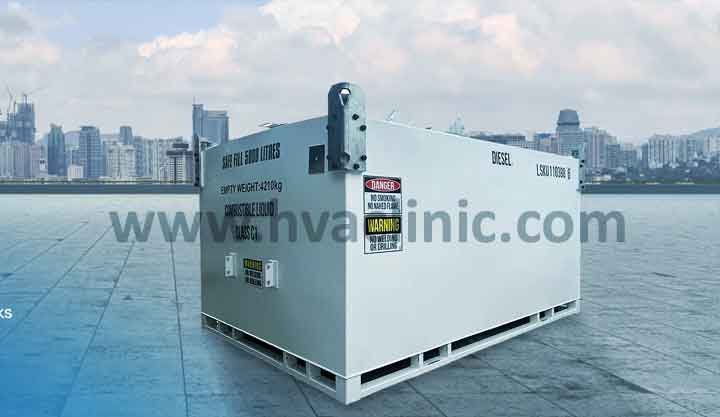
If the project is using temporary generators together with rental chillers, the electrical demand of the complete cooling system should be considered.
This is especially important for temporary sites where the electrical infrastructure may be limited.
7. Compare Efficiency, Not Just Rental Price
The lowest rental price does not necessarily represent the lowest overall cost.
Chillers consume electricity throughout their operation, so efficiency can have a substantial impact on the total cost of temporary cooling.
ASHRAE recommends considering life-cycle costs when selecting chilled-water equipment rather than concentrating solely on initial equipment cost. It also notes that some chillers perform better at full load while others may be more efficient at off-peak conditions.
When comparing rental proposals, ask for relevant performance information such as:
COP
kW/TR where applicable
Rated cooling capacity
Expected power consumption
Full-load performance
Part-load performance
Performance at the required chilled-water temperature
A slightly higher rental rate may be justified if the equipment provides better performance under the project’s actual operating conditions.
8. Don’t Ignore Part-Load Performance
A chiller does not necessarily operate at full capacity throughout the day.
Cooling requirements can change because of:
Outdoor temperature
Occupancy
Production schedules
Building usage
Equipment operation
Time of day
Seasonal conditions
ASHRAE’s guidance emphasizes the importance of evaluating chiller performance at both peak and off-peak conditions.
Therefore, ask how the proposed rental chiller performs at the expected operating load. A machine selected only for its maximum capacity may not provide the best operating economics when the actual load is significantly lower.
9. Examine Piping and Flow Requirements
The chiller itself is only one component of a temporary cooling system.
Before installation, check:
Chilled-water flow rate
Supply and return pipe sizes
Connection sizes
Pump requirements
Flexible hoses
Valves
Strainers
Operating pressure
Drainage
Water treatment requirements
ASHRAE identifies chilled-water distribution, piping and pump selection as important considerations in chilled-water plant design.
For an existing HVAC system, the rental equipment should be hydraulically compatible with the building’s chilled-water system.
10. Consider Available Space and Site Access
Temporary cooling equipment needs adequate space for installation, operation and maintenance.
Before delivery, determine where the chiller will be positioned and whether the location provides sufficient:
Equipment clearance
Airflow
Access for technicians
Access for delivery vehicles
Electrical connections
Pipe routing
Drainage
Safety clearance
For air-cooled chillers in particular, the location should allow adequate airflow around the condenser section.
Site access is also important. Large rental chillers may require suitable routes for transportation and lifting equipment.
11. Ask About Installation and Commissioning
A rental agreement should not be evaluated solely on the equipment supplied.
Ask what is included in the service package.
Depending on the project, this may include:
Equipment transportation
Positioning
Chilled-water connections
Electrical connections
Pump installation
Testing
Commissioning
System monitoring
Dismantling
Equipment collection
Proper commissioning helps verify that the temporary system is operating according to the required design conditions.
ASHRAE’s guidance on central chilled-water plants highlights commissioning as an important part of ensuring that cooling systems meet their intended design performance.
12. Check Maintenance and Technical Support
Temporary cooling equipment can become critical infrastructure, particularly when a rental chiller is replacing failed permanent equipment.
Ask the rental provider about:
Preventive maintenance
24/7 technical support
Emergency response
Technician availability
Spare parts
Fault monitoring
Routine inspections
Replacement equipment availability
For critical facilities, response time can be just as important as the chiller’s rated capacity.
A supplier that can provide technical support throughout the rental period may offer greater operational value than a supplier offering only equipment delivery.
13. Consider Redundancy for Critical Applications
Some facilities cannot afford a complete loss of cooling.
Data centres, healthcare facilities, industrial processes and other critical operations may require additional capacity or standby equipment.
The appropriate redundancy strategy depends on the consequences of cooling failure, the expected load and the facility’s operational requirements.
ASHRAE guidance on chiller plant control and sequencing considers operating capacity, part-load performance and the decision to bring additional chillers online.
For critical applications, discuss backup capacity with the rental provider before finalizing the equipment configuration.
14. Understand the Total Rental Cost
When comparing rental chiller quotations in Dubai, look beyond the headline daily, weekly or monthly rental rate.
The total cost may include:
Chiller rental
Transportation
Installation
Pumps
Temporary piping
Hoses
Electrical equipment
Generator requirements
Commissioning
Fuel, where applicable
Maintenance
Technician support
Dismantling
Collection
Additional accessories
Request a detailed quotation that clearly separates equipment rental from additional services.
This makes it easier to compare suppliers on a like-for-like basis.
15. Consider the Rental Duration
The required rental period can influence the most economical solution.
Short-term rental may be appropriate for:
Emergency breakdowns
Planned maintenance
Events
Temporary projects
Seasonal cooling requirements
Longer rental periods may be useful for:
Construction projects
Facility expansion
Temporary production requirementsExtended plant refurbishment
Delayed permanent equipment installation
Before signing the agreement, confirm the rental period, extension terms, minimum rental period and equipment collection arrangements.
16. Ask for a Complete Technical Proposal
Instead of asking only, “How much does a chiller cost to rent?”, provide the supplier with the project’s technical requirements.
A useful request for quotation should include:
Required cooling capacity
Chilled-water supply temperature
Chilled-water return temperature
Required flow
Operating hours
Site location
Available electrical supply
Required rental duration
Application
Installation requirements
Expected ambient conditions
Required redundancy
This gives the supplier enough information to recommend an appropriate configuration.
Rental Chiller Checklist for Dubai
Before choosing a rental chiller, confirm the following:
| Requirement | What to Check |
|---|---|
| Cooling capacity | Required TR or kW |
| Cooling load | Peak and expected operating load |
| Water temperature | Supply and return temperatures |
| Flow rate | Required chilled-water flow |
| Chiller type | Air-cooled or water-cooled |
| Ambient conditions | Dubai summer operating conditions |
| Power | Voltage, phase, frequency and load |
| Piping | Connection sizes and routing |
| Site | Space, access and airflow |
| Efficiency | COP, kW/TR and part-load performance |
| Installation | Delivery, connection and commissioning |
| Support | Maintenance and emergency response |
| Backup | Standby or additional capacity |
| Rental period | Short- or long-term requirement |
| Cost | Equipment plus installation and operating costs |
When Is Renting a Chiller in Dubai a Practical Choice?
Chiller rental can be a practical solution when cooling requirements are temporary, unexpected or likely to change.
Common situations include emergency chiller replacement, planned maintenance, construction projects, seasonal demand, facility expansion, industrial shutdowns and temporary events.
Dubai’s extensive use of chilled-water cooling also makes temporary cooling capacity useful when existing systems need additional support. ASHRAE has highlighted Dubai’s role in district cooling and the importance of effective chilled-water system design in the region.
For a long-term, predictable cooling requirement, however, purchasing a permanent system may make more sense. The decision should be based on the expected duration of use, capital investment, energy consumption, maintenance requirements and future cooling demand.
Final Thoughts
Choosing a rental chiller in Dubai should be treated as a technical decision rather than simply a price comparison.
The most important factors include cooling load, chilled-water temperatures, flow requirements, chiller type, Dubai’s ambient conditions, electrical supply, efficiency, site limitations, installation requirements, maintenance support and total rental cost.
ASHRAE guidance supports a comprehensive selection approach that considers load profiles, operating conditions, efficiency, distribution systems and life-cycle costs rather than selecting equipment based only on nominal capacity.
Before signing a rental agreement, provide the supplier with accurate project information and request a complete technical and commercial proposal. For critical operations, also consider standby capacity and emergency technical support.
A properly selected rental chiller can provide dependable temporary cooling while helping businesses manage equipment failures, maintenance periods, construction requirements, seasonal demand and unexpected increases in cooling load without committing to a permanent chiller installation.
Looking for Rental Chiller in UAE?
Engineered temporary cooling solutions across Dubai, Abu Dhabi, Sharjah, and Northern Emirates. High-efficiency air-cooled and water-cooled rental chillers from...