Chiller Oil Spectrophotometric & Dielectric Analysis: Moisture, TAN, and Wear Metals
Compressor lubricant is the lifeblood of a chiller. Laboratory oil analysis detects bearing wear and acid formation months before catastrophic mechanical failure.
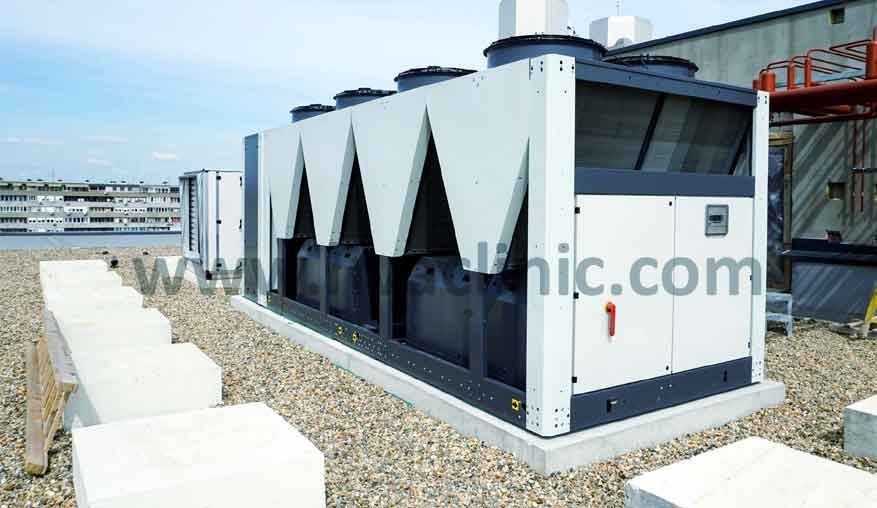
Commercial refrigeration compressors utilize specialized synthetic lubricants—primarily polyolester (POE) oils for HFC refrigerants (R134a, R410A) and polyalkylene glycol (PAG) or alkylbenzene for industrial circuits. The lubricant performs four vital functions: lubricating bearings, sealing rotor clearances, removing compression heat, and dampening acoustic vibration.
In the high-stress UAE operating environment, lubricants are subjected to continuous high discharge temperatures (>95°C). Under thermal stress and trace moisture contamination, synthetic esters undergo chemical hydrolysis, splitting back into aggressive organic acids and alcohol. Laboratory oil spectroscopy identifies internal degradation before physical breakdown occurs.
Engineering Principles & Technical Specifications
Standard laboratory oil analysis protocols include: Inductively Coupled Plasma (ICP) spectroscopy for wear metals ($Fe, Cu, Al, Pb$), Karl Fischer coulometric titration for moisture (ASTM D6304, threshold $<50 \text{ ppm}$), and Total Acid Number titration (ASTM D974, threshold $<0.05 \text{ mg KOH/g}$).
| Lubricant Test Parameter | Normal / Clean Baseline | Warning Threshold | Critical Danger Level | Physical Failure Indication |
|---|---|---|---|---|
| Moisture (Karl Fischer) | <35 ppm Moisture | 50 – 75 ppm Moisture | >100 ppm Moisture | Hydrolysis, acid formation, copper plating |
| Total Acid Number (TAN) | <0.03 mg KOH/g | 0.05 – 0.08 mg KOH/g | >0.10 mg KOH/g | Acid etching, motor insulation degradation |
| Iron (Fe) Wear Metal | <5 ppm Particulate | 10 – 25 ppm Fe | >35 ppm Fe | Rotor lobe contact, cylinder wall wear |
| Copper (Cu) Wear Metal | <10 ppm Particulate | 20 – 50 ppm Cu | >75 ppm Cu | Bronze thrust washer wear, coil leaching |
| Dielectric Breakdown | >30 kV Strength | 22 – 28 kV | <20 kV Breakdown | Hermetic motor short-circuit risk |
Step-by-Step Technical Execution & Mobilization Protocol
To ensure seamless reliability under extreme UAE summer ambient conditions (reaching +50°C to +52°C), our engineering logistics teams implement the following structured workflow:
- Hermetic Oil Sampling Under System Pressure: Extract a representative 250ml oil sample from the compressor sump while running at operating temperature, using a vacuum sampling bottle with sealed septum.
- Coulometric Karl Fischer Moisture Titration: Inject micro-liter oil samples into an automated Karl Fischer titration cell to determine exact dissolved moisture in parts per million (ppm).
- Potentiometric Acid Number (TAN) Determination: Titrate oil sample with potassium hydroxide (KOH) solution to measure total organic acid concentration resulting from oil oxidation.
- ICP Optical Emission Wear Metal Spectroscopy: Analyze elemental atomic emission spectra to detect microscopic concentrations of iron, copper, aluminum, tin, and lead wear metals.
- Diagnostic Recommendation Report Generation: Generate computerized trend charts comparing current test results with historical benchmarks, providing actionable filtration or oil replacement advice.
Common Operating Pitfalls & Desert Condition Mitigation
Operating HVAC and power plant equipment across Dubai, Abu Dhabi, Sharjah, and coastal industrial zones like JAFZA presents severe thermodynamic challenges. The following table of risks must be actively managed:
- Atmospheric Air Entering Sample Bottle: Use sealed pre-purged nitrogen-flushed sampling containers; exposing POE oil to ambient air for 15 minutes adds 30 ppm moisture.
- Sampling Stagnant Oil from Cold Compressor Bottom: Always sample oil after the compressor has run for at least 1 hour at normal operating temperature to ensure uniform particulate suspension.
- Ignoring Low TAN with High Moisture: Moisture can cause copper plating on bearings even before acid numbers spike; replace filter-driers immediately if moisture exceeds 50 ppm.
Turnkey Commercial Execution & SLA Guarantees
At HVAC Clinic, every deployment is backed by certified mechanical refrigeration technicians and electrical engineers. We maintain operational depot staging yards in Al Quoz (Dubai), Musaffah (Abu Dhabi), and Industrial Area (Sharjah), enabling guaranteed 60 to 120-minute emergency mobilization across all 7 Emirates.
Our temporary installations include turnkey high-pressure flexible hoses, Bauer quick-action couplings, variable primary pumping stations, double-walled fuel tanks, and round-the-clock telemetry monitoring. For specialized project sizing, explore our core Chiller Maintenance & Overhaul capabilities.
Frequently Asked Technical Questions
How often should chiller compressor oil be laboratory tested in Dubai?▼
What happens if moisture gets into POE chiller oil?▼
Can high acid in chiller oil be corrected without replacing the oil?▼
Looking for Chiller Maintenance?
Comprehensive industrial and commercial chiller maintenance services across Dubai, Abu Dhabi, Sharjah, and the UAE. Annual Maintenance Contracts (AMC), emergenc...