Commercial Cooling & Chiller Rental Solutions UAE
Commercial buildings in the UAE depend heavily on reliable cooling throughout much of the year. Offices, hotels, shopping centres, retail spaces, warehouses, healthcare facilities, construction projects, industrial sites and other commercial environments can experience serious operational problems when cooling capacity becomes unavailable or insufficient. A permanent HVAC system may be perfectly suitable during normal operation, […]
Commercial buildings in the UAE depend heavily on reliable cooling throughout much of the year. Offices, hotels, shopping centres, retail spaces, warehouses, healthcare facilities, construction projects, industrial sites and other commercial environments can experience serious operational problems when cooling capacity becomes unavailable or insufficient.
A permanent HVAC system may be perfectly suitable during normal operation, but businesses can still face situations where additional or temporary cooling is required. A chiller may fail unexpectedly, planned maintenance may require equipment to be taken offline, a building may experience a temporary increase in cooling demand, or a new project may need cooling before its permanent HVAC system is commissioned.
This is where commercial cooling and chiller rental solutions in the UAE can provide temporary capacity without requiring a business to purchase another permanent chiller.
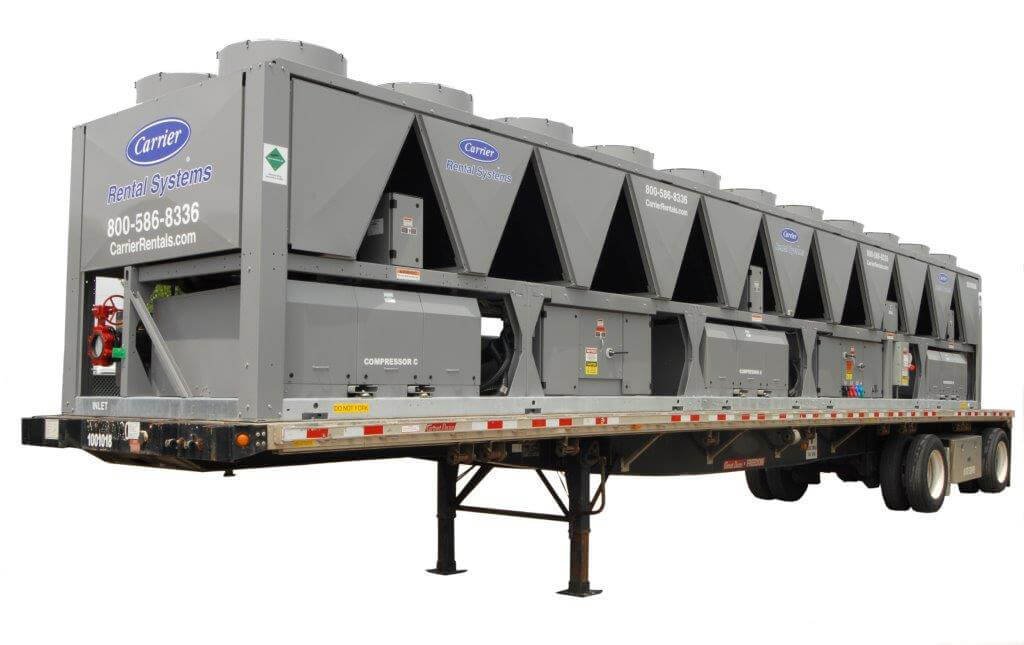
Rental providers in the UAE commonly offer temporary chillers and supporting equipment for emergency cooling, planned maintenance, peak-load support, construction, events, industrial processes and other applications. Current providers describe solutions ranging from short-term emergency hire to longer project-based arrangements, with equipment selection based on factors such as cooling load, temperature requirements, power availability, water flow and site conditions.
The UAE climate makes this subject particularly important. Government climate information describes the country as having a hot desert climate, with summer maximum temperatures reaching above 49°C in some areas. Dubai’s government information similarly describes extremely hot and humid summers, while Abu Dhabi information reports summer temperatures commonly reaching 35°C to 42°C with high humidity.
What Are Commercial Cooling and Chiller Rental Solutions?
Commercial cooling rental refers to the temporary provision of cooling equipment for a defined period rather than purchasing and permanently installing a complete cooling system.
A rental chiller is one type of temporary cooling equipment. It is generally used to produce chilled water, which can then be circulated through an appropriate cooling system such as air-handling units or other building or process heat exchangers.
The U.S. Department of Energy describes a chiller as a refrigeration system that cools water. Once cooled, that water can be used for applications including space cooling and process cooling.
In practical commercial applications, the rental arrangement can involve more than the chiller itself. Depending on the project, a temporary cooling package may include pumps, hoses or temporary pipework, electrical connections, control equipment, air-handling units and other accessories required to connect the equipment to the facility.
UAE rental providers describe packages that can include air-cooled chillers, water-cooled chillers, portable chillers, air-handling units and other temporary cooling equipment. The exact combination depends on the site and application rather than simply the size of the building.
This distinction is important because commercial cooling is not simply a matter of choosing the largest available chiller. The temporary system must be compatible with the building’s cooling load, connection arrangements, electrical infrastructure, operating temperatures and available space.
Why Do UAE Businesses Use Temporary Chiller Rental?
Businesses usually consider temporary cooling when their existing permanent cooling arrangement cannot meet the required demand for a particular period.
One common situation is an unexpected chiller breakdown. If the failed equipment is responsible for a large part of a building’s cooling capacity, waiting for a permanent repair or replacement can leave occupants, equipment or business operations exposed to uncomfortable or unsuitable temperatures.
Another situation is planned maintenance. A commercial facility may need to shut down a chiller for inspection, overhaul, repair or replacement. A temporary rental system can potentially maintain cooling during the period when the permanent equipment is unavailable.
Rental chillers can also be used when cooling demand temporarily increases. For example, a facility may add equipment, increase occupancy, expand operations or experience unusually high seasonal demand. Instead of permanently expanding the cooling plant for a short-term requirement, a business may consider temporary capacity.
Current UAE rental providers specifically identify emergency breakdowns, planned maintenance, peak-load support and temporary project requirements among the main reasons businesses use rental chillers.
How Does a Commercial Chiller Work?
Understanding how the equipment works makes it easier to understand what a rental solution actually provides.
A conventional mechanical-compression chiller uses a refrigeration cycle. The main refrigeration components include the evaporator, compressor, condenser and expansion valve. The U.S. Department of Energy identifies these as the four basic components of a mechanical compression refrigeration cycle.
The process begins when heat is transferred from the building’s water loop or process water into the chiller’s evaporator.
The refrigeration system removes this heat, causing the water to become chilled. Pumps then circulate the chilled water to the required cooling equipment.
In a commercial building, chilled water may be sent to cooling coils in air-handling units. Air passing across these coils is cooled before being distributed through the building’s air-conditioning system.
The warmed chilled water then returns to the chiller, where heat is removed again.
At the same time, the refrigeration cycle transfers the extracted heat to the condenser side. Depending on the type of chiller, that heat is rejected either directly to outdoor air or through a condenser-water and cooling-tower arrangement.
The cycle continues as long as cooling is required.
What Is the Difference Between Air-Cooled and Water-Cooled Chillers?
The two broad categories frequently considered for commercial applications are air-cooled chillers and water-cooled chillers.
Air-Cooled Chillers
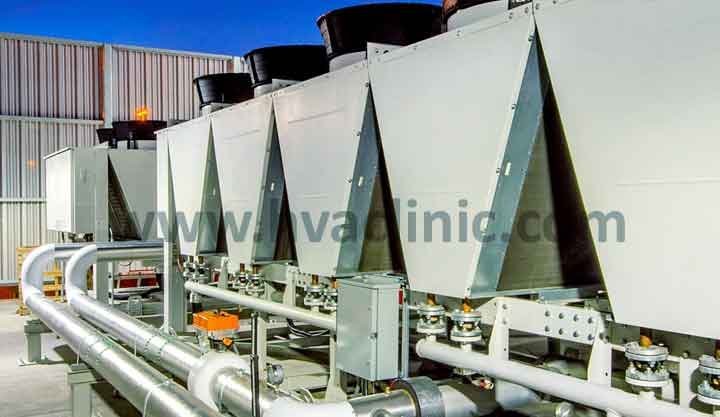
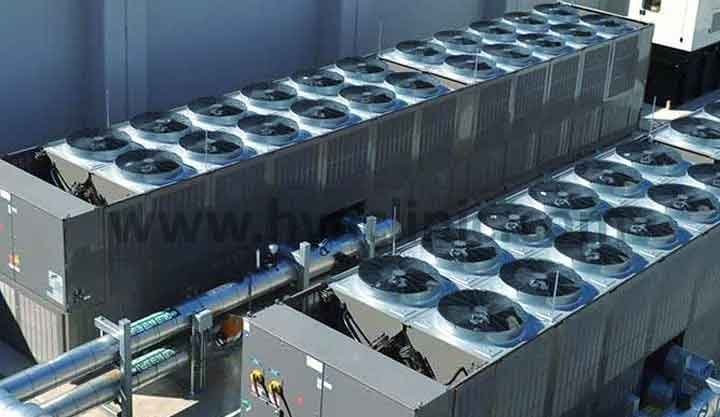
An air-cooled chiller rejects heat directly to the surrounding air, normally using condenser fans.
This configuration can simplify temporary installation because it does not require the same cooling-tower arrangement associated with a conventional water-cooled system.
UAE rental providers describe air-cooled chillers as suitable for applications where rapid deployment and simpler installation are important, including emergency, construction and temporary cooling requirements.
However, the equipment still needs adequate outdoor placement, electrical supply, airflow and appropriate connections. The UAE’s high ambient temperatures also need to be considered during equipment selection.
Water-Cooled Chillers
Water-cooled systems reject heat through a condenser-water circuit, normally associated with a cooling tower and related pumping equipment.
They can be suitable for larger or continuous cooling applications where the required infrastructure is available.
For temporary rental projects, the additional equipment and connection requirements can make the installation more involved than an air-cooled arrangement. The correct choice therefore depends on the application, existing infrastructure, required capacity and project duration.
Rental providers serving the UAE commonly distinguish between air-cooled and water-cooled configurations according to site requirements and application.
What Types of Commercial Cooling Equipment Can Be Rented?
A commercial cooling project may require more than a standalone chiller.
Depending on the application, rental fleets in the UAE can include:
Air-cooled chillers for temporary chilled-water production.
Water-cooled chillers for applications where suitable condenser-water infrastructure is available.
Air-handling units (AHUs) for distributing cooled air or connecting temporary chilled-water capacity to occupied spaces.
Packaged air-conditioning units for applications that require a different configuration from a central chilled-water system.
Portable air-conditioning units for localized or smaller cooling requirements.
Pumps, hoses and temporary pipework for moving chilled water between the rental equipment and the existing system.
Control and electrical equipment where required for safe and coordinated operation.
Current UAE suppliers list combinations of chillers, AHUs, packaged AC units, portable AC equipment and supporting accessories as part of temporary cooling solutions.
The equipment package should therefore be treated as a complete temporary cooling system rather than simply a rented machine.
When Is Commercial Chiller Rental Needed?
There is no single situation in which every business should rent a chiller. The requirement depends on the facility, cooling system and duration of the problem.
During an Unexpected Chiller Breakdown
An unexpected failure can remove a significant amount of cooling capacity from a commercial building.
A temporary rental chiller may be used while technicians diagnose the permanent system, obtain replacement components or complete repairs.
This approach can be particularly relevant where maintaining acceptable indoor conditions is important to continued business operations.
During Planned HVAC Maintenance
Maintenance is easier to schedule when a business knows that equipment will be unavailable.
A temporary chiller can potentially provide cooling while the permanent equipment is isolated for servicing.
Rental providers in the UAE specifically market temporary cooling for planned shutdowns and maintenance periods.
When Cooling Demand Temporarily Increases
A facility may require additional cooling during a temporary period of higher demand.
This could happen because of increased occupancy, additional equipment, seasonal demand or changes to the way a building is being used.
Temporary rental capacity can provide a way to address the additional requirement without automatically committing to a permanent cooling-plant expansion.
During Construction or Fit-Out
New commercial developments and refurbishment projects can have periods when permanent HVAC equipment is unavailable or not yet operational.
Temporary cooling can be used during certain construction, fit-out or commissioning stages, subject to the project’s engineering requirements.
Some UAE rental providers specifically identify construction, commissioning and project-based cooling among their applications.
During Equipment Replacement
Replacing a large permanent chiller can take time.
The existing system may need to be removed before the new system is ready for operation. Temporary cooling can serve as a bridge between those stages when the building cannot simply operate without cooling.
Which Commercial Facilities Can Use Chiller Rental?
Commercial chiller rental is not limited to one type of building.
Offices
Office buildings can use temporary cooling during chiller maintenance, HVAC replacement or unexpected failures. Maintaining suitable indoor conditions can be particularly important where employees and visitors occupy the facility throughout the working day.
Hotels and Hospitality Facilities
Hotels can have substantial and continuous cooling requirements. Guest rooms, restaurants, public areas and other spaces may require coordinated temperature control.
A temporary cooling arrangement may be considered when permanent HVAC equipment is undergoing maintenance or replacement.
Shopping Centres and Retail Buildings
Retail facilities often contain large occupied areas with substantial internal heat gains from lighting, people and equipment.
Temporary cooling can help provide additional capacity during maintenance or exceptional demand, depending on the existing HVAC configuration.
Warehouses and Commercial Storage Facilities
Cooling requirements vary significantly between warehouses. Some require comfort cooling, while others may require controlled temperatures for specific products or processes.
The required solution therefore depends on the actual application rather than the building being classified simply as a warehouse.
Healthcare Facilities
Cooling requirements in healthcare environments can be particularly sensitive. Any temporary HVAC arrangement should therefore be properly engineered, assessed and commissioned for the facility’s specific requirements.
Events and Temporary Facilities
Events, exhibitions and temporary structures can have short-duration cooling requirements.
Rental companies in the UAE list events, tents and temporary facilities among potential cooling applications.
How Is the Correct Chiller Capacity Selected?
Selecting the correct cooling capacity is one of the most important parts of a commercial cooling rental project.
A common mistake is to choose equipment based only on the building’s floor area.
The actual requirement can be influenced by:
- Building size and configuration
- Occupancy
- Outdoor design conditions
- Internal heat loads
- Equipment and machinery
- Lighting
- Required indoor temperature
- Existing HVAC configuration
- Chilled-water supply and return conditions
- Process requirements
- Operating schedule
- Required redundancy
- Available electrical capacity
Current UAE rental providers state that selection can involve factors such as cooling load, leaving-water temperature, ambient conditions, electrical supply, pumping arrangements, pipe routes and operating duration.
This is why published tonnage ranges should not automatically be treated as a recommendation for a particular building.
A proper assessment should establish the actual cooling requirement before the equipment is selected.
Why Does the UAE Climate Matter for Chiller Selection?
The UAE’s climate places significant demands on cooling systems.
The UAE government climate atlas describes a desert climate, with average temperatures during the hot months of April through September generally around 30°C to 40°C and summer maximum temperatures exceeding 49°C in some parts of the country. It also reports high summer humidity in the UAE.
Dubai’s government information reports average summer high temperatures around 41.8°C, while Abu Dhabi information gives typical summer maximum temperatures of 35°C to 42°C and humidity levels between 60% and 100%.
These conditions matter because chiller performance and heat rejection are affected by outdoor conditions.
For temporary rental projects, equipment selection therefore needs to consider the expected ambient conditions rather than simply looking at nominal capacity under a different test condition.
This is one reason UAE rental suppliers specifically promote equipment designed for high-ambient operation.
What Is the Commercial Chiller Rental Process in the UAE?
Although individual suppliers have different procedures, the rental process generally follows several technical stages.
1. Requirement Assessment
The business provides information about the building, application, required cooling period and existing HVAC arrangement.
If the required capacity is unknown, a technical assessment may be necessary.
2. Cooling Load and Equipment Selection
The supplier determines the appropriate chiller configuration based on cooling demand, operating conditions and compatibility requirements.
The objective is not simply to select the largest unit available. The equipment needs to deliver suitable capacity under the expected operating conditions.
3. Site Planning
Before delivery, the project team may need to review equipment placement, access routes, electrical supply, chilled-water connections, pumping requirements, pipe routes and other site conditions.
4. Delivery
The selected equipment is transported to the site.
Access needs to be considered in advance because commercial chillers and supporting equipment can be large and heavy.
5. Connection and Installation
The temporary system is connected to the building’s existing chilled-water system or another approved temporary distribution arrangement.
Depending on the project, this may involve pumps, hoses, pipework, AHUs, electrical connections and controls.
6. Testing and Commissioning
Before normal operation, the system should be checked and commissioned to verify that the temporary cooling arrangement operates as intended.
7. Operation and Technical Support
During the rental period, monitoring and technical support may be provided according to the rental agreement.
8. Removal
Once the permanent cooling system is restored or the project ends, the temporary equipment can be disconnected and removed.
UAE providers such as Stout Energy and Rental Power describe similar workflows involving assessment, deployment, installation, commissioning, operation and collection.
What Information Should a Business Give a Chiller Rental Company?
Providing accurate project information can make the equipment-selection process more efficient.
Useful information can include:
Required cooling capacity: If known, provide the existing chiller capacity or calculated cooling load.
Application: Explain whether the requirement is for office cooling, hotel cooling, process cooling, an event, maintenance or emergency backup.
Rental period: State whether the requirement is for days, weeks, months or a longer project.
Existing HVAC system: Information about the current chiller, AHUs, pumps and chilled-water circuit can help determine compatibility.
Required temperatures: Provide the required supply-water temperature and other relevant operating conditions when available.
Electrical supply: The available electrical capacity and connection arrangement should be established before deployment.
Site location and access: Equipment delivery and positioning depend on physical access.
Installation requirements: Explain whether the rental company needs to provide pumps, hoses, temporary pipework, AHUs or other accessories.
The more complete the information, the easier it is to evaluate the appropriate temporary cooling configuration.
What Factors Affect Commercial Chiller Rental Cost in the UAE?
There is no single rental price that applies to every commercial cooling project.
Current UAE rental providers state that pricing can depend on factors such as cooling capacity, rental duration, delivery distance, accessories, power requirements and installation complexity.
Cooling Capacity
Larger cooling requirements generally require larger or multiple units, which can affect equipment and logistics costs.
Rental Duration
A short emergency rental and a long-term project rental have different commercial structures.
Chiller Type
Air-cooled and water-cooled systems can have different equipment and installation requirements.
Installation Complexity
A simple temporary connection can be very different from a project requiring extensive temporary pipework, pumps, electrical work or air-handling equipment.
Location
Delivery distance, site access and logistics can influence the total project cost.
Supporting Equipment
A quote may need to include pumps, hoses, AHUs, cables, controls or other accessories in addition to the chiller itself.
For this reason, comparing rental prices based only on the advertised chiller capacity can produce misleading results. The more useful comparison is between complete solutions that provide the required cooling under the project’s actual conditions.
What Are the Advantages of Commercial Chiller Rental?
One of the main advantages is flexibility.
A business does not necessarily need to purchase a permanent cooling system when the requirement is temporary.
Rental can also reduce the need for a major capital purchase for a short-duration requirement. Current UAE rental providers commonly describe temporary cooling as a way to obtain cooling capacity without purchasing permanent equipment.
Another advantage is scalability.
If a project requires additional capacity for a defined period, temporary equipment can potentially be added and later removed when demand returns to normal.
Rental can also provide a bridge during equipment replacement. Instead of leaving a commercial facility without cooling while a permanent chiller is being repaired or replaced, temporary equipment can be considered as part of the continuity plan.
What Are the Limitations of Chiller Rental?
Rental is not automatically the right solution for every cooling requirement.
A temporary system still requires suitable site conditions, electrical infrastructure, connection points and sufficient space.
Installation can also require engineering coordination. Large equipment may require appropriate access for delivery and positioning.
There is also the possibility that the existing building’s distribution system is not suitable for direct connection to the rental equipment. In such cases, additional equipment or modifications may be required.
Finally, correct capacity selection remains essential. A rental chiller that is too small may fail to meet the cooling demand, while excessive capacity can result in unnecessary equipment and operating costs.
What Should You Check Before Renting a Commercial Chiller?
Before agreeing to a rental, businesses should confirm several technical and commercial details.
First, verify the actual cooling requirement rather than selecting equipment based solely on building size.
Next, confirm whether the selected chiller is appropriate for the expected UAE ambient conditions.
Check the required chilled-water temperatures and flow rates.
Confirm available electrical capacity.
Review where the equipment will be positioned and whether the site has adequate access for delivery.
Confirm whether pumps, hoses, temporary pipework, AHUs and electrical accessories are included.
Establish who will perform installation and commissioning.
Ask how technical support is handled during the rental period.
Finally, clarify what happens at the end of the rental period and how equipment collection will be coordinated.
These checks help ensure that the rental arrangement covers the complete cooling requirement rather than supplying equipment that cannot be properly integrated with the building.
Commercial Cooling Rental vs Buying a Permanent Chiller
The decision between renting and buying depends largely on the duration and nature of the cooling requirement.
A permanent purchase can make sense when a facility has a stable, long-term cooling requirement and the infrastructure and capital budget support ownership.
Rental can be considered when cooling is required temporarily, when demand is uncertain, during emergency breakdowns, while permanent equipment is being replaced, or when a business needs additional capacity for a defined period.
Neither approach is universally suitable.
The important question is whether the required cooling capacity is temporary or permanent, and whether the total cost and operational requirements support ownership or rental.
How Do Temporary Chillers Support Business Continuity?
Cooling is often part of a wider business-continuity requirement.
When a commercial building loses cooling, the impact can extend beyond comfort. Employees may be affected, customers may experience unsuitable conditions, temperature-sensitive areas may require protection, and certain operations may need to reduce activity.
A temporary chiller can provide an alternative cooling source while the permanent system is unavailable.
This is why UAE rental companies position temporary chillers for breakdown response, planned maintenance, peak-load support and project-based applications.
The rental system itself does not eliminate the underlying fault in the permanent HVAC plant. Instead, it can provide temporary cooling capacity while the permanent solution is being addressed.
Are Commercial Chiller Rentals Available for Short and Long Periods?
Yes. UAE providers advertise both short-term and longer-term rental arrangements.
Short-term rental can be useful for emergency breakdowns, maintenance periods, events or other brief requirements.
Longer arrangements can support extended construction projects, industrial operations, seasonal requirements or situations where permanent cooling capacity is not immediately available.
Rental Power, for example, describes daily and weekly hire alongside monthly, seasonal and project-based arrangements, while HVAC Clinic describes short-term and long-term rental options.
The appropriate rental period should reflect the actual project schedule, including sufficient time for installation, testing and removal where necessary.
What Makes a Chiller Rental Solution Suitable for UAE Commercial Projects?
A suitable solution should be based on the actual application rather than a generic equipment package.
For a UAE commercial project, important considerations include the expected outdoor conditions, cooling load, required water temperatures, electrical availability, site access, equipment placement, connection method and rental duration.
The supplier should also understand whether the requirement is emergency cooling, planned maintenance, additional capacity, temporary project cooling or another application.
UAE rental providers currently describe solutions covering commercial, industrial, construction, event and emergency applications, with equipment ranges and configurations varying between suppliers.
Frequently Asked Questions
What is a commercial chiller rental?
A commercial chiller rental is a temporary cooling arrangement in which a business hires chiller equipment for a defined period instead of purchasing a permanent cooling system. The chiller can be connected to an existing HVAC system or incorporated into a temporary cooling configuration, depending on the project.
How does a rental chiller provide cooling?
A mechanical chiller removes heat from water through a refrigeration cycle. The chilled water is then circulated to cooling equipment such as air-handling units or other heat exchangers. The warmed water returns to the chiller, where the cycle begins again.
Can a chiller be rented during HVAC maintenance?
Yes. Planned maintenance is one of the common applications described by UAE chiller rental providers. Temporary cooling can help maintain operations while permanent cooling equipment is taken offline.
Can commercial businesses rent chillers for emergencies?
Yes. Emergency breakdown support is a common rental application. The actual response time and equipment availability depend on the supplier, location, equipment requirement and site conditions.
Are air-cooled chillers suitable for the UAE?
Air-cooled chillers are used for temporary and commercial cooling applications in the UAE. However, the selected equipment needs to be appropriate for the expected ambient conditions and required cooling load. Several UAE suppliers specifically list high-ambient air-cooled equipment for local applications.
How much does commercial chiller rental cost in the UAE?
There is no universal price. Cost depends on factors such as capacity, rental duration, equipment type, delivery, installation, accessories, power requirements and site conditions. UAE providers generally quote according to the individual project.
How long can a commercial chiller be rented?
Rental periods can range from short emergency requirements to longer project or seasonal arrangements. The available rental period depends on the supplier and equipment, while the appropriate duration depends on the project’s cooling requirement.
Can rental chillers connect to an existing HVAC system?
They can be connected to an existing system when the chiller, water temperatures, flow requirements, connections and other system characteristics are compatible. A technical assessment should confirm compatibility before installation.
What information is needed to rent a chiller?
Useful information includes cooling capacity, application, required temperatures, rental duration, site location, existing HVAC configuration, electrical supply and connection requirements. If the capacity is unknown, a technical site assessment may be required.
Final Thoughts
Commercial cooling and chiller rental solutions in the UAE provide businesses with a temporary way to maintain or increase cooling capacity when permanent systems cannot meet the immediate requirement.
The technology itself is based on a well-established refrigeration process: a chiller removes heat from water, and that chilled water can then be used for building or process cooling.
The rental side adds flexibility by allowing businesses to use cooling equipment for a defined period rather than immediately investing in permanent capacity.
For UAE projects, equipment selection needs to account for the country’s demanding summer conditions, the building’s actual cooling load, available power, water flow, site access, connection requirements and intended rental duration. Government climate information confirms the exceptionally high temperatures experienced across the country, while UAE rental providers identify emergency breakdowns, planned maintenance, peak-load support and temporary projects as common applications.
For that reason, the most important part of a commercial cooling rental project is not simply finding a chiller with a particular tonnage. It is selecting and configuring a complete temporary cooling solution that matches the building, operating conditions and duration of the requirement.
Looking for Rental Chiller in UAE?
Engineered temporary cooling solutions across Dubai, Abu Dhabi, Sharjah, and Northern Emirates. High-efficiency air-cooled and water-cooled rental chillers from...