Short-Term Emergency Chiller Hire in UAE
Cooling is an essential part of operating many commercial, industrial, hospitality, retail, and critical facilities in the UAE. When a central chiller suddenly fails, a facility enters an unplanned maintenance period, or existing cooling capacity is temporarily insufficient, waiting weeks for a permanent replacement is often impractical. Short-term emergency chiller hire in the UAE provides […]
Cooling is an essential part of operating many commercial, industrial, hospitality, retail, and critical facilities in the UAE. When a central chiller suddenly fails, a facility enters an unplanned maintenance period, or existing cooling capacity is temporarily insufficient, waiting weeks for a permanent replacement is often impractical. Short-term emergency chiller hire in the UAE provides temporary cooling capacity while the original system is repaired, replaced, upgraded, or brought back into service.
A rental chiller is not simply a machine delivered to a site. A suitable temporary cooling arrangement needs to match the required cooling load, chilled-water temperatures, flow requirements, available electrical supply, site access, connection points, and operating conditions. UAE rental providers commonly assess these factors before selecting and installing equipment.
Short-term hire can cover a few days, several weeks, or another defined period depending on the emergency and the time required to restore the permanent cooling system. It can also provide additional capacity during planned maintenance, seasonal demand, construction, commissioning, or temporary increases in cooling requirements.
What Is Short-Term Emergency Chiller Hire in the UAE?
Short-term emergency chiller hire is the temporary rental of cooling equipment for a limited period when a building, facility, process, or project needs additional or replacement cooling capacity.
Instead of purchasing a permanent chiller, the business hires equipment that can be delivered, connected, commissioned, operated, supported, and eventually removed when the temporary requirement ends.
Depending on the application, a rental package can include the chiller itself together with pumps, hoses, temporary pipework, electrical equipment, buffer tanks, heat exchangers, air handling units, fan coil units, or other accessories. The exact arrangement depends on the existing HVAC system and the site’s cooling requirements.
For emergency applications, the objective is generally to restore or supplement cooling while the permanent system is unavailable. This makes temporary chiller hire particularly relevant where a cooling interruption could affect business operations, production, equipment, inventory, building occupants, or other temperature-sensitive requirements.
Why Is Emergency Chiller Hire Important in the UAE?
The UAE has a substantial cooling requirement because of its hot climate and extensive use of air conditioning. The U.S. Department of Commerce notes that the UAE is one of the world’s cooling-intensive markets and reports that cooling can account for approximately 60% to 70% of peak electricity consumption during summer months.
Cooling demand is also significant across Dubai’s commercial, residential, hospitality, retail, and mixed-use sectors. Dubai’s Media Office reported that Empower’s district-cooling customers increased consumption by 20% in the first half of 2024 compared with the same period in 2023.
This does not mean every facility requires emergency rental equipment. However, it explains why maintaining adequate cooling capacity can be important, particularly when a facility depends on a central chilled-water system.
A failed chiller during a period of high cooling demand can leave a building with insufficient capacity. A temporary chiller can provide a bridge until permanent equipment is repaired or replaced.
When Is Short-Term Emergency Chiller Hire Needed?
There is no single situation that automatically requires a rental chiller. The requirement depends on the facility, available cooling capacity, duration of the problem, operating conditions, and consequences of reduced cooling.
The following are among the common situations identified by UAE rental providers.
1. When an Existing Chiller Breaks Down
An unexpected chiller failure is one of the clearest reasons to consider emergency chiller hire.
A facility may have one failed unit while other chillers remain operational, or the failure may significantly reduce the total available cooling capacity. In either case, the facility team needs to determine whether the remaining system can handle the current load.
If it cannot, a temporary chiller can provide additional capacity while technicians investigate and repair the permanent equipment.
UAE rental providers specifically describe emergency chiller rental as a solution for unexpected breakdowns and temporary replacement capacity.
2. During Major Chiller Repairs
Some chiller repairs cannot be completed quickly.
A minor fault may be resolved without requiring temporary cooling, but major compressor, heat-exchanger, electrical, controls, or other equipment problems can require more extensive work.
If the affected facility must continue operating during the repair, short-term chiller hire can act as a temporary cooling source.
The rental period can then be aligned with the expected repair or restoration period rather than requiring the business to purchase another permanent machine for a temporary problem.
3. During Planned Maintenance
Emergency cooling is not limited to unexpected failures.
Businesses can also arrange temporary chiller hire before planned maintenance when the permanent cooling system needs to be shut down.
This approach allows facility managers to prepare the temporary arrangement before the maintenance window begins. Providers commonly identify planned maintenance and shutdowns as applications for temporary chillers.
Planning in advance also gives engineers more time to verify the cooling load, connection points, power supply, equipment access, pipe routes, and installation requirements.
4. When a Chiller Is Being Replaced
Replacing a permanent chiller can involve equipment procurement, delivery, removal of the old unit, installation, electrical work, pipe connections, testing, and commissioning.
The complete process may take longer than the facility can comfortably operate without sufficient cooling.
A temporary chiller can therefore serve as a bridge between removal of the old equipment and successful commissioning of the new system.
This is particularly relevant for commercial buildings and industrial facilities where shutting down the entire cooling operation is not practical.
5. During Peak Summer Cooling Demand
A facility may have working chillers but still experience a temporary shortage of cooling capacity.
This can happen when cooling demand increases because of seasonal conditions, higher occupancy, production changes, temporary expansion, or additional equipment.
Rental providers identify peak-load support and seasonal demand as common applications for temporary chiller systems.
In such cases, the rental chiller does not necessarily replace the permanent system. Instead, it supplements the available cooling capacity.
6. During Construction and Fit-Out Projects
Temporary cooling can also be required before a permanent HVAC system is fully available.
Construction and fit-out projects may have temporary offices, enclosed work areas, equipment, commissioning activities, or other spaces that require controlled temperatures.
Rental chiller systems can provide temporary cooling during construction, commissioning, testing, or phased occupation. UAE rental providers list construction and project-based temporary cooling among their applications.
7. For Industrial Process Cooling
Not every chiller requirement is related to building comfort.
Industrial facilities can use chilled water as part of manufacturing or process operations. If the primary cooling equipment becomes unavailable, the effect can extend beyond indoor comfort to production processes and equipment.
For process applications, selecting the correct temporary chiller requires more than estimating building size. Engineers need to understand the process load, required water temperature, flow, operating schedule, and system connection requirements.
Al Shola, for example, states that rental chiller selection is assessed around cooling load, leaving-water temperature, ambient conditions, electrical supply, pumping arrangements, pipe routes, and operating period.
How Does Short-Term Emergency Chiller Hire Work?
A professional emergency chiller rental process normally starts with understanding the actual cooling requirement.
Step 1: Identify the Cooling Problem
The first step is to determine why temporary cooling is required.
The facility may be dealing with a complete chiller failure, reduced capacity, planned maintenance, replacement work, seasonal demand, or another temporary requirement.
The rental provider needs enough information to understand whether the temporary unit will replace unavailable capacity or supplement an existing system.
Step 2: Determine the Required Cooling Capacity
Chiller capacity is commonly expressed in refrigeration tons, or TR.
Capacity should not be selected simply because a particular rental machine is available. It should be based on the actual cooling requirement and operating conditions.
Relevant information can include the cooling load, supply and return-water temperatures, required flow rate, application, ambient conditions, and operating profile.
UAE rental providers specifically emphasize that equipment selection should be based on cooling load and site requirements rather than capacity alone.
Step 3: Check Power Requirements
The temporary chiller needs an appropriate electrical supply unless the rental configuration includes another suitable power arrangement.
The electrical characteristics of the equipment must be compatible with the site’s available supply.
For example, published UAE rental specifications include equipment designed for three-phase electrical supplies, but actual electrical requirements vary by machine and configuration.
This is why the available power should be confirmed before equipment is dispatched.
Step 4: Check Chilled-Water Connections
A temporary chiller must be connected correctly to the building or process system.
Engineers may need to review supply and return connections, pipe sizes, flow rates, pressure requirements, connection locations, hose requirements, and isolation arrangements.
Where the existing system cannot be connected directly, additional equipment such as pumps, heat exchangers, temporary pipework, or buffer tanks may be required.
Step 5: Assess Site Access and Placement
Large rental chillers require appropriate space and safe access for delivery and installation.
The site assessment may therefore consider:
- Available placement area
- Delivery route
- Vehicle access
- Lifting requirements
- Pipe routes
- Electrical connections
- Water connections
- Equipment clearances
- Drainage and operational considerations
Al Shola’s UAE rental guidance specifically identifies access, placement, lifting requirements, pipe routes, and connection points as factors that should be reviewed during rental planning.
Step 6: Delivery, Installation and Commissioning
Once the equipment and site arrangement are confirmed, the chiller can be delivered and installed.
The temporary system should be tested and commissioned before normal operation begins. This helps confirm that the selected equipment, connections, flow, controls, and operating conditions are working as intended.
Some UAE rental providers describe their service as including delivery, installation, commissioning, operation, and technical support.
Step 7: Operation and Technical Support
The rental period does not necessarily end after installation.
For a critical cooling requirement, the facility may need monitoring, maintenance, troubleshooting, and technical support throughout the rental period.
The level of support depends on the provider and contract, so businesses should confirm what is included before accepting a quotation.
What Types of Chillers Can Be Used for Emergency Hire?
The appropriate chiller type depends on the application and site.
Air-Cooled Chillers
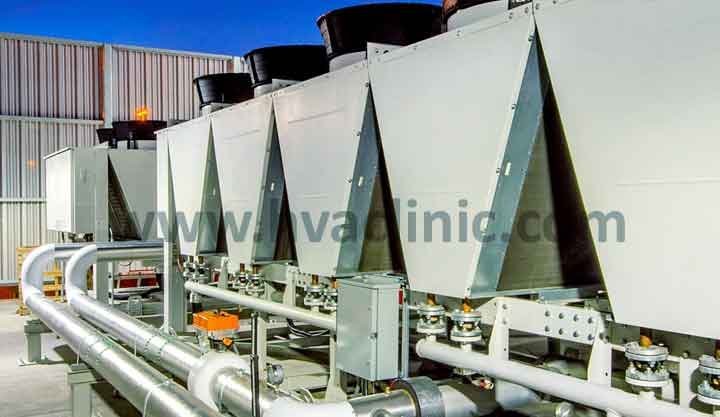
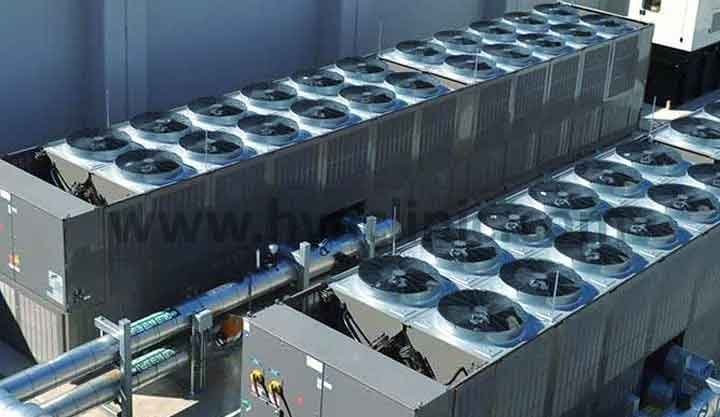
Air-cooled chillers reject heat directly to the surrounding air and can be useful where a temporary cooling installation needs to avoid reliance on a cooling tower.
Several UAE rental providers advertise air-cooled chillers for temporary, industrial, commercial, and emergency applications. Al Shola currently lists air-cooled rental chillers from 50 TR to 400 TR and describes high-ambient equipment designed for demanding GCC conditions.
The actual suitable capacity still needs to be determined from the project’s cooling requirements.
Water-Cooled Chillers
Water-cooled chillers use a water-based heat-rejection arrangement and can be appropriate for larger or specific industrial and process applications where the required infrastructure is available.
They can involve additional requirements such as cooling towers, pumps, condenser-water connections, and suitable water management.
For this reason, the choice between air-cooled and water-cooled equipment should be based on the site’s technical requirements rather than simply choosing the largest available unit.
How Is Emergency Chiller Capacity Selected?
Selecting the correct capacity is one of the most important parts of a short-term chiller rental.
An undersized chiller may not provide sufficient cooling during peak conditions. An unnecessarily oversized unit may add equipment, installation, transportation, and operating requirements without providing a corresponding benefit.
The calculation should consider the actual load rather than relying only on floor area.
Important information may include:
Cooling load: How much heat needs to be removed?
Supply-water temperature: What temperature does the building or process require?
Return-water temperature: What temperature returns to the chiller?
Flow rate: How much chilled water must circulate through the system?
Ambient conditions: What outdoor conditions will the equipment encounter?
Operating schedule: Will the chiller operate continuously or during defined periods?
Existing capacity: How much cooling remains available from the permanent system?
Application: Is the requirement for comfort cooling, process cooling, equipment protection, or another purpose?
Rental providers in the UAE use these types of factors when assessing temporary chiller requirements.
What Information Should You Give a Chiller Rental Company?
Providing accurate technical information can make the assessment faster.
Before requesting short-term emergency chiller hire in the UAE, a facility manager should ideally have information about the required cooling capacity or heat load, supply and return temperatures, flow rate, power availability, site location, connection points, access conditions, and expected rental duration.
If the required tonnage is unknown, that does not necessarily prevent an enquiry. A rental provider can review the available system information and determine what additional information or site assessment is required.
Al Shola specifically asks customers to provide information such as required TR or heat load, supply and return temperatures, flow, available power, connection points, site access, location, and rental duration.
How Long Can You Hire an Emergency Chiller?
The appropriate rental period depends on the reason for the temporary cooling requirement.
A short emergency may require equipment for only a few days. A major repair or replacement project could require several weeks or longer.
UAE rental providers advertise short-term arrangements covering daily, weekly, and monthly requirements, while longer-term contracts can be used for extended industrial or project applications.
The rental period should ideally include enough time for the permanent cooling system to be repaired, tested, commissioned, and confirmed operational.
What Affects Short-Term Chiller Hire Cost in the UAE?
There is no universal rental price for every emergency chiller project.
Current UAE rental information indicates that pricing can depend on cooling capacity, rental duration, chiller type, installation requirements, location, accessories, transportation, and technical support.
A short emergency rental can also involve mobilisation and installation costs that would not be present in exactly the same way for a longer planned project.
Businesses should therefore compare the complete quotation rather than looking only at the basic daily equipment rate.
A quotation may need to clarify whether it includes delivery, installation, hoses, pumps, electrical work, commissioning, monitoring, maintenance, collection, and emergency support.
Why Is High-Ambient Performance Important in the UAE?
The UAE’s outdoor conditions can place significant demands on cooling equipment.
For temporary chiller projects, the equipment’s operating conditions should therefore be checked against the expected ambient temperature and required cooling duty.
Some UAE rental providers specifically advertise high-ambient chillers designed for GCC conditions. Al Shola, for example, describes certain rental chillers as suitable for high-ambient conditions and states that specific equipment can operate at temperatures up to 55 degrees Celsius, subject to project design and operating conditions.
This does not mean every rental chiller has the same performance at every outdoor temperature. The equipment’s published operating limits and actual project requirements should be verified before selection.
Which Businesses May Need Emergency Chiller Hire?
Short-term emergency cooling can be relevant to a range of UAE facilities.
Commercial Buildings
Offices, shopping facilities, retail properties, and mixed-use buildings may need temporary cooling when existing central HVAC equipment becomes unavailable.
Hotels and Hospitality Facilities
Hotels depend on consistent temperature control for guest areas and operational spaces. Temporary cooling can be considered during equipment failure, planned maintenance, replacement, or periods of additional demand.
Industrial Facilities
Factories and process facilities may need temporary cooling for production areas, machinery, processes, or temperature-sensitive operations.
Data Centres and Critical Environments
Facilities containing sensitive technical equipment may have strict cooling requirements. Any temporary arrangement needs careful consideration of redundancy, load, electrical supply, connection methods, and monitoring.
Warehouses
Certain warehouses may require temperature-controlled environments for products, equipment, or working conditions.
Construction and Temporary Projects
Construction, commissioning, events, and temporary facilities may require cooling for a defined period before permanent systems are ready.
UAE rental providers list commercial buildings, data centres, warehouses, construction, events, industrial facilities, and emergency cooling among temporary chiller applications.
Emergency Chiller Hire vs Buying a Permanent Chiller
Emergency rental and permanent equipment serve different purposes.
Buying a chiller can make sense when cooling demand is long-term, predictable, and the business is prepared for the capital expenditure, maintenance, installation, depreciation, and ownership responsibilities.
Short-term rental is more relevant when the requirement is temporary, unexpected, seasonal, or connected to a specific project.
For example, purchasing a new permanent chiller solely because an existing machine has unexpectedly failed may not be the fastest way to restore cooling. A rental unit can provide temporary capacity while the facility evaluates the permanent repair or replacement.
UAE rental guidance similarly identifies emergency failures, planned maintenance, seasonal requirements, construction, events, and temporary production increases as situations where rental can be considered.
What Are the Main Benefits of Short-Term Emergency Chiller Hire?
The main benefit is temporary access to cooling capacity without committing to a permanent equipment purchase.
Other potential advantages include:
Faster temporary capacity: Rental equipment can provide a bridge while permanent equipment is unavailable.
Flexible rental duration: The hire period can be aligned with the emergency, maintenance window, or project.
Reduced capital commitment: A business does not have to purchase a permanent chiller for a short-lived requirement.
Scalable cooling: Additional units can potentially be configured when the required load is larger or changes during the project.
Support during maintenance: Facilities can maintain cooling while permanent equipment is taken offline.
Support during replacement: Temporary equipment can bridge the gap between removal and commissioning of permanent equipment.
These benefits depend on equipment availability, site conditions, technical compatibility, and the rental agreement.
What Should You Check Before Hiring an Emergency Chiller?
An emergency situation can create pressure to accept the first available machine. However, technical compatibility remains important.
Before confirming a rental, check:
Cooling capacity: Is the unit suitable for the actual load?
Water temperatures: Are the required supply and return temperatures compatible?
Flow requirements: Can the temporary system deliver the required water flow?
Electrical supply: Is the available power suitable for the selected equipment?
Connection arrangement: Can the chiller be safely integrated with the existing system?
Site access: Can the equipment reach the installation location?
Equipment placement: Is there sufficient safe space for the chiller and accessories?
Installation scope: Are pumps, hoses, pipework, electrical connections, and other accessories included where required?
Support: What technical assistance is available during the rental?
Rental duration: Is the equipment available for the entire expected repair or replacement period?
High-ambient suitability: Is the equipment appropriate for the expected UAE operating conditions?
These checks reflect the same core assessment factors identified in current UAE rental guidance.
How Can Businesses Prepare for a Chiller Emergency Before It Happens?
The best time to investigate temporary cooling requirements is before a major failure occurs.
Facility managers can document the cooling capacity of existing chillers, supply and return temperatures, flow requirements, electrical information, connection points, available equipment space, and access routes.
They can also identify which areas are most critical if cooling capacity is reduced.
Having this information available can help a rental provider understand the requirement more quickly when an emergency occurs.
A contingency plan can also identify whether temporary cooling would replace the entire system or support only selected areas.
For facilities where cooling interruption has significant consequences, this type of preparation can reduce the amount of technical information that needs to be collected during a breakdown.
Emergency Chiller Hire for Planned and Unplanned Situations
Although the phrase emergency chiller hire suggests an unexpected failure, short-term rental can be used in both planned and unplanned situations.
An unplanned situation might involve a sudden chiller breakdown, compressor failure, loss of cooling capacity, or unexpected demand.
A planned situation could involve scheduled maintenance, equipment replacement, building refurbishment, commissioning, construction, or a known period of additional cooling demand.
The common factor is that the need for cooling is temporary.
That is why short-term chiller hire can function as a bridge between the facility’s current cooling requirement and the point when its permanent system becomes available again.
Frequently Asked Questions
What is short-term emergency chiller hire in the UAE?
It is the temporary rental of chiller equipment for a limited period when a facility needs replacement or additional cooling capacity because of a breakdown, maintenance, replacement project, peak demand, construction activity, or another temporary requirement.
How quickly can an emergency chiller be delivered?
Response times depend on equipment availability, location, site access, technical requirements, and installation complexity. Some UAE providers advertise rapid emergency response, but an exact deployment time should be confirmed for the individual project rather than assumed.
Can I hire a chiller for only a few days?
Yes. UAE rental providers advertise short-term arrangements that can cover daily and weekly requirements, although availability and commercial terms vary by equipment and project.
What size emergency chiller do I need?
The correct size depends on the actual cooling load, water temperatures, flow, ambient conditions, operating requirements, and available permanent cooling capacity. It should be determined from the project’s technical requirements rather than selected by floor area alone.
Can a rental chiller replace a failed permanent chiller?
It can provide temporary replacement capacity where the rental equipment is technically compatible and correctly sized. The exact arrangement depends on the building or process system and may require temporary pumps, hoses, pipework, electrical equipment, or other accessories.
Can emergency chillers operate during UAE summer conditions?
Some rental chillers are specifically designed for high-ambient GCC conditions. However, suitability depends on the individual equipment model, required capacity, ambient temperature, and operating conditions. Equipment specifications should be checked before rental.
Can chillers be hired during planned maintenance?
Yes. Planned maintenance is one of the commonly identified applications for temporary chiller rental in the UAE. A temporary system can provide cooling while the permanent equipment is taken offline.
Does emergency chiller hire include installation?
This depends on the rental provider and quotation. Some UAE providers offer complete packages that include delivery, installation, commissioning, operation, and technical support. The scope should be confirmed before accepting the quote.
Is air-cooled or water-cooled better for emergency chiller hire?
Neither is automatically suitable for every project. The choice depends on cooling requirements, site infrastructure, available water systems, electrical supply, ambient conditions, installation space, and the existing HVAC configuration.
How much does emergency chiller hire cost in the UAE?
There is no single applicable price. Current UAE rental information indicates that cost depends on factors such as capacity, rental duration, equipment type, location, transportation, installation, accessories, and technical support.
Final Thoughts
Short-term emergency chiller hire in the UAE provides a temporary way to maintain or restore cooling when a permanent system cannot meet the facility’s requirements.
It can be useful after an unexpected chiller breakdown, during major repairs, throughout planned maintenance, while permanent equipment is being replaced, during temporary construction or commissioning work, and when additional cooling capacity is required during periods of higher demand.
The most important consideration is not simply finding a chiller that is available. The equipment must be appropriately sized and compatible with the site’s cooling load, chilled-water temperatures, flow requirements, electrical supply, connection arrangement, access conditions, and operating environment.
For UAE projects, high-ambient performance also deserves specific attention. Current rental providers offer equipment intended for demanding GCC conditions, but the suitability of any particular machine needs to be confirmed against the actual project requirements.
A properly assessed temporary cooling arrangement can therefore act as a practical bridge between an immediate cooling problem and the restoration, replacement, or expansion of a permanent HVAC system.
Looking for Rental Cooling?
Engineered temporary cooling solutions across Dubai, Abu Dhabi, Sharjah, and Northern Emirates. High-efficiency air-cooled and water-cooled rental chillers from...