24/7 Chiller Rental Services for Businesses in UAE
Cooling is an essential part of operating many commercial, industrial, hospitality, healthcare, retail, construction, and event facilities in the UAE. When a permanent chiller fails, planned maintenance takes a system offline, or cooling demand suddenly increases, businesses may not have the time or budget to wait for a permanent replacement. This is where chiller rental […]
Cooling is an essential part of operating many commercial, industrial, hospitality, healthcare, retail, construction, and event facilities in the UAE. When a permanent chiller fails, planned maintenance takes a system offline, or cooling demand suddenly increases, businesses may not have the time or budget to wait for a permanent replacement. This is where chiller rental services in the UAE provide a practical temporary cooling solution.
A rental chiller can provide the cooling capacity needed to keep a building, process, production area, event space, or other facility operating while the permanent system is repaired, upgraded, or expanded. Depending on the application, businesses can rent air-cooled chillers, water-cooled chillers, process chillers, portable cooling equipment, and supporting air-handling equipment.
The important difference between ordinary chiller rental and a 24/7 chiller rental service is not simply that the equipment can operate continuously. The service is designed around availability of technical assistance, emergency response, equipment deployment, installation, commissioning, maintenance, and troubleshooting throughout the rental period.
In the UAE, where cooling is an important part of commercial and industrial operations, access to temporary cooling can help businesses reduce the operational impact of unexpected HVAC failures and short-term increases in cooling demand.
What Are 24/7 Chiller Rental Services in the UAE?
24/7 chiller rental services in the UAE are temporary cooling services that provide businesses with rental chillers and associated equipment whenever additional or replacement cooling capacity is required.
The rental period can range from a short emergency hire lasting several days to a longer project lasting weeks or months. The appropriate rental arrangement depends on the cooling load, application, available space, electrical supply, water requirements, connection points, operating conditions, and duration of the project.
The term “24/7” generally refers to the availability of the rental provider’s support and emergency response rather than suggesting that every rental arrangement has identical operating conditions. A professional rental provider may offer round-the-clock assistance for breakdowns, technical problems, operational questions, and urgent cooling requirements.
For businesses, this can be particularly useful when a cooling failure occurs outside normal working hours. A chiller breakdown does not necessarily happen during a convenient maintenance window. Having access to an emergency rental service can help a facility arrange temporary cooling while permanent repairs are being carried out.
How Does a Chiller Work?
Before understanding how chiller rental works, it helps to understand what the equipment does.
A chiller is a refrigeration system that removes heat from water or another suitable fluid. The cooled fluid is then circulated through a building’s air-handling equipment or through an industrial process that requires cooling.
In a typical chilled-water system, warm water returns from the building or process to the chiller. The chiller removes heat from that water and sends the cooled water back through the system. Air-handling units or other heat exchangers then use the chilled water to provide cooling where it is required.
There are two major categories of chillers: air-cooled chillers and water-cooled chillers.
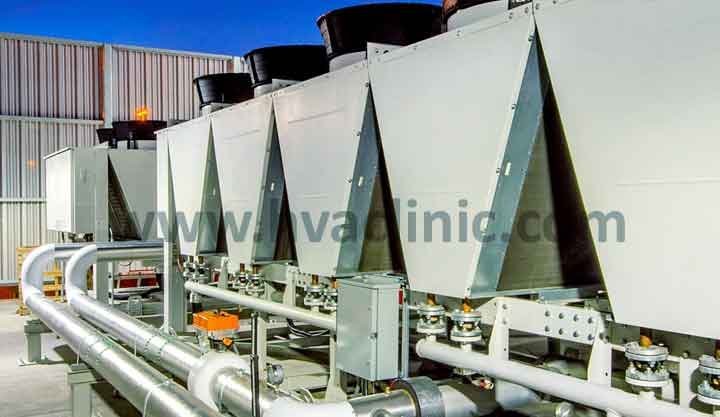
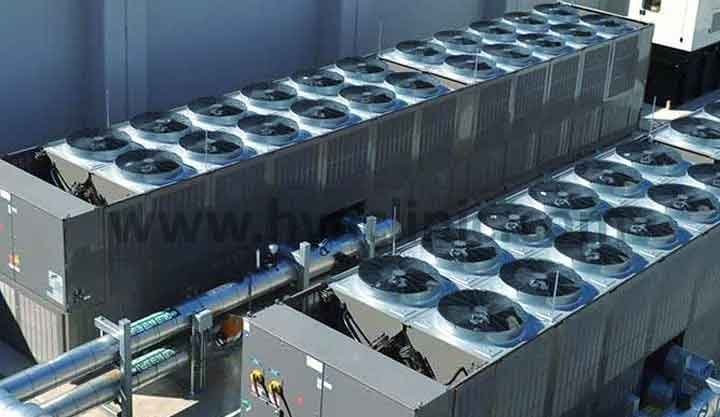
An air-cooled chiller rejects the heat extracted from the chilled-water loop directly into outdoor air through condenser coils and fans. This configuration can be useful where a cooling tower or continuous condenser-water system is not practical.
A water-cooled chiller transfers heat into a separate water loop. That heat is normally rejected through equipment such as a cooling tower or another heat-rejection device. Water-cooled systems can therefore require additional equipment, connections, and site planning.
The right choice depends on the project rather than simply selecting the largest available chiller.
How Do 24/7 Chiller Rental Services Work?
The rental process normally begins with a cooling requirement assessment. A business contacts the rental provider and explains what type of facility or process needs cooling, the reason for the rental, the expected rental duration, and the site location.
The provider then determines the required cooling capacity and equipment configuration. If the required capacity is already known, the selection process can be relatively straightforward. If it is not known, a technical assessment may be necessary.
The next stage is quotation and equipment selection. The quotation can take into account the rental chiller itself as well as transportation, installation, pipework, pumps, cables, air-handling equipment, commissioning, technicians, and other required accessories.
After the equipment is selected and the rental agreement is confirmed, the chiller is transported to the site. The installation team positions the equipment and connects it to the building or process cooling system.
The system is then tested and commissioned before normal operation begins. This step is important because simply delivering a chiller to a site does not automatically mean that the facility is ready to receive the required cooling.
During the rental period, technical support and maintenance may be provided according to the rental agreement. At the end of the rental period, the equipment can be disconnected and collected, unless the agreement is extended.
This process can be summarized as:
Cooling assessment → Chiller selection → Quotation → Delivery → Installation → Commissioning → Operation and support → Collection or rental extension
When Do Businesses Need 24/7 Chiller Rental in the UAE?
Businesses usually consider temporary chiller rental when their existing cooling system cannot provide the required capacity.
One of the most common situations is an unexpected chiller breakdown. A permanent chiller failure can affect indoor temperatures, production processes, equipment rooms, hospitality areas, offices, retail spaces, or other temperature-sensitive environments.
A second situation is planned maintenance. Large chillers sometimes require maintenance or repair work that requires equipment to be shut down. Instead of allowing the facility to operate without adequate cooling, a temporary rental chiller can provide cooling during the maintenance period.
Businesses may also require rental chillers when a permanent cooling system is being replaced. Purchasing and installing a new chiller can take time, particularly for larger commercial or industrial projects. Temporary equipment can bridge the gap between removing the old system and commissioning the replacement.
Another common requirement is additional cooling capacity. A building may experience a temporary increase in occupancy, production, equipment load, or seasonal cooling demand. Renting additional capacity can allow the business to respond to the increase without permanently purchasing equipment that may not be required later.
Emergency Chiller Rental for Unexpected Breakdowns
Emergency cooling is one of the main reasons businesses search for 24/7 chiller rental services in the UAE.
When a chiller fails during operating hours, the facility may already be experiencing rising indoor temperatures or disruption to a temperature-dependent process. Waiting several days for permanent repairs may not be practical.
Emergency rental services are intended to shorten the time between the failure and restoration of temporary cooling.
A professional emergency response normally starts by identifying the required capacity and determining how the rental equipment can be connected to the existing system. The provider may then arrange transportation, positioning, connections, testing, and commissioning.
The speed of deployment depends on factors such as equipment availability, required capacity, site accessibility, connection requirements, transportation distance, electrical infrastructure, and the complexity of the installation.
For this reason, businesses should not assume that every emergency chiller can be installed immediately without a technical assessment.
Chiller Rental for Planned Maintenance
Temporary cooling is not limited to emergencies.
Many facilities plan maintenance periods in advance. If the existing chiller needs major servicing, component replacement, cleaning, or other work, operating without cooling may be undesirable.
A temporary chiller can provide cooling while the permanent system is unavailable.
Planning the rental in advance can make the process easier because the provider has more time to evaluate the cooling load, inspect the site, confirm connections, arrange transportation, and prepare the required equipment.
For large commercial and industrial facilities, planned rental can also reduce the pressure associated with an unexpected cooling failure because temporary capacity has already been considered as part of the maintenance strategy.
Air-Cooled Chiller Rental in the UAE
Air-cooled chiller rental is commonly considered for temporary applications where the project needs a relatively straightforward heat-rejection arrangement.
Air-cooled chillers use fans and condenser coils to reject heat directly into the surrounding air. They do not require a cooling tower as part of the heat-rejection system.
This can make them suitable for certain temporary commercial, industrial, construction, event, and emergency applications.
However, equipment selection must take ambient conditions into consideration. The UAE’s hot climate can place significant demands on cooling equipment, particularly during summer.
The selected unit therefore needs to be appropriate for the expected operating conditions and required cooling load rather than being selected solely according to its nominal capacity.
Water-Cooled Chiller Rental in the UAE
Water-cooled chillers use a separate water circuit for heat rejection, commonly involving a cooling tower or another heat-rejection arrangement.
They can be suitable for larger commercial and industrial applications where the necessary water-side infrastructure is available or can be installed as part of the temporary cooling system.
A water-cooled rental arrangement may involve more supporting equipment than an air-cooled system. The site may need appropriate pumps, pipework, cooling-tower capacity, water connections, and other components.
This means a water-cooled rental project should be assessed as a complete system rather than treating the chiller as an isolated piece of equipment.
What Equipment Can Be Included in a Chiller Rental Package?
The rental chiller itself may only be one part of a temporary cooling installation.
Depending on the project, a rental package may include chillers, pumps, air-handling units, fan coils, temporary pipework, hoses, electrical connections, control equipment, and other accessories.
Air-handling units can be used to distribute conditioned air to areas where direct connection to an existing chilled-water system is not sufficient or practical.
The equipment required depends on the site’s existing HVAC infrastructure and the type of cooling application.
For example, a commercial building with an existing chilled-water network may primarily need temporary chiller capacity and the appropriate connections. A construction project or temporary event may require a more complete temporary cooling arrangement.
What Industries Use Chiller Rental Services?
Chiller rental can support a wide range of UAE industries and applications.
Commercial buildings may use temporary chillers when their existing HVAC equipment fails or during planned maintenance. Hotels and hospitality facilities may require temporary cooling because maintaining comfortable indoor conditions is important for guests and operations.
Industrial facilities can require rental chillers for process cooling, equipment cooling, production environments, or temporary capacity during maintenance.
Construction projects may use temporary cooling before permanent HVAC infrastructure is fully operational. Events and temporary venues can also require cooling for occupied spaces.
Healthcare facilities, data-related environments, warehouses, retail facilities, manufacturing operations, and other temperature-sensitive applications can have specific temporary cooling requirements.
The exact equipment and installation method should always be selected according to the application’s cooling load and technical requirements.
Why Do Businesses Rent Instead of Buying a Chiller?
Purchasing a permanent chiller can make sense when cooling demand is long-term and predictable. However, buying is not always the most practical choice for temporary requirements.
Rental allows a business to obtain cooling capacity without committing to the purchase of permanent equipment for a short-term need.
For example, if a facility requires additional cooling for a limited project period, purchasing a new chiller could leave the business responsible for equipment that is no longer needed after the project ends.
Rental can also provide flexibility during emergencies, maintenance, replacement projects, and temporary capacity increases.
Another consideration is maintenance responsibility. Depending on the agreement, the rental provider may handle servicing and technical support during the rental period, allowing the customer to focus on its core operations.
What Factors Affect the Cost of Chiller Rental in the UAE?
There is no single price for chiller rental because the cost depends on the project requirements.
Cooling capacity is one of the most important factors. A larger cooling requirement generally requires larger or multiple units and potentially more supporting equipment.
Rental duration also affects pricing. A short emergency rental and a long-term project rental may have different commercial structures.
The type of chiller can influence the overall cost. Air-cooled and water-cooled systems have different installation and supporting-equipment requirements.
Transportation and site location are also relevant. A difficult-access site or a project requiring specialized logistics may require additional planning.
Installation complexity can affect the quotation as well. Pipework, pumps, electrical connections, air-handling equipment, and other accessories can form part of the temporary cooling system.
The best approach is therefore to request a project-specific quotation rather than relying on a generic advertised rental rate.
What Should You Check Before Renting a Chiller?
Before confirming a rental, businesses should establish the required cooling capacity as accurately as possible.
The application should also be explained clearly to the rental provider. Cooling an office building, production process, event space, warehouse, or specialized industrial application can involve very different requirements.
The site should be reviewed for equipment placement, access for delivery vehicles, electrical supply, pipe connections, water requirements, ventilation, and safe operating conditions.
Businesses should also confirm what is included in the rental quotation.
Ask whether delivery, installation, commissioning, technical support, maintenance, accessories, and collection are included or priced separately.
It is equally important to understand the support arrangement. If the project is described as requiring 24/7 service, clarify what that means in practice, including emergency response, technician availability, troubleshooting, and replacement support.
Why Is 24/7 Support Important for Chiller Rental?
A temporary cooling system is often installed because cooling is important to the operation of the facility.
If the rental chiller develops a problem outside normal working hours, waiting until the next business day can extend the disruption.
A 24/7 chiller rental service gives businesses access to support when problems occur, including nights, weekends, and holidays, subject to the provider’s service agreement.
This is particularly valuable for facilities that operate continuously or have critical cooling requirements.
However, businesses should distinguish between “24/7 availability” and guaranteed immediate equipment replacement. Service response times depend on the rental agreement, equipment availability, location, technical requirements, and the nature of the problem.
A reputable provider should explain the support process clearly before the rental begins.
How Long Can You Rent a Chiller in the UAE?
Chillers can be rented for different periods depending on the provider and application.
Short-term rental may be appropriate for emergency breakdowns, events, planned maintenance, or temporary projects lasting several days or weeks.
Longer rental periods can be useful when a facility is waiting for permanent equipment, undergoing a major refurbishment, expanding its operations, or requiring temporary cooling for an extended project.
Some providers offer daily, weekly, monthly, or longer-term arrangements. The most suitable rental period depends on when permanent cooling will become available and how long the temporary capacity is required.
Businesses should avoid renting for an unnecessarily long period when the permanent system can be restored sooner, while also allowing enough time for installation, testing, and safe removal.
How Fast Can a Rental Chiller Be Delivered?
Delivery time varies according to the equipment required and the provider’s available fleet.
An emergency requirement may receive faster attention when the required capacity and equipment are immediately available. However, a complex installation can require additional planning even when the chiller itself is available.
The location of the project, access conditions, transportation requirements, installation work, connection configuration, and commissioning can all influence deployment time.
For urgent requirements, providing complete technical information at the beginning can help the rental company determine the appropriate equipment faster.
How Can Businesses Reduce Cooling Downtime?
The best way to reduce cooling downtime is to plan for potential failures before they happen.
Facilities that depend heavily on chilled-water systems can maintain emergency contact information for their HVAC contractor and chiller rental provider.
Businesses can also document the cooling capacity of their existing system, connection details, electrical requirements, and site access information. Having this information available can make an emergency rental assessment faster.
Planned maintenance is another important part of reducing unexpected failures. A temporary rental chiller can be arranged in advance when major maintenance is expected to take a system offline.
For critical facilities, businesses may also evaluate whether standby or additional temporary capacity is appropriate for their operational risk.
24/7 Chiller Rental for UAE Commercial Projects
Commercial projects can experience changing cooling requirements throughout their development and operation.
A building undergoing renovation may need temporary cooling while parts of its permanent HVAC system are unavailable. A newly constructed facility may also require temporary cooling before the permanent system is fully commissioned.
Retail facilities, offices, hotels, event spaces, and other commercial properties may use rental chillers during HVAC replacement or major maintenance.
The temporary system should be selected according to the actual cooling load and the configuration of the building rather than simply matching the capacity of an existing chiller.
24/7 Chiller Rental for Industrial Applications
Industrial facilities often have cooling requirements that go beyond simple indoor comfort.
Production machinery, manufacturing processes, temperature-controlled operations, and industrial equipment may require reliable chilled water.
When an industrial chiller fails, the consequences can extend beyond uncomfortable indoor temperatures. Production may be affected, equipment may need to be shut down, and project schedules can be disrupted.
Industrial chiller rental therefore requires a more detailed technical assessment. The rental provider may need information about process temperatures, flow requirements, operating hours, heat loads, connection points, and the existing system.
The selected temporary cooling equipment should be capable of supporting the actual application rather than simply providing a nominal cooling capacity.
What Makes a Reliable Chiller Rental Company in the UAE?
A reliable provider should be able to explain the technical basis for its equipment recommendation.
Experience with temporary cooling projects is important because rental installations often involve working around existing infrastructure and tight deployment schedules.
A suitable provider should also have access to appropriate equipment and supporting components. Having a chiller available is not enough if the project also requires pumps, AHUs, pipework, controls, or other equipment that is unavailable.
Technical support is another important consideration. For a service advertised as 24/7, customers should understand how emergency support is provided and who they can contact if the equipment requires attention.
Clear quotations are also valuable. Businesses should know which equipment, services, installation activities, transportation charges, and support services are included before confirming the rental.
What Is the Difference Between Temporary and Emergency Chiller Rental?
Temporary chiller rental is a broad category covering any situation where cooling is required for a limited period.
Emergency chiller rental is a specific type of temporary rental that is usually triggered by an urgent cooling failure or unexpected requirement.
For example, a business planning a three-week maintenance shutdown may arrange a temporary chiller several weeks before the shutdown begins.
If the permanent chiller unexpectedly fails on a weekend, the business may require emergency chiller rental and rapid technical support.
Both situations can use similar equipment, but the planning and response requirements are different.
FAQs
What are 24/7 chiller rental services in the UAE?
They are temporary cooling services that provide rental chillers and related technical support for businesses that need additional or replacement cooling capacity. The 24/7 aspect generally refers to round-the-clock service availability and emergency support.
Can I rent a chiller for an emergency breakdown?
Yes. Emergency chiller rental is commonly used when an existing chiller fails unexpectedly. Equipment availability, required capacity, site conditions, and installation requirements determine how quickly temporary cooling can be deployed.
What types of chillers are available for rent?
Depending on the provider and project, businesses may be able to rent air-cooled chillers, water-cooled chillers, industrial chillers, process chillers, portable systems, and related temporary cooling equipment.
Can chillers be rented for only a few days?
Yes. Short-term chiller rental can be suitable for emergency repairs, planned maintenance, events, temporary projects, and other limited-duration requirements. Availability and minimum rental periods vary by provider.
Can I rent a chiller for several months?
Yes. Long-term chiller rental can be used when permanent equipment is being replaced, a project requires temporary cooling for an extended period, or additional cooling capacity is required for a longer timeframe.
Do rental chillers include installation?
Installation arrangements vary. Some rental packages include delivery, installation, connection, testing, and commissioning, while other quotations may price certain services separately. Always confirm the scope before signing the rental agreement.
Is 24/7 support included with every chiller rental?
Not necessarily. Service levels vary between providers and contracts. Businesses should confirm whether 24/7 technical support, emergency response, maintenance, and troubleshooting are included in the quoted rental package.
How do I select the right chiller capacity?
The correct capacity depends on the building or process cooling load, required temperatures, flow conditions, ambient conditions, operating schedule, and system configuration. A technical assessment is recommended when the required capacity is uncertain.
Are air-cooled chillers suitable for the UAE?
Air-cooled chillers can be used for many temporary cooling applications in the UAE. However, the equipment must be suitable for the expected ambient conditions and required cooling load.
What information should I provide when requesting a chiller rental quote?
Provide the site location, application, required rental period, known cooling capacity, existing chiller information, operating requirements, available electrical supply, connection details, and any information about the building or process that needs cooling.
Conclusion
24/7 chiller rental services in the UAE provide businesses with a flexible way to maintain temporary or replacement cooling when permanent HVAC capacity is unavailable or insufficient. They can support emergency breakdowns, planned maintenance, HVAC replacement, temporary projects, seasonal requirements, additional cooling demand, commercial facilities, industrial processes, and events.
The rental process normally involves assessing the cooling requirement, selecting the appropriate chiller configuration, preparing a quotation, delivering the equipment, installing and commissioning the system, and providing operational support throughout the agreed rental period.
The most important factor is not simply finding a chiller that is available. The equipment must be correctly matched to the application’s cooling load, site conditions, connection requirements, and operating environment.
For UAE businesses, working with a provider that can combine appropriate equipment with technical assessment, professional installation, commissioning, and dependable support can make temporary cooling considerably easier to manage.
If your existing chiller has failed, your facility is undergoing planned maintenance, or you need additional cooling capacity for a temporary project, a professionally planned rental chiller can provide the bridge between your immediate cooling requirement and your permanent HVAC solution.
Looking for Rental Chiller in UAE?
Engineered temporary cooling solutions across Dubai, Abu Dhabi, Sharjah, and Northern Emirates. High-efficiency air-cooled and water-cooled rental chillers from...