
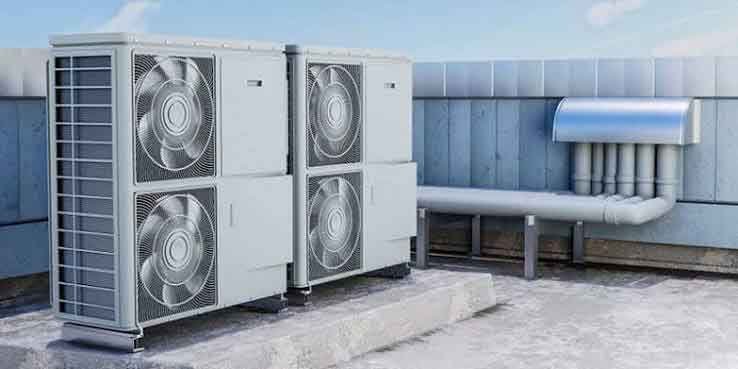

Construction projects in the UAE often require reliable cooling before the permanent HVAC system is fully operational. During different stages of a project, temporary buildings, site offices, enclosed work areas, testing zones, and newly completed sections may need controlled temperatures. In these situations, temporary chiller rental for construction projects in UAE can provide cooling capacity without requiring contractors to purchase permanent equipment for a short-term requirement.
Rental chillers can also support projects where the permanent cooling plant is being installed, upgraded, commissioned, or delayed. Depending on the project requirements, temporary cooling can be arranged using air-cooled or water-cooled chillers together with pumps, hoses, piping, air-handling units, and other accessories.
Why Construction Projects Need Temporary Chillers
Cooling requirements can change significantly throughout a construction schedule. A project may have limited cooling requirements during early construction but require much greater capacity during fit-out, commissioning, or phased handover.
Temporary cooling is particularly useful when the permanent chiller plant is not yet ready. Instead of waiting for the complete HVAC system before certain areas can be commissioned or occupied, contractors can use a temporary cooling arrangement to bridge the gap.
It can also be useful during planned HVAC shutdowns, equipment replacement, construction delays, temporary increases in cooling demand, and phased building completion.
For larger projects, rental cooling equipment can be scaled according to the required load. Multiple chiller units can also be arranged together where additional capacity is required.
How Temporary Chiller Rental Works on a Construction Site
A temporary chiller system is normally selected according to the project’s actual cooling requirements and site conditions. The rental provider first needs information such as the required cooling capacity, chilled-water temperatures, available electrical supply, operating period, installation area, pipe routes, and the type of equipment being cooled.
The chiller can then be connected to the temporary or existing chilled-water system. Depending on the application, the setup may include chilled-water pumps, flexible hoses, temporary pipework, buffer tanks, air-handling units, power equipment, and control systems.
Proper installation is important because the chiller needs adequate space, airflow, electrical capacity, water flow, and safe access for operation and maintenance. Equipment placement should also take the site’s construction activities and available working space into account.
Choosing the Right Chiller Capacity
One of the most important parts of temporary cooling is selecting the correct capacity. Choosing a chiller simply because it has a high tonnage does not necessarily mean it will perform efficiently.
Cooling load calculations should consider factors such as the size and construction of the area, outdoor temperature, occupancy, equipment and lighting heat loads, fresh-air requirements, desired indoor temperature, humidity requirements, and the operating conditions of the chilled-water circuit.
For construction projects in the UAE, high outdoor temperatures are another important consideration. A rental chiller should be suitable for the expected ambient conditions and the required leaving-water temperature.
An undersized chiller may fail to provide sufficient cooling during peak conditions, while an unnecessarily oversized system can increase equipment and operating requirements. Proper load assessment therefore helps contractors select a temporary cooling system that matches the actual project demand.
Air-Cooled vs Water-Cooled Chillers for Construction
Air-cooled chillers are often practical for temporary construction applications because they do not require a separate cooling tower. They reject heat directly to the surrounding air and can be installed outdoors when suitable space and airflow are available.
Water-cooled chillers can be appropriate for applications where the required infrastructure and water-side arrangements are available. However, the complete system may require additional equipment and coordination.
The choice between the two depends on factors such as cooling capacity, available space, water availability, electrical supply, site conditions, project duration, and the technical requirements of the HVAC system.
A professional rental provider should assess these conditions before recommending a particular chiller configuration.
Supporting Equipment May Be Required
A chiller is only one part of a temporary cooling system. Construction projects may require additional equipment to distribute chilled water and deliver cooling to the required areas.
Depending on the application, a temporary package can include:
- Chillers
- Chilled-water pumps
- Flexible hoses
- Temporary pipework
- Buffer tanks
- Air-handling units
- Power distribution equipment
- Generators where suitable
- Control and monitoring equipment
The exact combination depends on the project’s cooling load and existing HVAC arrangement. Coordinating these components through one rental provider can also simplify installation, commissioning, monitoring, and maintenance.
Temporary Chiller Rental During HVAC Installation
A common application is cooling a building while its permanent HVAC infrastructure is still under construction.
Large commercial buildings, hotels, residential developments, industrial facilities, and other projects can be completed in phases. Some areas may be ready for testing or fit-out while the permanent cooling plant is still being installed.
A temporary chiller can provide cooling during this transition period. Once the permanent HVAC system becomes operational, the rental equipment can be disconnected and removed without becoming part of the building’s permanent infrastructure.
This approach can help construction teams maintain their planned sequence when temporary cooling is technically appropriate.
Temporary Cooling for Testing and Commissioning
Cooling can also be required during HVAC testing and commissioning. Construction teams may need to test air-handling equipment, chilled-water circuits, controls, and building systems before the permanent plant is completely available.
Temporary cooling equipment can provide the required thermal conditions for certain commissioning activities, depending on the project’s design and testing requirements.
For complex projects, the temporary system should be engineered around the actual testing conditions rather than treated simply as a standalone chiller rental.
Why UAE Climate Conditions Matter
The UAE’s hot climate makes cooling performance particularly important for construction projects. Outdoor temperatures can place significant demand on air-cooled equipment, especially when chillers operate for extended periods.
For this reason, contractors should check the rental chiller’s operating conditions rather than comparing equipment only by its nominal capacity.
Important information includes the expected ambient temperature, entering and leaving chilled-water temperatures, available power, required flow rate, and expected operating schedule.
This information allows the rental provider to determine whether the selected equipment can deliver the required performance under the project’s actual conditions.
What to Check Before Renting a Temporary Chiller
Before signing a rental agreement, construction companies should provide the supplier with accurate project information. This can include the required cooling capacity, site location, available power, chilled-water connection details, operating hours, rental duration, installation location, and expected project schedule.
It is also important to clarify what is included in the rental package. Depending on the supplier, the quotation may cover the chiller alone or may include transportation, installation, commissioning, hoses, pumps, accessories, technical support, and maintenance.
The contractor should also confirm how emergency support and equipment breakdowns will be handled during the rental period.
Benefits of Temporary Chiller Rental for Construction Projects
For a project with a temporary or changing cooling requirement, rental can avoid the need to purchase a permanent chiller for a limited application.
The main practical benefits can include flexible rental periods, access to additional cooling capacity, faster deployment for urgent requirements, and the ability to remove the equipment when the project no longer needs it.
Rental can also provide a useful bridge between construction stages. Instead of making a permanent HVAC investment for a temporary requirement, contractors can arrange cooling according to the project’s schedule.
For projects with changing requirements, scalable rental equipment can also make it easier to increase or reduce temporary cooling capacity as different areas are completed.
Maintenance and Monitoring During the Rental Period
Temporary chillers still require proper operation and maintenance. Water flow, operating temperatures, pressure, electrical conditions, and other system parameters should be monitored during operation.
Regular technical support can help identify problems before they interrupt the construction schedule. Some modern rental cooling systems can also provide remote monitoring, allowing operating conditions and system warnings to be reviewed without relying entirely on physical inspections.
For long-duration construction projects, contractors should ask the rental provider about planned maintenance, technician availability, emergency response, and replacement equipment arrangements.
How Much Does Temporary Chiller Rental Cost in the UAE?
There is no single rental price for every construction project. The cost depends on factors such as chiller capacity, equipment type, rental duration, site location, installation requirements, accessories, transportation, power requirements, and technical support.
A small temporary cooling requirement may require a relatively simple setup, while a large construction project may need several chillers, pumps, temporary pipework, air-handling units, and additional power equipment.
For this reason, contractors should request an itemized quotation based on the actual site requirements rather than comparing rental prices based only on the chiller’s tonnage.
When Should You Rent a Temporary Chiller?
Temporary chiller rental can be considered when:
- The permanent chiller plant is not yet operational.
- Additional cooling is required during construction or fit-out.
- HVAC equipment is undergoing replacement or maintenance.
- A project is being completed in phases.
- Temporary cooling is required for testing and commissioning.
- The project’s cooling requirement will only last for a limited period.
- An unexpected cooling requirement could affect the construction schedule.
The suitability of rental equipment should always be confirmed through a proper assessment of the project’s cooling load and technical conditions.
Finding a Temporary Chiller Rental Provider in the UAE
Construction companies should look for a rental provider that can supply more than just the chiller itself. Site assessment, equipment sizing, transportation, installation, commissioning, accessories, maintenance, and technical support can all affect the performance of a temporary cooling system.
For UAE construction projects, it is also useful to choose equipment that is suitable for local ambient conditions and to confirm that the supplier can support the project throughout the agreed rental period.
A properly planned temporary cooling system can provide construction teams with the flexibility to maintain required temperatures while permanent HVAC infrastructure is being completed.
Final Thoughts
Temporary chiller rental for construction projects in UAE can be a practical solution when cooling is required before a permanent HVAC system is ready or when additional capacity is needed for a limited period.
The key is not simply renting the largest available chiller. The system should be selected according to the actual cooling load, chilled-water requirements, ambient conditions, power availability, site layout, project schedule, and required operating period.
For a construction project, the most useful rental arrangement is one that combines correctly sized equipment with suitable accessories, professional installation, monitoring, maintenance, and responsive technical support. This allows temporary cooling to work as part of the overall construction plan rather than becoming another source of delays or technical complications.