
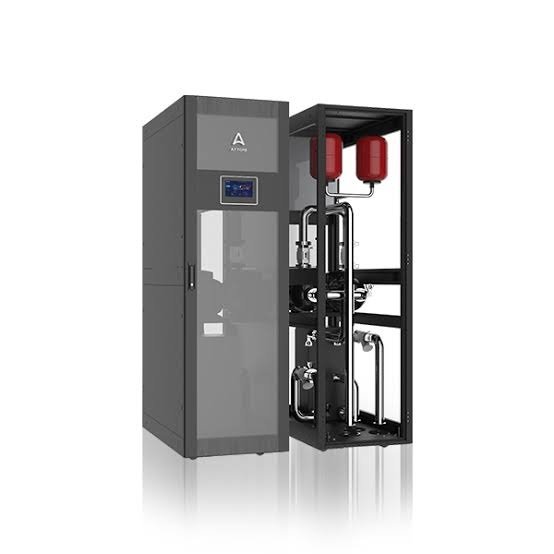

Reliable cooling is an important part of business continuity in the United Arab Emirates. Offices, hotels, shopping centres, warehouses, hospitals, industrial facilities, data centres, retail spaces and other commercial properties can depend heavily on air conditioning and chilled-water systems for daily operations.
The HVAC climate makes cooling particularly important. Government climate information describes the country as having a hot desert climate, with average temperatures during the hotter months generally ranging from 30 to 40 degrees Celsius and maximum temperatures in some areas exceeding 49 degrees Celsius. Summer humidity can also be high, particularly in coastal areas.
Cooling also represents a substantial share of building electricity consumption. In July 2026, Abu Dhabi’s Department of Energy stated that air-conditioning systems account for approximately 60–70% of electricity consumption in UAE buildings. The department’s new Cooling Load Manual also highlighted the importance of correctly calculating cooling loads and selecting appropriately sized systems.
For businesses, this means a failure of the main cooling system can become an operational problem rather than simply a comfort issue. A reliable backup cooling strategy provides temporary capacity when a primary chiller, air-conditioning system or district cooling connection is unavailable, undergoing maintenance, or unable to meet demand.
Backup cooling solutions can include rental chillers, temporary cooling systems, air handling units, packaged air conditioners, portable air conditioners, spot cooling equipment and larger temporary cooling plants. The appropriate solution depends on the building, cooling load, existing HVAC configuration, available power, installation arrangements and expected duration.
What Are Reliable Backup Cooling Solutions for UAE Businesses?
Reliable backup cooling solutions are temporary or standby cooling arrangements designed to maintain required indoor or process temperatures when a permanent cooling system cannot provide sufficient capacity.
Unlike a conventional replacement HVAC installation, a backup cooling system is generally designed around a specific operational requirement. It may be required for several hours, several days, several weeks, or an extended project period.
For example, a commercial building may need temporary cooling while its main chiller undergoes major maintenance. A hotel may require additional capacity during a period of unusually high demand. An industrial facility may need process cooling while permanent equipment is repaired. A district cooling operator may require temporary plant capacity during a planned shutdown.
This is why the term backup cooling covers several different technologies rather than one particular machine.
Daikin’s UAE cooling-rental information identifies rental chillers, air handling units, heat pumps and power solutions as temporary cooling options for planned maintenance, emergency situations and peak demand.
Similarly, UAE cooling providers describe temporary systems being used for emergency breakdowns, planned shutdowns, additional capacity and project-based requirements.
Why Do UAE Businesses Need Backup Cooling?
The need for backup cooling is closely connected with the UAE’s environmental conditions and the importance of air conditioning to commercial operations.
During summer, cooling systems can operate for long periods under high outdoor temperatures. Daikin notes that UAE conditions can include temperatures above 45 degrees Celsius, coastal humidity and a cooling season extending for much of the year. These conditions place considerable demands on air-conditioning equipment.
A primary cooling system can also be unavailable for reasons that have nothing to do with outdoor temperature. Equipment may require scheduled maintenance, major repairs, component replacement, plant upgrades or system modifications.
Businesses may therefore use backup cooling for several situations.
Planned HVAC Maintenance
Major maintenance can require equipment to be taken out of service. If the building cannot operate without cooling, a temporary system can provide capacity while technicians work on the permanent plant.
This approach is documented in the UAE market. Andrews Sykes describes temporary chillers being used during planned maintenance and repair shutdowns at district cooling facilities, while Daikin identifies planned maintenance as one of the applications for its cooling rental solutions.
Unexpected Chiller Breakdown
A sudden chiller failure can create an immediate cooling requirement. Instead of waiting for the permanent equipment to be repaired before restoring cooling, a temporary chiller or other suitable system can be installed to bridge the gap.
Temporary cooling providers in the UAE specifically identify emergency breakdowns and main plant failures as applications for rental cooling equipment.
Peak Cooling Demand
A building’s permanent HVAC plant may be sufficient under normal operating conditions but require additional capacity during periods of unusually high demand.
Rental cooling can provide temporary additional capacity without requiring the business to purchase a larger permanent system for a short-duration requirement. Daikin specifically identifies peak demand as an application for cooling rental solutions.
HVAC Replacement or Upgrade
Replacing a large chiller plant can take time. During this period, a temporary cooling system can act as a bridge between the old equipment and the new permanent installation.
This can be particularly useful for large commercial facilities where shutting down cooling completely during a replacement project would disrupt occupants and operations.
New Construction and Commissioning
Temporary cooling may also be required before a permanent district cooling or HVAC system is fully operational.
RSS documents a UAE project involving a temporary cooling plant used while a district cooling facility was being developed. The project used temporary chillers and supporting equipment to serve mixed-use high-rise buildings.
How Do Backup Cooling Solutions Work?
The exact arrangement depends on the type of cooling system and the existing building infrastructure, but the process generally begins with determining the required cooling capacity.
A professional temporary cooling project normally considers the building’s cooling load, existing chilled-water system, required temperatures, available electrical supply, pipework, installation location, access and operating period.
This is important because selecting equipment only by building size can produce an unsuitable solution.
Al Shola states that its rental packages are planned around factors including cooling load, temperature, water flow, power availability, access and connection routes.
A typical process can therefore be divided into several stages.
1. Cooling Requirement Assessment
The first step is understanding how much cooling the facility actually requires.
The assessment can consider the existing cooling plant, building occupancy, equipment loads, indoor conditions, process requirements and the amount of cooling that must remain available during the interruption.
For larger installations, engineers may also assess chilled-water flow, supply and return temperatures, available electrical capacity and the physical route between temporary equipment and the building.
2. Equipment Selection
Once the requirement has been established, the appropriate temporary cooling equipment can be selected.
Possible equipment includes air-cooled chillers, water-cooled systems, air handling units, packaged air conditioners and portable cooling equipment.
The choice depends on the application rather than simply the requested tonnage.
For example, Al Shola lists high-ambient air-cooled chillers, air handling units, packaged AC units and portable AC equipment for different temporary cooling applications.
3. Site Preparation and Connection
The temporary equipment must then be positioned and connected to the required cooling system.
For chilled-water applications, this can involve temporary pipework, hoses, pumps, valves, headers and other accessories. Depending on the application, the temporary equipment can operate alongside the permanent system or provide replacement capacity while the primary equipment is unavailable.
RSS describes a UAE temporary cooling project where a temporary plant was integrated with the existing piping network to maintain service.
4. Installation and Commissioning
After connection, the system needs to be checked and commissioned before normal operation.
This stage can include checking connections, flow, operating conditions and control arrangements. Temporary cooling providers commonly include delivery, installation and commissioning within managed rental services.
5. Operation and Monitoring
Reliable backup cooling does not end when the equipment starts.
During a longer rental or temporary installation, operating conditions may need to be monitored and equipment maintained. RSS documents the use of BTU metering, flow meters, SCADA communications and weather monitoring on a large UAE temporary cooling project.
This illustrates an important point: a temporary cooling system can be engineered as a complete operating solution rather than simply delivered as a standalone machine.
What Types of Backup Cooling Equipment Are Available?
There is no single backup cooling system suitable for every UAE business. Different facilities have different cooling loads and infrastructure.
Air-Cooled Chillers
Air-cooled chillers reject heat directly to the surrounding air and can be useful where a suitable cooling tower or continuous condenser-water supply is unavailable.
They are widely used in temporary and emergency cooling applications because they can form part of relatively flexible temporary installations.
Some UAE rental providers offer high-ambient air-cooled chillers specifically designed for demanding GCC conditions. Al Shola, for example, lists air-cooled screw chillers designed for operation at ambient temperatures up to 55 degrees Celsius and offers units in several capacity ranges.
The exact operating capability, however, depends on the particular equipment model and site conditions, so businesses should verify manufacturer performance data rather than assuming that every air-cooled chiller has the same high-ambient capability.
Water-Cooled Chillers
Water-cooled chillers use condenser-water systems and can be suitable for larger permanent or temporary cooling installations where the required supporting infrastructure is available.
They can form part of engineered temporary plants, particularly for larger commercial, industrial and district cooling applications.
The correct choice between air-cooled and water-cooled equipment depends on the project’s load, infrastructure, operating conditions, water availability and installation requirements.
Air Handling Units
An air handling unit, or AHU, distributes conditioned air through a building or designated space.
AHUs can be paired with temporary chillers where chilled water needs to be converted into conditioned air for a particular area.
UAE cooling rental providers list AHUs for commercial buildings, industrial facilities, construction projects, warehouses, events and emergency cooling applications.
Packaged Air Conditioners
Packaged AC units can provide temporary cooling for spaces where a full chilled-water plant is unnecessary or impractical.
They can be suitable for certain commercial spaces, warehouses, construction facilities and temporary structures, depending on the required capacity and air distribution arrangement.
Portable Air Conditioners and Spot Coolers
Smaller portable systems can be useful when cooling is required only in specific rooms or work areas.
They can be particularly practical for localized cooling rather than attempting to cool an entire large building with small units.
Al Shola lists portable AC equipment for applications including offices, server rooms, construction cabins, tents and events.
Backup Chiller vs Temporary AC: What Is the Difference?
The terms backup cooling, temporary cooling, chiller rental and AC rental are sometimes used interchangeably, but they do not necessarily describe the same type of system.
A temporary chiller is generally more appropriate when the building already uses a chilled-water system and the temporary equipment needs to replace or supplement the existing chiller plant.
Temporary packaged or portable AC equipment may be more suitable for localized areas, temporary buildings or applications where connecting to the existing chilled-water network is unnecessary.
An AHU can be part of a larger temporary cooling arrangement when conditioned air needs to be distributed through a particular space.
The important consideration is therefore not simply the equipment name. It is how the equipment will deliver the required cooling to the actual area or process.
How Is Backup Cooling Capacity Determined?
Correct sizing is one of the most important parts of a reliable backup cooling plan.
A system that is too small may fail to provide the required conditions. A system that is unnecessarily large can increase equipment, installation and operating requirements.
The Abu Dhabi Department of Energy’s 2026 Cooling Load Manual specifically addresses accurate cooling-load calculation and equipment sizing, noting that AC systems in buildings can be significantly oversized.
For a temporary cooling project, engineers may need to consider:
Existing cooling load: How much cooling the facility normally requires.
Critical load: Which areas or processes must remain operational if full cooling cannot be maintained.
Outdoor conditions: Ambient temperature and humidity can affect cooling-system performance.
Building occupancy: People, lighting and equipment contribute to internal heat loads.
Process heat: Industrial equipment and production processes may create additional cooling requirements.
Chilled-water conditions: Supply temperature, return temperature and required flow can affect system selection.
Available power: Temporary equipment needs an appropriate electrical supply or another suitable power arrangement.
Connection limitations: Pipe routes, access, lifting requirements and installation locations can influence the practical solution.
For these reasons, a site assessment is generally preferable to selecting a backup chiller from a simple building-area calculation.
Why High-Ambient Performance Matters in the UAE
A cooling system that performs adequately in a moderate climate may not behave in exactly the same way under UAE summer conditions.
Official UAE climate information shows that maximum temperatures can exceed 49 degrees Celsius in some parts of the country during summer.
Daikin also notes that temperatures in the UAE can regularly exceed 45 degrees Celsius, with coastal humidity adding to the environmental challenge for air-conditioning equipment.
This makes high-ambient cooling equipment an important consideration when planning backup cooling in the UAE.
Businesses should check the manufacturer’s performance data for the actual ambient conditions expected at the site. A headline cooling capacity at one design condition should not automatically be assumed to represent the same capacity at much higher outdoor temperatures.
This is one reason professional sizing and equipment selection matter for reliable backup cooling solutions for UAE businesses.
Where Are Backup Cooling Solutions Used in the UAE?
Backup cooling can be applied across many sectors because the underlying requirement is the same: maintain necessary temperature conditions while permanent capacity is unavailable or insufficient.
Commercial Buildings
Office buildings can use temporary chillers or air-conditioning systems during central plant maintenance, chiller replacement and unexpected breakdowns.
Hotels and Resorts
Hotels require dependable cooling for guest rooms, public spaces, kitchens, meeting areas and other facilities. Temporary cooling can be used during plant upgrades, maintenance or other interruptions.
RSS documents a UAE temporary cooling project for a district cooling provider serving a luxury hotel and resort in Dubai.
Shopping Malls and Retail Facilities
Retail facilities can have substantial cooling requirements because of their large occupied spaces, lighting, equipment and extended operating hours.
Backup cooling can help maintain usable conditions while permanent equipment is repaired or upgraded.
Hospitals and Healthcare Facilities
Healthcare facilities can have areas where temperature control is particularly important. Backup arrangements can therefore form part of broader business-continuity and facilities-management planning.
Data Centres and Critical IT Areas
Data centres and other technology environments can require continuous temperature management. Temporary cooling can be considered during maintenance, plant upgrades or emergency situations, subject to the facility’s engineering and redundancy requirements.
Industrial Facilities
Factories and process plants may require cooling for buildings, machinery or production processes.
For these applications, backup cooling may involve low-temperature chillers, process cooling equipment, pumps and other supporting systems rather than conventional comfort AC alone.
Warehouses and Temperature-Sensitive Storage
Some warehouses require controlled environmental conditions for products or equipment. Temporary cooling can bridge a period when permanent equipment is unavailable.
Construction and Project Sites
Temporary cooling can support construction facilities, site offices, events and buildings awaiting permanent HVAC or district cooling connections.
RSS’s documented UAE work includes large temporary cooling plants used during district cooling development and commissioning.
What Makes a Backup Cooling Solution Reliable?
Reliability is not determined by the chiller’s nameplate capacity alone.
A genuinely dependable backup cooling arrangement needs to consider the complete system.
Correct Equipment Sizing
The equipment should match the actual cooling requirement and operating conditions.
High-Ambient Suitability
Equipment should be suitable for the outdoor conditions expected at the UAE site.
Compatible Connections
The temporary system must be capable of connecting safely and effectively to the building’s existing infrastructure where required.
Adequate Power
The electrical supply must support the temporary cooling equipment and associated pumps, controls and auxiliary systems.
Supporting Equipment
A temporary chiller may require pumps, hoses, headers, valves, control equipment and other accessories depending on the installation.
Professional Commissioning
The system should be tested and commissioned before being relied upon for normal operation.
Monitoring and Maintenance
Longer temporary projects may require ongoing monitoring, maintenance and technical support.
Deployment Planning
The equipment may be technically suitable but still unsuitable if it cannot be delivered, positioned and connected within the required timeframe.
These considerations are why established temporary cooling projects are often treated as engineered solutions rather than simple equipment deliveries. RSS describes its cooling projects as designed, installed and operated solutions, while Stout Energy similarly describes site assessment, deployment, commissioning and ongoing operation as stages of its UAE rental process.
How Much Do Backup Cooling Solutions Cost in the UAE?
There is no single price for backup cooling in the UAE because the cost depends on the equipment and project requirements.
Important cost factors can include the required cooling capacity, rental period, equipment type, transportation, installation, temporary pipework, pumps, electrical requirements, site access and technical support.
For example, a small localized cooling requirement and a large temporary chiller plant serving a commercial development are fundamentally different projects.
The duration also matters. Short-term emergency cooling may require rapid mobilisation and temporary installation, while long-term projects may involve a more extensive engineered system.
Daikin describes cooling rental as a way to reduce capital expenditure while optimising operating expenditure, while UAE rental providers commonly offer both short- and long-term temporary cooling arrangements.
Businesses should therefore request an itemised quotation based on their actual site requirements instead of relying on a generic advertised rental price.
Is Backup Cooling Better Than Buying a Permanent System?
Backup cooling and permanent HVAC systems serve different purposes.
A permanent system is designed as part of the building’s long-term infrastructure. A temporary cooling system is intended to provide capacity for a defined requirement.
Temporary cooling can make sense when the requirement is caused by:
planned maintenance;
an unexpected breakdown;
a temporary increase in demand;
a construction or commissioning period;
a chiller replacement project;
a temporary district cooling interruption; or
a short-term operational requirement.
Daikin specifically identifies planned maintenance, emergency situations and peak demand among the applications for cooling rental solutions.
If a business has a long-term requirement for additional permanent capacity, however, a permanent HVAC upgrade may need to be evaluated separately.
How Can Businesses Prepare a Backup Cooling Plan Before Summer?
Waiting until a major chiller fails can make emergency cooling more difficult.
Businesses with critical cooling requirements can prepare in advance by identifying which systems are essential, determining the required backup capacity, checking available connection points and confirming where temporary equipment could be positioned.
Facility managers can also document information such as existing chiller capacity, chilled-water connection sizes, supply and return temperatures, available electrical capacity and equipment access routes.
A pre-planned response can reduce the amount of technical information that needs to be collected during an emergency.
For large facilities, it can also be useful to identify whether the temporary system would operate alongside the existing plant or replace it completely.
This approach turns backup cooling from an emergency reaction into part of a broader HVAC business continuity plan.
What Should Businesses Ask a Backup Cooling Provider?
Before arranging temporary cooling, businesses should establish several technical and commercial points.
Ask what cooling capacity is available under the expected UAE ambient conditions rather than looking only at nominal capacity.
Ask whether the provider can perform a site assessment.
Confirm whether delivery, installation and commissioning are included.
Check which pumps, hoses, headers, cables, controls or other accessories are required.
Confirm the electrical requirements of the proposed equipment.
Ask how the temporary equipment will connect to the existing HVAC system.
Clarify the expected mobilisation and installation schedule.
Determine what technical support is available during operation.
For longer projects, ask about maintenance, monitoring and emergency response.
Also confirm whether the quoted price covers equipment only or a complete temporary cooling package.
These questions help businesses compare solutions based on the actual project rather than comparing rental prices alone.
Backup Cooling and Business Continuity
For many UAE businesses, the real value of backup cooling is not the equipment itself. It is the ability to maintain essential operations during a temporary interruption.
A hotel may need to keep guest areas comfortable while its central plant is being repaired. A commercial building may need cooling while a chiller is replaced. A factory may need process temperature control while permanent equipment undergoes maintenance. A district cooling operator may require temporary plant capacity while permanent infrastructure is commissioned.
A documented UAE example from RSS involved a 3,600 refrigeration-ton temporary cooling plant supporting a district cooling provider during commissioning of a plant serving a luxury hotel and resort in Dubai. The temporary system was designed to integrate with the existing piping network, with monitoring technologies incorporated into the solution.
Another RSS project involved a 10,000 refrigeration-ton temporary cooling plant supporting mixed-use high-rise buildings while district cooling infrastructure was being developed.
These projects demonstrate that temporary cooling can range from relatively small equipment installations to large engineered plants.
Reliable Backup Cooling Solutions for UAE Businesses: Key Takeaways
Reliable backup cooling is best understood as a planned temporary capacity solution rather than simply a spare air conditioner.
For UAE businesses, the appropriate solution can involve rental chillers, temporary chillers, air handling units, packaged AC units, portable AC systems or larger temporary cooling plants, depending on the required load and existing infrastructure.
The UAE’s hot climate and substantial dependence on air conditioning make cooling continuity an important consideration for commercial and industrial facilities. Government climate information records very high summer temperatures, while Abu Dhabi’s Department of Energy reports that air conditioning represents approximately 60–70% of electricity consumption in UAE buildings.
A reliable backup cooling system normally begins with a proper assessment of cooling load and site conditions. Equipment is then selected, delivered, connected, commissioned and monitored according to the project’s requirements.
For planned maintenance, emergency chiller breakdowns, peak demand, HVAC replacement, construction and district cooling projects, temporary cooling can provide a bridge between a cooling interruption and the restoration or completion of permanent capacity.
The most important consideration is not simply choosing the largest available chiller. It is selecting equipment that matches the actual load, UAE operating conditions, site infrastructure, power availability, connection requirements and project duration.
Frequently Asked Questions
What are backup cooling solutions for UAE businesses?
Backup cooling solutions are temporary or standby systems used to maintain required cooling when a primary HVAC or chiller system is unavailable or cannot provide enough capacity. They can include rental chillers, AHUs, packaged AC units, portable AC equipment and larger temporary cooling plants.
When is temporary cooling needed in the UAE?
Temporary cooling can be used during planned HVAC maintenance, unexpected chiller breakdowns, peak cooling demand, permanent system replacement, construction, commissioning and temporary district cooling interruptions. UAE cooling providers and manufacturers specifically identify these situations as applications for rental cooling solutions.
What is the difference between backup cooling and chiller rental?
Chiller rental is one type of backup cooling solution. Backup cooling is the broader concept and can include chillers, AHUs, packaged AC units and portable cooling equipment.
Can a rental chiller replace a failed permanent chiller?
It can provide temporary replacement capacity when the site infrastructure, cooling load and connection arrangement are suitable. The temporary system needs to be correctly sized and integrated with the building’s cooling system.
Are air-cooled chillers suitable for UAE conditions?
Air-cooled chillers can be used for temporary cooling in the UAE, but the specific equipment must be checked against the expected ambient conditions and required performance. Some UAE providers offer high-ambient equipment specifically designed for demanding GCC conditions.
How is backup chiller capacity calculated?
Capacity should be based on the actual cooling load and operating requirements rather than building size alone. Factors can include occupancy, equipment heat, process loads, outdoor conditions, chilled-water temperatures and required flow.
Can temporary cooling be used during chiller replacement?
Yes. Temporary cooling can provide a bridge while a permanent chiller or cooling plant is being removed, replaced or upgraded. This application is specifically described by temporary cooling providers.
Can backup cooling support large commercial facilities?
Yes. Temporary cooling projects can range from localized equipment to large temporary plants. RSS documents UAE projects involving temporary cooling plants serving mixed-use developments and district cooling infrastructure.
Is backup cooling useful for planned maintenance?
Yes. Planned maintenance is one of the established applications for temporary cooling. It allows the permanent cooling system to be taken offline while temporary equipment maintains required cooling capacity.
What should I consider before arranging backup cooling?
Consider the required cooling capacity, expected ambient conditions, equipment type, available electrical power, chilled-water connections, installation location, access, rental duration, supporting equipment, commissioning and technical support.
Conclusion
Reliable backup cooling solutions give UAE businesses a practical way to maintain essential temperature control when permanent HVAC capacity is unavailable, insufficient or being upgraded.
Because the UAE combines high summer temperatures with significant dependence on air conditioning, backup planning can be particularly relevant for commercial buildings, hotels, industrial facilities, warehouses, healthcare sites, data centres, retail properties and other temperature-sensitive operations.
The right solution depends on the application. A small office may require localized portable cooling, while a large commercial facility may need a temporary chiller plant with pumps, pipework, AHUs and monitoring equipment.
For that reason, businesses should evaluate cooling load, high-ambient performance, compatibility, power requirements, installation arrangements and support before selecting equipment.
When these factors are considered together, temporary cooling can provide a structured bridge during maintenance, breakdowns, peak demand, replacement projects and other situations where maintaining cooling is essential to business continuity.