
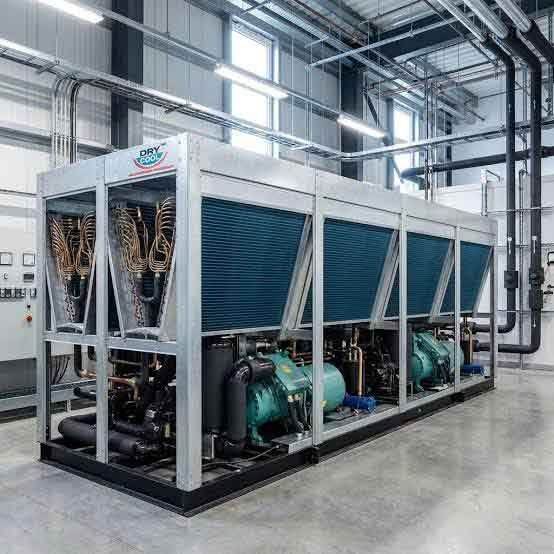

Reliable cooling is not simply a comfort requirement for many businesses in the UAE. It can directly affect production, indoor conditions, equipment performance, customer experience, and day-to-day operations. When a permanent chiller is under maintenance, a cooling system fails unexpectedly, or a project needs additional capacity, renting a chiller can provide a practical temporary solution.
However, choosing a rental chiller is more involved than selecting a machine based on its cooling capacity or rental price. Businesses need to consider cooling load, operating conditions, equipment efficiency, installation requirements, rental duration, maintenance support, and the technical requirements of the site.
This guide explains the main factors businesses should consider before arranging chiller rentals in the UAE.
Why Businesses Rent Chillers in the UAE
Businesses usually consider rental chillers when their existing cooling infrastructure cannot meet current requirements. A permanent chiller may be unavailable because of a breakdown, planned maintenance, refurbishment, or an unexpected increase in cooling demand.
Temporary cooling can also be useful for construction projects, commercial buildings, industrial facilities, hotels, warehouses, events, and other applications where a permanent cooling system is not yet available or additional capacity is required.
The financial advantage of renting depends on the project. For a short-term requirement, purchasing and installing a permanent chiller may involve equipment, installation, commissioning, maintenance, and other costs that are difficult to justify for a temporary need. Rental allows a business to obtain cooling capacity for a defined period without making the same long-term equipment commitment.
Start With the Cooling Load
One of the most important decisions is determining how much cooling the business actually needs.
ASHRAE guidance identifies cooling-load size as a major factor in chiller selection and advises that the required capacity should be calculated accurately rather than simply adding a large arbitrary allowance. Oversizing can increase equipment and operating costs and may create operational problems, particularly when equipment repeatedly cycles at low loads.
For a rental project, the supplier should therefore understand the actual application before recommending equipment. Useful information can include the building or process being cooled, required chilled-water temperatures, operating hours, existing HVAC equipment, expected peak load, and whether the cooling demand changes during the day.
A properly sized rental chiller can help avoid paying for unnecessary capacity while ensuring that the system can handle the required load.
Choose the Right Type of Rental Chiller
The appropriate chiller depends on the application and the available site infrastructure.
Air-cooled chillers can be useful for temporary applications where a cooling tower and associated condenser-water infrastructure are not practical. Water-cooled systems may be suitable where the required water-side infrastructure is available and the project conditions support their use.
The decision should not be based only on whether one type has a lower rental rate. Businesses should consider installation requirements, available space, electrical supply, water requirements, operating conditions, efficiency, noise considerations, and access for maintenance.
The supplier should also explain what auxiliary equipment is required. Depending on the project, this can include pumps, hoses or pipework, electrical connections, controls, heat exchangers, and other components needed to integrate the rental system with the existing cooling network.
Consider UAE Operating Conditions
The UAE’s climate makes cooling demand an important operational consideration. According to Abu Dhabi’s Department of Energy, air-conditioning systems account for approximately 60–70% of electricity consumption in UAE buildings, highlighting the importance of appropriate cooling-system design and efficiency. The department also notes that cooling systems are often oversized, reinforcing the importance of accurate load calculations.
For a rental chiller, the equipment must be evaluated under the actual conditions in which it will operate. Outdoor temperature, entering condenser-water temperature where applicable, chilled-water supply and return temperatures, operating hours, and load profile can all affect performance.
A supplier should therefore provide performance information relevant to the expected operating conditions rather than relying only on the nominal capacity printed on the equipment.
Look Beyond the Rental Price
The cheapest quoted rental rate does not necessarily represent the lowest overall cooling cost.
ASHRAE recommends considering life-cycle costs when evaluating chillers. These can include equipment, installation, energy, water where applicable, maintenance, and other associated costs.
The same principle applies to temporary cooling.
A business should ask what is included in the rental quotation. Does it cover delivery, installation, commissioning, technical support, routine maintenance, emergency assistance, pumps, cabling, pipework, or removal at the end of the rental period?
Energy consumption should also be considered. Two chillers with similar nominal capacities may have different operating characteristics. Part-load performance is particularly relevant because a chiller may spend much of its rental period operating below maximum capacity.
ASHRAE’s guidance on chiller control emphasizes that operating chillers according to actual load and part-load characteristics can affect overall plant efficiency.
Check Part-Load Performance
Businesses should not assume that a rental chiller will operate at full capacity throughout the day.
Cooling demand can change because of occupancy, weather, production schedules, equipment operation, and other factors. A machine that performs well at full load may not necessarily be the most suitable choice when the actual load is significantly lower.
When comparing rental equipment, ask the supplier for available performance information at the expected operating conditions. Important information may include cooling capacity, power consumption, COP or other efficiency data, and part-load performance.
This helps businesses compare the actual operating requirements rather than choosing equipment solely on its advertised capacity.
Understand Installation Requirements
A rental chiller is only useful if it can be safely and correctly integrated with the existing cooling system.
Before delivery, the site should be assessed for equipment access, installation space, electrical requirements, chilled-water connections, drainage where applicable, ventilation, pipe routes, and maintenance access.
Dubai’s Building Code illustrates why cooling-system interfaces need careful coordination. Its district-cooling requirements include parameters such as cooling capacity, pipe connection size, chilled-water supply and return temperatures, system pressure, and water velocity or pressure drop.
Not every rental project is a district-cooling project, but these requirements demonstrate the importance of checking the complete chilled-water interface instead of treating the chiller as a standalone machine.
Ask About Maintenance and Technical Support
Temporary equipment still requires proper maintenance.
ASHRAE recommends preventive maintenance and continual monitoring for liquid-chilling systems. Its guidance includes checking operating conditions, water flows, pressures and temperatures, refrigerant conditions, controls, electrical connections, safety systems, and heat-exchanger cleanliness as appropriate to the equipment.
For a business, technical support becomes particularly important when the rental chiller is supporting a critical operation. Before signing an agreement, ask how maintenance is handled, who responds to breakdowns, whether technicians are available during the required operating hours, and what happens if the supplied machine cannot meet the required cooling load.
A clear support arrangement can reduce uncertainty during the rental period.
Decide How Long You Need the Chiller
Rental duration can influence the commercial structure of the agreement.
A business may need a chiller for a few days during emergency repairs, several weeks during planned maintenance, or several months for a construction or industrial project. The rental agreement should clearly define the start date, expected end date, extension procedure, maintenance responsibilities, transportation arrangements, and removal conditions.
For longer projects, it is also worth reviewing whether the equipment remains appropriate as the cooling load changes. A project that begins with a high temporary load may require a different configuration later.
Check Whether the Existing System Can Be Integrated
Before ordering a rental chiller, businesses should establish how the temporary unit will connect to the existing HVAC or process-cooling system.
Important questions include:
- What chilled-water supply and return temperatures are required?
- What flow rate is needed?
- What connection sizes are available?
- Is there sufficient electrical capacity?
- Are additional pumps required?
- Where can the rental equipment be positioned?
- Is temporary pipework required?
- Are controls compatible with the existing system?
- What happens if the permanent chiller is returned to service earlier than expected?
Answering these questions before equipment delivery can reduce installation delays and unexpected costs.
Rental Chillers Can Support Business Continuity
One of the main reasons companies use temporary cooling is to maintain operations when their normal cooling system is unavailable.
For example, a commercial building may need temporary capacity while a failed chiller is being repaired. An industrial facility may require additional cooling during a production expansion. A construction project may need temporary HVAC before permanent mechanical systems are commissioned.
Multiple-chiller arrangements can also provide operational flexibility and standby capacity. ASHRAE notes that multiple chillers can allow maintenance on one unit while other units continue providing cooling, depending on the system design and load.
For critical applications, businesses should discuss redundancy and contingency planning with the rental provider rather than assuming that one machine will always be sufficient.
Understand the Difference Between Rental Cooling and District Cooling
Businesses in the UAE should also distinguish between a temporary rental chiller and district cooling.
District cooling is a regulated service in Dubai, and providers must hold the required licensing and permits. The Dubai Building Code also specifies coordination requirements between buildings and district-cooling providers.
A rental chiller, by contrast, is temporary equipment installed to provide cooling capacity for a particular application or period. The technical arrangement and responsibilities depend on the project and rental agreement.
Understanding the existing cooling arrangement is therefore important before selecting a temporary system.
Questions to Ask a Chiller Rental Supplier
Before agreeing to a rental, businesses should ask for clear answers to several practical questions.
What cooling capacity is being recommended, and how was it calculated?
What performance can the chiller provide at the project’s expected operating conditions?
What are the chilled-water supply and return temperatures?
What electrical supply is required?
Are pumps, hoses, pipework, cabling, controls, and other accessories included?
Who handles installation and commissioning?
What maintenance is included?
How quickly can technical support respond to a problem?
What happens if the cooling load increases?
Can the rental period be extended?
What are the delivery, collection, and removal arrangements?
A professional supplier should be able to explain these points before the equipment arrives on site.
How to Make a Rental Chiller More Cost-Effective
Businesses can improve the economics of temporary cooling by starting with an accurate load assessment instead of automatically selecting the largest available machine.
They should also compare energy performance, not just rental rates. Efficient operation at the expected load can have a significant effect on total operating costs. ASHRAE’s guidance emphasizes evaluating energy consumption, part-load operation, pumping requirements, and overall system performance when selecting and controlling chillers.
Planning the installation in advance can also help. Having electrical connections, pipe routes, access arrangements, and the required site space ready before delivery can reduce unnecessary delays.
Finally, businesses should make sure that the rental agreement clearly defines what is included. A low headline rental price can become less attractive if important installation or support services are charged separately.
Final Thoughts
Chiller rental can give UAE businesses a flexible way to manage temporary cooling requirements without immediately investing in a permanent replacement or additional cooling plant. However, the right rental solution depends on more than cooling capacity and price.
Businesses should evaluate their actual cooling load, operating conditions, chiller efficiency, part-load performance, installation requirements, maintenance arrangements, rental duration, and technical support before making a decision.
For projects where reliable cooling is important to business operations, working with a rental supplier that can assess the site and explain the complete temporary cooling arrangement can make the rental process more predictable and easier to manage.