
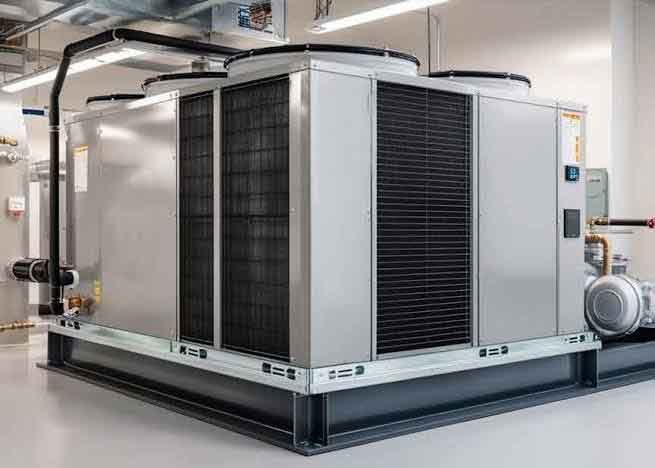

Businesses in the UAE depend heavily on reliable cooling throughout the year. Commercial buildings, hotels, hospitals, manufacturing facilities, data centres, rental chillers retail properties, construction projects, and events can all experience situations where their existing cooling capacity is unavailable or insufficient. A permanent chiller may fail unexpectedly, require planned maintenance, or simply be unable to handle a temporary increase in cooling demand.
On-demand chiller rental services in the UAE provide temporary chilled-water capacity without requiring a business to purchase and permanently install another chiller. Rental providers can supply equipment for emergency cooling, planned shutdowns, seasonal demand, construction projects, facility upgrades, and other temporary requirements. UAE rental providers commonly offer air-cooled and water-cooled chillers, with supporting equipment and technical services depending on the project.
The basic concept is straightforward: the rental company assesses the required cooling capacity and site conditions, selects suitable equipment, delivers it to the site, connects it to the required chilled-water or temporary cooling circuit, commissions the system, and provides support during the agreed rental period. At the end of the project, the temporary equipment can be disconnected and removed.
But there is considerably more involved than simply placing a chiller outside a building. The correct equipment depends on the cooling load, chilled-water requirements, available power, connection points, site access, operating conditions, rental duration, and whether the application is comfort cooling or process cooling.
What Is an On-Demand Chiller Rental Service?
An on-demand chiller rental service is a temporary cooling solution in which a business hires a chiller instead of purchasing a permanent cooling machine.
A chiller is a refrigeration machine that removes heat from water or another circulating fluid. The cooled fluid is then circulated through a building or industrial process to absorb heat. In a conventional chilled-water HVAC system, the chilled water can be supplied to air-handling units or other heat-transfer equipment before returning to the chiller to be cooled again.
The word “on-demand” describes the flexibility of obtaining cooling capacity when it is required. A business may need a rental chiller for a few days during an emergency, several weeks during maintenance, several months for a construction project, or longer for a temporary facility.
UAE rental providers advertise applications ranging from emergency cooling and planned maintenance to industrial processes, commercial buildings, hospitality, events, and temporary facilities.
This approach can allow a company to restore or supplement cooling without waiting for a permanent replacement project to be completed.
How Does Chiller Rental Work in the UAE?
The rental process normally starts with an assessment of the customer’s cooling requirement. A rental provider needs more information than simply the size of the building because the required chiller capacity depends on the actual cooling load and system conditions.
A typical on-demand chiller rental process involves the following stages.
1. Assessing the Cooling Requirement
The first step is determining how much cooling is required.
The rental company may ask about:
- Required cooling capacity
- Existing chiller capacity
- Supply and return water conditions
- Flow requirements
- Building or process application
- Available electrical supply
- Available installation area
- Connection points
- Required rental duration
- Site access and delivery restrictions
- Whether the cooling requirement is emergency, planned, seasonal, or project-based
This information helps engineers determine which rental configuration is appropriate.
Capacity should not be selected simply because a larger machine appears safer. Oversizing and undersizing can both create operational and financial problems. Rental providers therefore commonly assess the application and site before final equipment selection.
2. Selecting the Chiller Type
Once the requirement is understood, the provider determines which type of chiller is suitable.
The two major categories used in commercial and industrial applications are air-cooled chillers and water-cooled chillers.
An air-cooled chiller rejects heat directly to outdoor air through condenser coils and fans. It does not require the cooling tower and condenser-water loop associated with a conventional water-cooled arrangement.
A water-cooled chiller transfers heat to a condenser-water loop. That heat is normally rejected through a cooling tower or another heat-rejection device. This arrangement can be suitable for large commercial and industrial cooling requirements but requires additional equipment and connections.
3. Preparing the Site
Before delivery, the installation location needs to be checked.
The rental equipment must have adequate access, appropriate connection points, and suitable electrical and hydraulic arrangements. Depending on the system, the installation may require pumps, hoses, flexible piping, manifolds, buffer tanks, electrical connections, or other accessories.
Some rental providers offer integrated packages containing supporting equipment rather than supplying only the chiller itself. For example, rental systems can include pumps, flexible water connections, electrical hookups, and other accessories depending on the equipment configuration.
4. Delivery and Installation
The selected chiller is transported to the customer’s site and positioned in the agreed location.
The equipment is then connected to the building’s existing chilled-water system or to a temporary cooling circuit. The exact arrangement depends on the application.
For an emergency replacement, the rental chiller may temporarily provide cooling while the permanent equipment is being repaired. For a construction project or temporary facility, it may form part of the project’s planned cooling system.
Rental companies operating in the UAE advertise delivery, installation, commissioning, and technical support as part of their service offering.
5. Commissioning and Testing
The equipment should be checked before being placed into normal operation.
Engineers can verify connections, operating conditions, water circulation, controls, and other relevant system parameters. This commissioning stage is important because a chiller cannot perform correctly if the supporting system has insufficient flow, unsuitable connections, inadequate power, or another installation problem.
Once the system is operating correctly, the temporary cooling arrangement can begin serving the required load.
6. Operation and Technical Support
During the rental period, the equipment operates according to the agreed requirements.
Depending on the provider and rental agreement, support can include monitoring, maintenance, troubleshooting, and emergency assistance. Several UAE rental providers specifically advertise technical support during the rental period and 24/7 emergency support.
7. Removal After the Rental Period
When the permanent system is restored or the temporary project ends, the rental chiller can be disconnected and removed.
This is one of the central differences between rental cooling and permanent installation: the customer obtains temporary cooling capacity without retaining the equipment as a permanent asset.
How Does a Chiller Actually Produce Cooling?
Understanding how the equipment works makes it easier to understand why rental chillers can be connected to existing HVAC systems.
A typical vapor-compression chiller uses four major refrigeration stages: evaporation, compression, condensation, and expansion. Trane describes this cycle for both air-cooled and water-cooled chillers.
Evaporator
Warm return water from the building or process enters the chiller.
Inside the evaporator, heat moves from the water into the refrigerant. The refrigerant absorbs this heat and changes state.
The resulting chilled water is then available to circulate back toward the building or process.
Compressor
The refrigerant vapor enters the compressor.
The compressor increases the refrigerant’s pressure and temperature. This prepares the refrigerant to release the heat it collected from the chilled-water system.
Condenser
The hot refrigerant then moves to the condenser.
With an air-cooled chiller, fans move outdoor air across condenser coils to reject the heat into the atmosphere. With a water-cooled chiller, condenser water carries the heat away to a cooling tower or another heat-rejection system.
Expansion Device
The refrigerant then passes through an expansion device.
Its pressure and temperature decrease before it returns to the evaporator, allowing the refrigeration cycle to begin again.
Meanwhile, the chilled water continues circulating through the building or process, absorbing heat and returning to the chiller.
Air-Cooled vs Water-Cooled Chiller Rental in the UAE
Choosing between an air-cooled and water-cooled rental chiller depends on the application rather than simply selecting the most powerful equipment.
| Factor | Air-Cooled Chiller | Water-Cooled Chiller |
|---|---|---|
| Heat rejection | Outdoor air | Condenser-water system |
| Cooling tower | Not normally required | Normally required |
| Installation | Generally simpler | More supporting equipment required |
| Water requirement | No condenser-water loop | Requires condenser-water system |
| Typical applications | Temporary, commercial, outdoor and emergency applications | Large commercial and industrial loads |
| Site requirements | Outdoor airflow and suitable placement | Chiller, condenser-water circuit and heat-rejection equipment |
| Maintenance considerations | Generally simpler system | More components and water-system maintenance |
Trane identifies air-cooled chillers as packaged systems that can simplify installation, while water-cooled chillers can offer greater efficiency and are commonly used for larger cooling requirements.
For temporary applications, air-cooled chillers can be particularly practical when rapid deployment and simpler installation are important. Water-cooled systems can make sense when the site already has the necessary infrastructure and the project requires substantial continuous cooling.
When Do UAE Businesses Need On-Demand Chiller Rental?
There is no single reason businesses rent chillers. The requirement can arise from an unexpected failure or from a carefully planned project.
Emergency Chiller Replacement
A permanent chiller failure can create an immediate cooling problem.
Instead of waiting for the original chiller to be repaired or replaced, a business may use a temporary rental chiller to restore cooling capacity.
This can be particularly relevant for facilities where cooling is important to business operations, occupant comfort, equipment protection, or industrial processes.
Rental providers in the UAE specifically market emergency cooling and breakdown support as applications for temporary chillers.
Planned Chiller Maintenance
A chiller does not necessarily have to fail before a rental becomes useful.
During major maintenance or refurbishment, the permanent cooling system may need to be taken offline. A temporary rental chiller can provide cooling during the shutdown period.
This allows maintenance work to be planned rather than forcing a facility to accept an uncontrolled cooling interruption.
Additional Cooling Capacity
A facility may already have functioning chillers but still need additional capacity.
This can happen when a building is expanded, occupancy changes, production increases, or seasonal cooling demand becomes higher than the installed capacity.
Instead of permanently increasing the chiller plant for a temporary requirement, renting additional capacity can provide a more flexible approach.
Construction and Temporary Facilities
Construction projects may require temporary cooling before permanent HVAC infrastructure is completed.
Temporary offices, site facilities, refurbishment projects, and other temporary spaces can require cooling for a defined period.
Rental chillers can be configured around the project duration and removed when permanent systems become operational.
Events and Temporary Venues
Exhibitions, conferences, events, temporary structures, and other venues may require cooling without having a permanent chilled-water plant.
Rental providers in the UAE specifically list events among applications for temporary cooling equipment.
Industrial Process Cooling
Chillers are not limited to comfort air conditioning.
Manufacturing and industrial processes can also require controlled cooling. Rental providers market industrial chillers for process applications where temporary or additional cooling capacity is required.
The correct system in these cases depends heavily on the process requirements, required fluid temperature, cooling load, flow rate, and operating conditions.
What Equipment Can Be Included With a Chiller Rental?
A rental chiller is sometimes only one part of the complete temporary cooling system.
Depending on the application, the rental package can include:
- Chiller unit
- Chilled-water pumps
- Flexible hoses or temporary piping
- Electrical connections
- Manifolds
- Buffer tanks
- Air-handling units
- Cooling towers for applicable water-cooled arrangements
- Controls and monitoring equipment
- Other connection accessories
The exact package should be designed around the site rather than assumed in advance. Daikin, for example, describes rental packages that can include pumps, flexible water piping connections and electrical hookups.
Some UAE providers also offer AHUs, packaged AC equipment and portable AC units as complementary temporary cooling solutions.
How Is the Right Chiller Rental Capacity Selected?
Chiller capacity is commonly expressed in tons of refrigeration (TR). However, choosing the correct tonnage requires more than knowing the floor area.
Engineers may consider:
Cooling load: How much heat must the system remove?
Supply and return temperatures: What chilled-water temperatures are required by the existing system or process?
Water flow: Is sufficient circulation available through the system?
Ambient conditions: Outdoor conditions affect equipment performance, particularly for air-cooled chillers.
Application: Comfort cooling and industrial process cooling can have very different requirements.
Operating hours: A temporary system running continuously has different operational considerations from a short event application.
Available power: The site must have an appropriate electrical supply or another suitable power arrangement.
Connection requirements: The rental equipment must be compatible with the existing system or temporary distribution arrangement.
UAE rental providers similarly state that chiller selection depends on factors such as cooling load, temperature, water flow, ambient conditions, power, access, and connection routes.
Why UAE Climate Conditions Matter for Chiller Rental
The UAE’s hot climate makes cooling-system selection particularly important.
ASHRAE has specifically examined chilled-water system design in hot, humid climates, including a case study involving a hypothetical high-rise building in Abu Dhabi. The research discusses how chilled-water supply temperature, cooling load, and system design affect energy performance.
For air-cooled chillers, outdoor ambient conditions directly affect heat rejection because the condenser uses outdoor air. Trane notes that hot weather can reduce air-cooled chiller performance.
This means a rental chiller intended for UAE operation should be selected with the site’s actual operating conditions in mind. A nominal capacity figure alone does not tell the complete story.
What Are the Benefits of On-Demand Chiller Rental?
Reduced Capital Commitment
Purchasing a permanent chiller involves equipment, installation, infrastructure and long-term ownership costs.
Rental provides access to cooling equipment without requiring the customer to purchase the machine as a permanent asset.
Faster Access to Temporary Cooling
When equipment is available, rental can provide a practical route to obtaining temporary cooling without waiting for a permanent chiller procurement and installation project.
Some rental providers specifically advertise rapid deployment and emergency response.
Flexible Rental Periods
A business can rent equipment for the period required by the project.
Rental providers advertise arrangements ranging from short-term requirements to longer project-based or seasonal rentals.
Support During Planned Maintenance
Temporary cooling can allow a facility to continue operating while its permanent equipment undergoes maintenance or replacement.
Scalable Cooling
Businesses can add temporary cooling capacity when demand increases and remove it when the additional requirement disappears.
This can be useful for projects where the cooling load is not expected to remain permanently high.
What Should Businesses Check Before Renting a Chiller in the UAE?
Before signing a rental agreement, businesses should look beyond the advertised chiller tonnage.
Ask the provider about:
Cooling capacity: Is the quoted capacity appropriate for the actual load and operating conditions?
Chiller type: Is an air-cooled or water-cooled system appropriate for the site?
Supporting equipment: Are pumps, hoses, tanks, AHUs, cooling towers, cables or other accessories required?
Electrical requirements: Can the site provide the required electrical supply?
Installation: Who handles delivery, connection, commissioning and removal?
Technical support: What support is available during the rental period?
Emergency response: What happens if the temporary chiller develops a fault?
Rental duration: Are daily, weekly, monthly or project-based arrangements available?
Site access: Can the required equipment reach and be positioned at the site?
Operating conditions: Has the provider considered UAE ambient conditions and the actual application?
These details can have a major effect on the practical performance and total cost of a rental solution.
Chiller Rental for Commercial and Industrial Applications
The applications for temporary chillers extend across several sectors.
Commercial buildings may require rental cooling during chiller replacement, maintenance, building upgrades or temporary increases in demand.
Hotels and hospitality facilities can use temporary cooling when existing equipment requires maintenance or additional capacity is needed.
Hospitals and healthcare facilities can have particularly important cooling requirements, making contingency planning an important consideration.
Manufacturing facilities may require process cooling rather than only comfort cooling.
Data centres have continuous heat-management requirements, and temporary cooling can form part of a planned maintenance or emergency strategy.
Construction projects can use temporary cooling before permanent HVAC systems are completed.
Events and exhibitions can require temporary cooling for a defined period.
Rental providers serving the UAE identify commercial buildings, manufacturing facilities, data centres, healthcare, hospitality, industrial processes and events among potential applications for temporary cooling.
Is On-Demand Chiller Rental Better Than Buying a Chiller?
There is no universal answer because rental and ownership serve different requirements.
Buying can make sense when a facility has a long-term, predictable need for permanent cooling capacity and is prepared to manage the associated ownership, maintenance and infrastructure requirements.
Rental can be appropriate when the cooling requirement is temporary, unexpected, seasonal, project-based, or connected with maintenance and replacement.
For example, purchasing another permanent chiller solely to cover a short maintenance shutdown may not be necessary if temporary rental capacity can meet the requirement.
The right decision therefore depends on duration, cooling demand, capital budget, existing infrastructure, maintenance strategy and long-term plans for the facility.
How Much Does On-Demand Chiller Rental Cost in the UAE?
There is no single standard UAE chiller rental price because rental cost depends on the project.
Important factors can include:
- Chiller capacity
- Air-cooled or water-cooled configuration
- Rental duration
- Required operating conditions
- Delivery distance
- Installation complexity
- Pumps and accessories
- Temporary piping
- Electrical requirements
- AHUs or other supporting equipment
- Technician or monitoring requirements
- Emergency deployment requirements
A small temporary installation for a short project will have different requirements from a large industrial cooling system operating continuously for several months.
For this reason, businesses should request a project-specific quotation rather than relying on a generic daily rental price.
How On-Demand Chiller Rental Supports Business Continuity
Cooling failures can create more than an uncomfortable indoor environment.
Depending on the facility, inadequate cooling can affect employees, customers, equipment, production processes or temperature-sensitive operations.
A properly planned temporary cooling solution can provide a bridge between the cooling problem and the permanent solution.
For example, if an existing chiller fails, a rental unit can potentially provide temporary chilled-water capacity while technicians repair the permanent system. If a facility is undergoing planned HVAC replacement, rental equipment can provide cooling during the transition.
This is why rental providers position temporary chillers not simply as equipment hire but as part of emergency cooling and business-continuity planning.
Why Professional Chiller Installation Matters
A rental chiller is only useful if the complete system is correctly configured.
The chiller must be connected to the appropriate water circuit, supplied with suitable power, and operated within its design conditions. Poor connection arrangements, inadequate water flow, unsuitable electrical supply or incorrect capacity selection can prevent the system from delivering the expected cooling.
Professional providers therefore commonly combine equipment rental with engineering assessment, installation, commissioning and technical support. HVACLINIC, Rental Power, Prime Chillers and Stout Energy all describe combinations of equipment supply and technical or installation support in their UAE rental offerings.
On-Demand Chiller Rental Services Across the UAE
Businesses looking for temporary cooling may require service in Dubai, Abu Dhabi, Sharjah, Ajman, Ras Al Khaimah, Fujairah or Umm Al Quwain.
The availability of specific equipment, installation support and delivery times can vary by provider and project location. For a UAE-wide requirement, it is therefore useful to confirm the provider’s actual service coverage, equipment availability and expected deployment time before the rental is arranged.
The equipment requirement also varies substantially between a commercial building, construction site, industrial facility, hotel, event venue and process-cooling application.
Final Thoughts
On-demand chiller rental services in the UAE provide businesses with temporary access to chilled-water cooling when permanent capacity is unavailable, insufficient or temporarily unsuitable.
The process normally involves assessing the cooling requirement, selecting the appropriate chiller, preparing the site, delivering and installing the equipment, commissioning the system, providing operational support and removing the equipment when the rental period ends.
Air-cooled and water-cooled chillers serve different requirements. Air-cooled equipment can simplify temporary deployment because it rejects heat directly to outdoor air and does not require a conventional cooling tower. Water-cooled systems can be appropriate for large cooling loads where the necessary condenser-water infrastructure is available.
For UAE businesses, the most important consideration is not simply finding the largest available rental chiller. The equipment should be matched to the actual cooling load, water flow, operating temperatures, ambient conditions, power supply, site layout, connection requirements and rental duration.
Whether the requirement comes from an emergency breakdown, planned maintenance, additional seasonal capacity, construction, an event or an industrial process, a correctly designed temporary cooling system can provide a practical bridge until the permanent cooling requirement is resolved.