

Anyone who has run a construction site, a food plant, or an outdoor event in the UAE during peak summer knows the problem isn’t just heat – it’s what happens when a fixed cooling system can’t keep up with it. With ambient temperatures regularly climbing past 40°C, a chiller breakdown or a sudden capacity shortfall isn’t a minor inconvenience; it can shut down a process line, spoil a cold-chain shipment, or ruin an event. That’s why rental chillers have become a standard part of how businesses across construction, healthcare, food and beverage, and industrial sectors in the UAE manage cooling.
But “renting a chiller” isn’t a one-size-fits-all decision. The right unit depends on your load, your site conditions, your timeline, and the level of support you’ll need once it’s running. Here’s a practical, research-backed guide to making that choice.
1. Start With the Type of Chiller You Actually Need
Rental chillers generally fall into two broad categories, and picking the wrong one is one of the most common (and costly) mistakes.
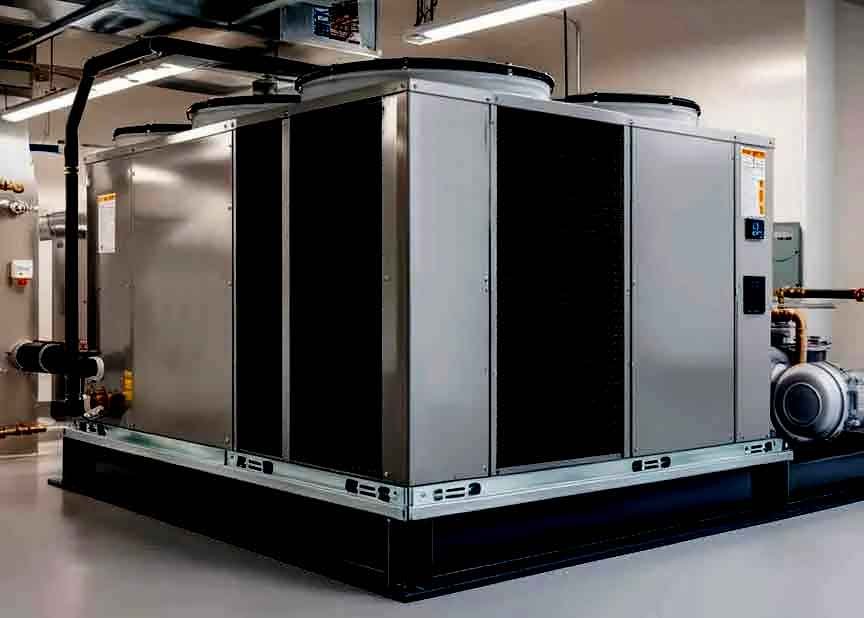
Air-cooled chillers use ambient air to reject heat from the refrigerant, which makes them the go-to option where water access is limited or where fast, self-contained deployment matters. They’re widely used for commercial and event cooling, cold storage, and general process cooling because they don’t need a separate water supply or cooling tower to operate.
Water-cooled chillers reject heat using water rather than air, which typically makes them more efficient for large, continuous industrial loads. They tend to suit long-term deployments – refineries, power stations, manufacturing plants – where space for a cooling tower is available and sustained heavy-duty performance matters more than quick setup.
There’s also a growing category worth knowing about: low-temperature process chillers, which are engineered for specialized applications like pharmaceutical manufacturing or food processing where standard chillers can’t reach the required range. Some rental fleets in the region offer units capable of pulling temperatures down well below standard air-cooled ranges, which matters if your process has strict thermal tolerances.
2. Size the Unit to Your Actual Load – Not a Guess
Chiller capacity is usually rented by ton (of refrigeration) or kW, and rental providers in the UAE typically stock a wide span – from small portable units of roughly 10 tons up to industrial-scale systems in the hundreds of tons, with some fleets scaling as high as 1,000 tons for major projects. That range exists because undersizing and oversizing are both expensive mistakes: too small, and you risk process downtime or spoiled product; too large, and you’re paying for capacity you’re not using.
This is one area where it genuinely pays to lean on the provider’s technical team rather than estimate yourself. Reputable rental companies send engineers to assess site load, ambient conditions, and process requirements before recommending a unit size – treat that site assessment as a non-negotiable step, not an optional extra.
3. Match the Chiller to Your Industry’s Specific Requirements
Different sectors have very different tolerances for error:
Construction sites often need flexible, scalable cooling that can be adjusted up or down as a project phase changes – a modular rental approach matters more here than raw capacity.
Food and beverage / cold storage operations need consistent, reliable temperature control since standard air-cooled units can struggle to hit very low temperatures without additional equipment — ask specifically whether the unit is rated for cold-storage-level performance, not just general commercial cooling.
Pharmaceutical and healthcare facilities typically require tighter tolerances and documented compliance with cold-chain standards, so ask providers directly how their chillers support pharmaceutical or food-logistics compliance.
Events and hospitality usually prioritize quiet operation and fast, clean deployment over raw industrial capacity – sound-attenuated units matter for anything guest-facing.
4. Check Deployment Speed and Flexibility
The UAE’s rental chiller market is built around urgency – construction delays, unplanned maintenance shutdowns, and emergency breakdowns don’t wait for a quote to be processed. Look for providers who can commit to same-day or next-day delivery for urgent needs, and confirm what “quick installation” actually means in practice – some providers advertise setup within hours using standardized, pre-configured connections, which is worth prioritizing if downtime is costly for you.
Also check the rental terms themselves. Providers generally offer both short-term (days to weeks) and long-term (months) arrangements, and flexible, modular systems that let you scale capacity up or down mid-rental are especially valuable for projects with changing demand.
5. Ask About Monitoring, Maintenance, and Support – Not Just the Machine
A rental chiller is only as good as the support behind it. Before signing, get clear answers on:
Remote monitoring: Many providers now offer 24/7 two-way monitoring on their units, which allows for faster response if something goes wrong and helps maximize uptime without you having to catch problems manually.
Maintenance responsibility: Confirm whether preventive maintenance, on-site technicians, and emergency support are included or offered as an add-on package.
Fuel and power arrangements: If the chiller needs to be paired with a generator, clarify whether fuel is included in the package or managed separately.
6. Confirm Compliance and Environmental Standards
Given the UAE’s environmental regulations and the increasing emphasis on sustainability in commercial cooling, it’s worth confirming that any rental unit is low-emission and compliant with local environmental standards, particularly if you’re operating in a sensitive area (near residential zones, hospitals, or food facilities). Ask specifically about the refrigerant used – many modern rental chillers use refrigerants selected for reliability and a lower environmental impact – and whether the unit carries relevant design compliance certifications.
7. Weigh Efficiency Against Operating Cost
Energy consumption adds up fast on a chiller running continuously in UAE summer conditions. When comparing rental options, ask how each unit performs at both full load and part load – chillers that maintain efficiency across varying loads will generally cost less to run over the rental period, which matters more the longer your project runs. This is also where a modular approach pays off: scaling capacity to match actual demand, rather than running one oversized unit continuously, tends to reduce both energy use and operating cost.
9. Understand How Rental Terms and Costs Actually Work
Pricing structures for industrial rental chillers aren’t as simple as a flat daily rate, and understanding the moving parts helps you avoid surprises on the invoice.
Duration-based pricing: As with most heavy equipment rental in the UAE, the per-day cost drops the longer you commit. Short-term or emergency rentals (days to a couple of weeks) carry a premium; month-long or multi-month project rentals bring the effective daily rate down significantly. If you know a project will run for months, negotiate a long-term rate up front rather than rolling short-term contracts.
Capacity-linked cost: Larger tonnage and lower target temperatures both push cost up, since bigger compressors and low-temperature process chillers draw more power and need more sophisticated controls. This is another reason accurate load sizing matters – paying for 100 tons when your process needs 60 is a recurring cost, not a one-time one.
What’s typically included vs. billed separately: Delivery, installation, and basic commissioning are often bundled into commercial chiller rental packages, but items like fuel (if paired with a generator), ancillary equipment (hoses, pumps, manifolds, buffer tanks), and after-hours emergency callouts may be quoted separately. Get an itemized breakdown before signing so you’re comparing like-for-like quotes across providers.
AMC (Annual Maintenance Contract) add-ons: Some providers offer optional AMC packages on top of the rental – preventive maintenance, on-site technicians, and remote monitoring bundled in. For long-running or mission-critical processes, this is usually worth the extra cost, since a single unplanned outage can cost far more than the AMC fee.
Mobilization and demobilization charges: For large industrial units, transport to and from site (especially to more remote locations or other emirates) can carry its own line item. Ask whether this is included in the quoted rate or charged separately, particularly if your site is outside a provider’s main coverage area.
10. Get Specific on Ancillary Equipment and Site Integration
A chiller rarely operates in isolation – it needs to be integrated into your existing (or temporary) cooling loop, and the ancillary equipment involved can make or break how smoothly the deployment goes. Ask providers whether their chillers are designed to “plug and play” with standard ancillary devices – hoses, pumps, manifolds, heat exchangers, and buffer tanks – since a unit that isn’t compatible with readily available connectors can add days to a deployment that was supposed to solve an urgent problem.
Also confirm:
Electrical connection requirements: Many industrial rental units run on 3-phase power and may not require a neutral cable, but you’ll need to confirm your site’s electrical infrastructure can support the unit’s draw – especially if you’re also running a rental generator alongside it.
Physical footprint and access: Confirm the unit’s frame dimensions, lift points (ISO lift facilities, forklift pockets), and whether crane access is needed for placement, particularly on congested construction sites.
Noise levels: If the chiller will run near occupied space – offices, residential areas, hospital wards, or an event venue – ask about sound attenuation specifications. Standard industrial units can be loud enough to violate noise ordinances or disturb guests, so sound-dampened models matter more than people often expect until it’s too late.
11. Real-World Scenarios Worth Knowing
A few practical examples illustrate why the “right” chiller is highly situational rather than a single best answer:
Construction project facing a fixed-system delay: When a permanent chilled-water plant isn’t ready in time for occupancy or process startup, a temporary rental chiller – sized to interim load, not final building load – can keep a project on schedule without forcing an expensive redesign.
Outdoor event with hundreds of guests: Event cooling prioritizes fast setup, quiet operation, and the ability to pair the chiller with air handling units or ducted cooling, often integrated with a silent rental generator so power and cooling are managed as one package.
Food or pharmaceutical cold-chain operation: These facilities can’t tolerate a temperature excursion, even briefly. Renting a chiller here means prioritizing monitoring, redundancy, and documented compliance with cold-chain standards over minimizing cost.
Planned maintenance shutdown at an industrial site: When a permanent chiller needs to go offline for scheduled maintenance, a rental unit provides bridge cooling so the process doesn’t have to stop — this is one of the most common and time-sensitive rental scenarios in refineries and manufacturing plants.
8. Compare a Few Providers Before Committing
The UAE rental chiller market includes everyone from global industrial rental specialists to regional and Dubai-based providers, and offerings vary meaningfully in fleet size, response time, and service depth. Before committing:
Ask for the full range of tonnage/kW options they stock, not just what they push first.
Get clarity on delivery timelines to your specific site or emirate.
Ask what happens if the unit underperforms or fails mid-rental – is replacement rapid, and is it covered under the agreement?
Request references or examples of similar projects they’ve supported (construction, events, pharma, food logistics), since experience in your specific sector often matters more than headline tonnage figures.
FINAL THOUGHTS
Choosing the right rental chiller in the UAE comes down to matching four things correctly: the chiller type (air-cooled vs. water-cooled vs. low-temperature process), the capacity (sized by a real site assessment, not a guess), the support model (monitoring, maintenance, fast replacement), and compliance (environmental and, where relevant, cold-chain standards). Get an engineer on-site before you sign anything, ask pointed questions about monitoring and maintenance rather than accepting a generic pitch, and treat delivery speed and flexibility as seriously as tonnage – because in UAE conditions, the gap between “cooling that works” and “cooling that fails” is often measured in hours, not days.