
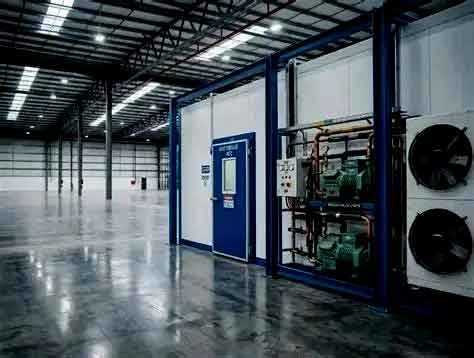

Commercial projects in the UAE often require reliable cooling throughout construction, fit-out, renovation, and operational phases. Because the country has a hot climate and cooling represents a major part of building energy demand, maintaining dependable chilled-water capacity is an important project consideration. The U.S. International Trade Administration notes that cooling can account for around 60–70% of peak electricity consumption during UAE summer months, while HVAC-related energy use represents a significant share of building energy demand.
For projects that need temporary or additional cooling capacity, a Rental Chiller in UAE can provide a practical alternative to purchasing permanent equipment. Rental systems can be deployed for temporary cooling requirements, emergency capacity, planned maintenance, refurbishment projects, or periods when the permanent cooling plant is not yet operational.
What Is a Rental Chiller?
A rental chiller is a temporary cooling system supplied for a defined period rather than permanently installed as part of a building’s original HVAC plant. Depending on the project, the rental package may include chillers, pumps, hoses or temporary pipework, control equipment, and other accessories required to connect the temporary system to the building’s cooling circuit.
Chillers produce chilled water that can be circulated to air-handling units, fan-coil units, process equipment, or other cooling loads. ASHRAE explains that central chilled-water plants commonly produce chilled water at a central location and distribute it to AHUs and other cooling equipment.
The exact configuration of a rental installation depends on the building, cooling load, available connection points, electrical supply, water circuit, installation area, and project schedule.
Why Commercial Projects in the UAE Use Rental Chillers
Commercial developments can experience temporary changes in cooling requirements. A building may be partially occupied while construction continues, an existing chiller may require major maintenance, or the permanent plant may not yet be ready for commissioning.
A temporary chiller can help bridge these situations without requiring the project owner to purchase additional permanent equipment.
Common reasons for renting include:
Temporary cooling during construction or fit-out
Additional cooling during periods of high demand
Chiller replacement or major maintenance
Emergency cooling after equipment failure
Cooling during HVAC upgrades
Temporary capacity for commercial expansions
Maintaining suitable indoor conditions during building refurbishment
Supporting temporary facilities and project offices
The main benefit is flexibility. The cooling capacity can be arranged around the project’s actual requirement and rental period rather than committing capital to equipment that may only be needed temporarily.
Applications of Rental Chillers in Commercial Projects
Shopping Malls and Retail Centers
Retail facilities have substantial cooling requirements because of their size, occupancy, lighting, equipment, and operating schedules. Temporary cooling may be required when a chiller plant is undergoing maintenance or when an additional cooling load is introduced during expansion or refurbishment.
A properly engineered temporary system can help maintain cooling while permanent HVAC work is carried out.
Hotels and Hospitality Projects
Hotels require dependable cooling for guest rooms, restaurants, kitchens, conference areas, and other occupied spaces. During refurbishment or plant maintenance, losing cooling capacity can affect guests and business operations.
Rental chillers can provide temporary capacity while permanent equipment is repaired, replaced, or upgraded.
Office Buildings
Office buildings can require temporary cooling during HVAC renovation, tenant modifications, or chiller replacement. A rental system can be designed to serve selected areas or support the building’s cooling network while work takes place.
Construction and Fit-Out Projects
A commercial building may need cooling before the permanent HVAC plant is fully available. Temporary chilled-water equipment can support construction activities, fit-out operations, testing, commissioning, or early occupancy where the project’s engineering and authority requirements allow it.
Dubai’s Building Code establishes minimum requirements covering building health, safety, environmental impact, and sustainable development, while also providing requirements and calculations related to air-conditioning systems.
Data and Technology Facilities
Facilities with sensitive equipment can have continuous cooling requirements. Temporary chillers may be considered when additional capacity is required or when cooling equipment needs planned maintenance.
For these applications, the temporary system should be engineered around the actual cooling load and required redundancy rather than selecting equipment based only on nominal capacity.
How to Determine the Required Chiller Capacity
Selecting a rental chiller should begin with the project’s cooling requirement. Choosing a unit simply because it has a large refrigeration-ton capacity can result in an inefficient or unsuitable installation.
ASHRAE guidance emphasizes that cooling plant design should consider peak loads, annual cooling-load profiles, equipment capacity, controls, and operating limitations.
Important information includes:
- Current cooling load – Determine how much cooling the building or selected areas actually require.
- Peak demand – Consider the maximum expected load rather than only average demand.
- Operating schedule – Occupancy and operating hours influence cooling requirements.
- Existing HVAC configuration – Check whether the temporary chiller will connect to an existing chilled-water loop or serve a separate system.
- Supply and return temperatures – The required chilled-water temperatures must be compatible with the connected system.
- Available electrical supply – Verify that the site’s electrical infrastructure can support the proposed equipment.
- Space and access – Confirm that the chiller can be positioned safely and that delivery and removal are practical.
- Redundancy requirements – Critical commercial applications may require standby capacity rather than a single operating unit.
ASHRAE also notes that simultaneous building loads are not necessarily equal to the simple sum of every individual peak load. Load diversity can therefore be important when determining central plant capacity.
For this reason, a proper load assessment is preferable to estimating capacity from building area alone.
Key Factors to Consider Before Renting
Cooling Capacity
The selected equipment should match the project’s calculated cooling requirement. Both insufficient and excessive capacity can create problems.
Chilled-Water Conditions
The rental chiller must be compatible with the required entering and leaving water temperatures and the expected flow rate.
Electrical Requirements
Confirm voltage, phase, frequency, starting characteristics, connected load, and available site capacity before equipment is mobilized.
Installation and Connection
Temporary chillers still require proper hydraulic, electrical, and control connections. The installation should be reviewed by qualified personnel and coordinated with the existing HVAC system.
Site Conditions
UAE commercial sites can have demanding environmental conditions. The installation location should provide adequate clearance, ventilation, safe access, and suitable operating conditions for the equipment.
Rental Duration
Rental periods can range from short emergency requirements to several months or longer. The commercial agreement should clearly define the rental period, transportation, installation, maintenance, breakdown response, and demobilization responsibilities.
Rental Chiller vs. Buying a Chiller
For a permanent cooling requirement, purchasing a chiller may make sense because the equipment becomes part of the building’s long-term HVAC infrastructure.
However, purchasing may be less attractive when the cooling requirement is temporary.
| Consideration | Rental Chiller | Purchased Chiller |
|---|---|---|
| Temporary project | Well suited | Often less practical |
| Emergency capacity | Fast capacity option | Requires equipment ownership |
| Capital expenditure | Lower upfront equipment investment | Higher upfront investment |
| Short-term requirement | Flexible | May not be economical |
| Long-term permanent plant | Usually not the first choice | Generally more suitable |
| Maintenance | Often included according to rental agreement | Owner’s responsibility |
| Replacement after failure | Rental provider may support replacement | Owner manages replacement |
The right choice ultimately depends on project duration, required capacity, capital budget, existing infrastructure, and long-term cooling strategy.
Energy Efficiency Should Still Matter
Temporary does not mean efficiency should be ignored. Chiller performance can influence operating costs, particularly for projects running equipment for extended periods.
ASHRAE identifies chilled-water plant design and operation as important factors affecting building energy use and operating costs.
When comparing rental options, project teams should therefore consider:
Chiller efficiency
Part-load performance
Pumping requirements
Condenser-water requirements where applicable
Control strategy
Operating hours
Expected load profile
Maintenance condition of the equipment
The cheapest rental rate is not necessarily the lowest overall operating cost.
Installation, Safety and Regulatory Considerations
Temporary cooling equipment should not be treated as a simple plug-and-play solution. Commercial projects may require coordination with building management, consultants, contractors, utility providers, and relevant authorities.
Requirements vary according to the emirate, project type, site, and installation arrangement. Dubai, for example, has specific regulatory requirements for district cooling services. Dubai’s legislation requires licensed entities providing district cooling services to obtain the relevant permit, while technical requirements and approvals can apply to cooling infrastructure.
This distinction is important: a temporary chiller serving a private commercial project is not automatically the same thing as providing regulated district cooling services. The applicable approvals should be confirmed for the specific installation.
For construction activities, local development authorities may also require temporary construction permits and supporting documents. For example, the Dubai Development Authority lists design drawings, relevant NOCs, and other project documents among the requirements for its temporary construction permit process.
A professional rental provider should therefore assess the site and coordinate the installation requirements before mobilization.
How the Rental Process Usually Works
A typical commercial rental project follows several stages.
1. Site and Cooling Assessment
The provider reviews the building, cooling load, existing HVAC system, connection points, available utilities, and site conditions.
2. Equipment Selection
The appropriate chiller capacity and configuration are selected based on the calculated requirements.
3. Technical Proposal
The proposal should explain equipment capacity, operating conditions, installation requirements, rental duration, and included services.
4. Mobilization
Equipment is transported to the project site and positioned according to the approved installation plan.
5. Connection and Commissioning
Temporary pipework, pumps, electrical connections, controls, and other required components are installed and tested.
6. Operation and Monitoring
The system is monitored throughout the rental period. Maintenance and emergency support should be clearly defined in the rental agreement.
7. Demobilization
When the permanent cooling system becomes available or the project requirement ends, the rental equipment can be disconnected and removed.
Questions to Ask a Rental Chiller Provider
Before signing a rental agreement, commercial project managers should ask:
What cooling capacity is available?
Has the required capacity been calculated for our project?
What chilled-water temperatures and flow rates are required?
What electrical supply does the equipment need?
Are pumps and temporary pipework included?
Is installation included in the quoted price?
Who handles commissioning?
What maintenance is included?
Is 24/7 emergency support available?
What happens if the rented chiller develops a fault?
What permits or approvals may be required?
How quickly can replacement equipment be mobilized?
What are the transportation and demobilization terms?
Is standby capacity recommended for this application?
Getting these details in writing can prevent unexpected costs and delays later.
Why Professional Planning Matters
A rental chiller can provide valuable temporary cooling capacity, but the equipment itself is only one part of the solution. Correct load calculations, hydraulic compatibility, electrical planning, controls, installation, commissioning, and ongoing maintenance all influence the reliability of the system.
ASHRAE’s central cooling plant guidance highlights the relationship between equipment capacity, cooling loads, controls, and operating limitations.
For commercial projects, the objective should therefore be to select a complete temporary cooling solution rather than simply rent the largest available chiller.
Final Thoughts
A Rental Chiller in UAE can be a practical solution for commercial projects that need temporary, additional, or emergency cooling capacity. It can support construction, fit-out, refurbishment, planned maintenance, equipment replacement, and other situations where permanent cooling capacity is unavailable or insufficient.
The most important step is to match the rental system to the project’s actual cooling load and technical requirements. Capacity, water temperatures, flow rates, electrical supply, site conditions, efficiency, installation, maintenance, and regulatory requirements should all be evaluated before deployment.
With proper engineering and professional installation, temporary chilled-water equipment can help commercial projects maintain reliable cooling while permanent HVAC work progresses.