
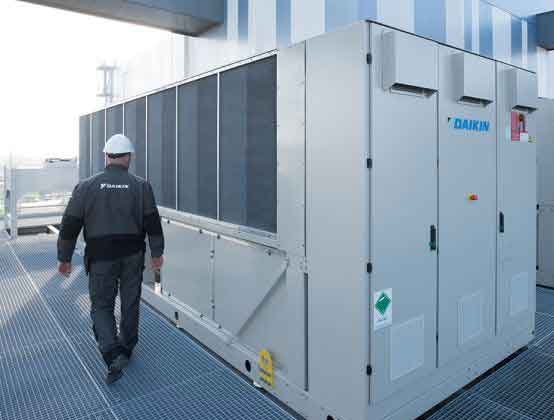

Industrial facilities in the UAE depend on reliable cooling to keep production processes, machinery, storage areas, and working environments within required temperature ranges. In a climate where summer temperatures can become extremely high, a failure or shortage of cooling capacity can quickly affect production and operating conditions. This is why rental chillers have become a practical option for factories, manufacturing plants, warehouses, food-processing facilities, chemical operations, and other industrial sites.
Rental chillers provide temporary or additional chilled-water capacity without requiring an industrial facility to purchase and install a permanent chiller plant. UAE rental providers offer solutions for emergency breakdowns, planned maintenance, seasonal demand, production expansion, and temporary process cooling.
Why Industrial Facilities Use Rental Chillers
Industrial cooling requirements can change significantly depending on production schedules, equipment loads, maintenance periods, and seasonal conditions. Installing additional permanent cooling equipment for a temporary requirement may not always make financial or operational sense.
A rental chiller can provide additional capacity when an existing system is unable to meet demand. Rental cooling providers in the UAE commonly support applications such as manufacturing, pharmaceutical production, food and beverage processing, chemical and petrochemical operations, process-water cooling, and other temperature-sensitive industrial activities.
Rental equipment can also be useful when a permanent chiller is undergoing maintenance or has suffered an unexpected failure. Instead of waiting for a replacement or completing major plant modifications immediately, a temporary system can bridge the cooling gap.
Common Applications of Rental Chillers in UAE Industrial Sites
1. Manufacturing and Production
Manufacturing processes often require controlled temperatures for equipment, process water, production lines, or specific stages of manufacturing. Temporary chillers can supplement an existing cooling system when production demand increases or existing equipment is taken offline.
2. Food and Beverage Processing
Temperature control is important throughout many food and beverage operations. Rental chillers can provide temporary process cooling during maintenance, production expansion, or periods of higher cooling demand.
3. Pharmaceutical Facilities
Pharmaceutical manufacturing can involve processes where stable temperature conditions are important. Temporary cooling can help maintain required conditions while permanent HVAC or process-cooling equipment is being serviced, upgraded, or expanded.
4. Chemical and Petrochemical Operations
Industrial processes in chemical and petrochemical facilities can have demanding cooling requirements. Rental systems can be configured with supporting equipment such as pumps, heat exchangers, hoses, and other components according to the site’s cooling arrangement.
5. Warehouses and Temperature-Sensitive Storage
Additional cooling may be required in storage environments where temperature conditions need to remain stable. Rental chillers can provide supplementary capacity when the existing cooling plant cannot handle the required load.
Rental Chillers for Planned Maintenance
Planned shutdowns are an important reason industrial companies consider temporary cooling. A chiller plant may need to be isolated for inspection, repair, cleaning, or replacement, but the facility may still need cooling during part of the maintenance period.
Rental providers in the UAE specifically market temporary cooling for planned shutdowns and maintenance periods. Depending on the installation, a rental package can include chillers, pumps, heat exchangers, air handlers, temporary pipework, and other accessories.
This approach allows a facility to schedule maintenance without necessarily shutting down every process that depends on cooling.
Emergency Cooling After Chiller Failure
An unexpected chiller breakdown can create an immediate operational problem. For an industrial facility, the consequences can extend beyond uncomfortable indoor temperatures because cooling may be directly connected to production processes or equipment.
Emergency rental cooling is therefore used as a temporary bridge while the permanent system is repaired. UAE rental providers advertise rapid deployment and 24/7 support for emergency industrial cooling requirements.
The actual response time and installation requirements depend on equipment availability, site access, cooling capacity, connection points, and the complexity of the installation.
How to Select the Right Rental Chiller
Choosing a rental chiller should not be based only on the advertised tonnage or kW rating. Industrial applications require an assessment of the complete cooling requirement.
Important factors include:
- Required cooling capacity
- Chilled-water supply and return temperatures
- Required water flow rate
- Outdoor ambient conditions
- Existing chilled-water system configuration
- Available electrical power
- Physical access for delivery and installation
- Available space for the temporary equipment
- Pipe and hose connection requirements
- Rental duration
- Need for pumps, buffer tanks, heat exchangers, AHUs, or generators
Some UAE rental providers offer air-cooled chillers in different capacities and can combine multiple units for larger cooling requirements. Atlas Copco, for example, lists rental air-cooled chillers from 50 kW to 720 kW per unit and states that multiple units can operate in parallel for multi-megawatt applications.
Air-Cooled vs. Water-Cooled Rental Chillers
The choice between air-cooled and water-cooled equipment depends on the site’s infrastructure and operating requirements.
Air-cooled chillers reject heat directly to the surrounding air and generally require less supporting infrastructure than water-cooled systems. They can be useful where a cooling tower or continuous condenser-water system is not available.
Water-cooled chillers can be appropriate where suitable condenser-water infrastructure already exists and the facility is designed around a central water-cooled cooling system. Rental providers in the UAE offer both air-cooled and water-cooled options for different industrial applications.
The final choice should be made after evaluating the site’s load, temperatures, water availability, power supply, installation conditions, and operating requirements.
Why Rental Can Be More Flexible Than Buying
Purchasing a permanent chiller involves equipment costs, installation, commissioning, maintenance, space requirements, and long-term ownership considerations. For a requirement lasting only weeks or months, renting can provide greater flexibility.
Rental chillers are particularly useful when a business needs:
- Temporary additional capacity
- Emergency replacement cooling
- Cooling during a planned shutdown
- Seasonal capacity
- Temporary cooling during plant expansion
- Cooling while waiting for permanent equipment
- Short-term process cooling
Rental solutions can also be scaled by using multiple units when the cooling requirement increases. This can be useful for industrial projects where cooling demand changes during different stages of operation.
Energy Efficiency Matters
Cooling represents a significant part of energy consumption in the UAE. Dubai’s Regulatory and Supervisory Bureau for Electricity and Water states that cooling accounts for almost half of the emirate’s total electricity demand, highlighting why efficient cooling is an important consideration.
For industrial facilities, efficiency should therefore be considered alongside capacity. Selecting equipment that is properly sized for the required load, maintaining suitable operating temperatures, and avoiding unnecessary overcapacity can help manage energy consumption.
The UAE’s cooling regulations and energy-efficiency initiatives also demonstrate the broader focus on improving cooling performance and reducing environmental impact. Abu Dhabi’s Department of Energy, for example, highlights energy efficiency and sustainable cooling within its regulatory framework.
Installation and Technical Support
A rental chiller is not simply a machine that can be delivered and switched on. Industrial installations may require pumps, temporary pipework, electrical connections, heat exchangers, buffer tanks, AHUs, or generators depending on the application.
Established rental providers commonly offer services covering site assessment, installation, commissioning, monitoring, maintenance, and decommissioning.
Before installation, the rental company should understand the facility’s existing cooling system, connection points, operating temperatures, electrical infrastructure, access limitations, and safety requirements.
Conclusion
Rental chillers can give industrial facilities in the UAE a practical way to maintain cooling capacity when permanent equipment is unavailable, insufficient, or undergoing maintenance. They can support manufacturing, food and beverage, pharmaceutical, chemical, petrochemical, storage, and other industrial applications.
The most suitable solution depends on the facility’s actual cooling load, operating temperatures, water flow, ambient conditions, available power, installation requirements, and rental period. Rather than choosing a chiller solely by its capacity, industrial operators should work with a rental provider that can assess the complete system and provide the required supporting equipment.
For UAE industrial facilities, the main value of rental cooling is flexibility: additional capacity can be brought in when it is needed, without committing to a permanent cooling installation for a temporary requirement.