
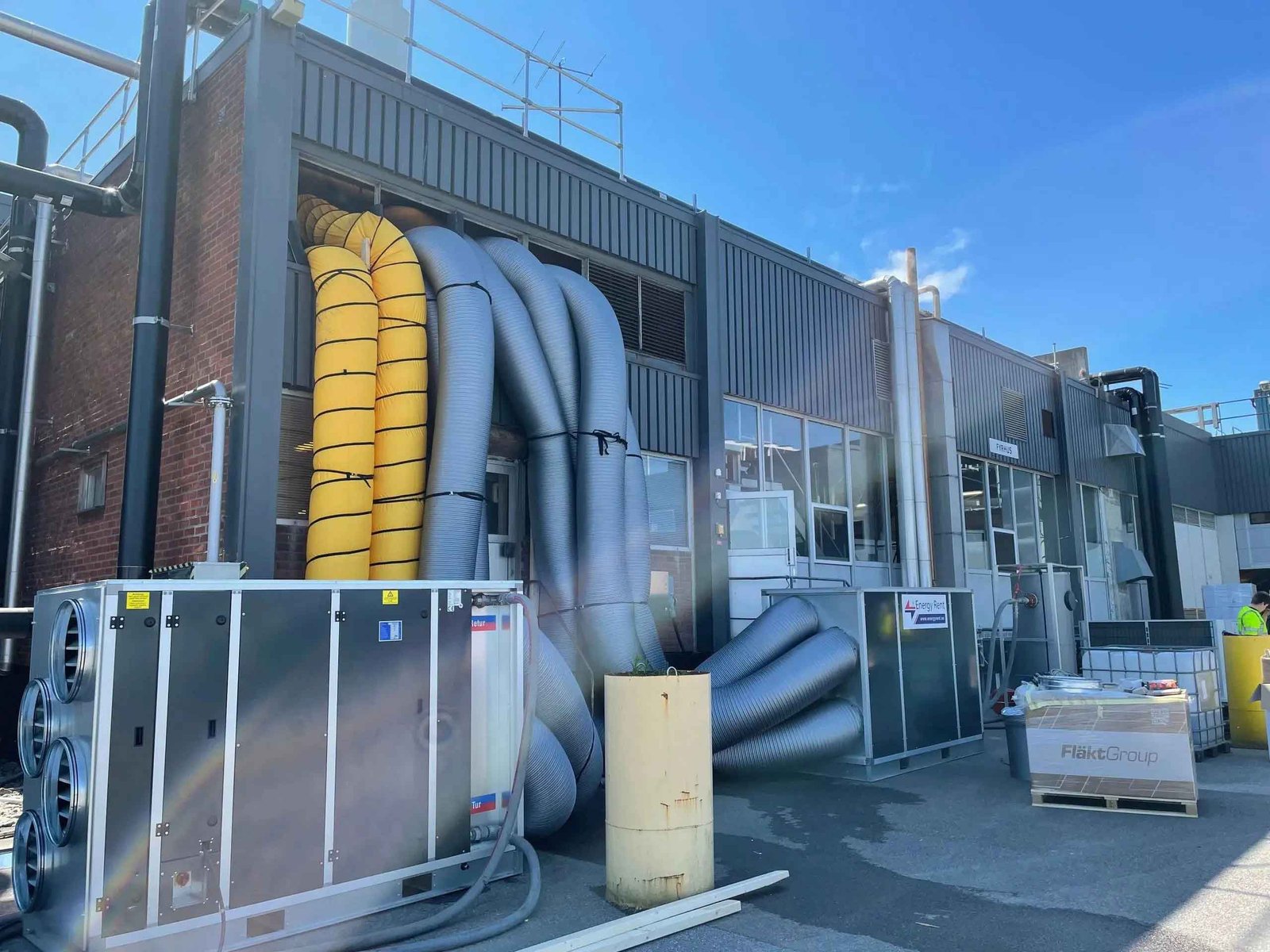

Cooling is not simply a comfort requirement for many businesses in the UAE. It can be directly connected to production, equipment reliability, storage conditions, employee safety, and day-to-day operations. When a central chiller fails unexpectedly, businesses may have very little time to find an alternative before indoor temperatures or process temperatures begin to rise.
This is where emergency rental chiller solutions in the UAE can provide a practical temporary answer. Instead of waiting days or weeks for a failed chiller to be repaired or replaced, businesses can bring in temporary cooling equipment while permanent systems are restored.
Dubai’s Regulatory and Supervisory Bureau (RSB) describes cooling as an essential service and notes that cooling accounts for almost half of Dubai’s total electricity demand. The regulator also emphasizes the importance of reliable and energy-efficient cooling for businesses and other users.
What Is an Emergency Rental Chiller?
An emergency rental chiller is a temporary cooling system supplied when a permanent chiller or cooling plant cannot meet a facility’s requirements.
The situation may be caused by:
Sudden chiller breakdown
Compressor failure
Condenser or evaporator problems
Electrical faults
Planned maintenance
Cooling plant replacement
Unexpected increase in cooling demand
Temporary expansion of a facility
Production or process-cooling problems
Rental chillers are available in different capacities and configurations. UAE rental providers commonly offer air-cooled and water-cooled equipment, together with supporting equipment such as pumps and chilled-water air-handling units. For example, one UAE rental provider lists portable chillers from 30 to 600 tons and supporting AHUs and pumps for applications including unexpected equipment failure and planned shutdowns.
The important point is that emergency rental cooling is not simply about delivering a chiller. The temporary system must be selected, connected and operated according to the site’s actual cooling requirements.
Why Businesses in the UAE Need Emergency Cooling
The UAE’s climate makes dependable air conditioning and process cooling particularly important. During periods of high outdoor temperatures, losing cooling capacity can quickly become an operational problem.
A chiller failure can affect different parts of a business depending on the facility.
For example, an office or hotel may experience uncomfortable indoor conditions, while a manufacturing facility could face problems with temperature-sensitive processes. Warehouses, food-related businesses and technical facilities may have additional temperature-control requirements.
Dubai’s building and cooling regulations also demonstrate the importance placed on efficient HVAC and chilled-water systems. Dubai’s Building Code establishes minimum requirements for building health, safety, welfare and environmental performance, while Dubai’s green-building requirements address chilled-water control and HVAC efficiency.
For a business dealing with an unexpected failure, however, the immediate priority is usually continuity: restore sufficient cooling first, then complete the permanent repair or replacement.
Common Situations That Require Emergency Chiller Rental
1. Unexpected Chiller Breakdown
A sudden compressor failure, electrical problem, refrigerant issue or mechanical fault can take a major cooling system offline.
Repairing the original equipment may require replacement parts, specialist technicians or additional diagnostic work. A temporary rental chiller can provide cooling capacity while those activities are taking place.
2. Planned Maintenance and Shutdowns
Emergency rental chillers are not limited to completely unexpected failures.
Businesses sometimes rent chillers during planned maintenance because taking the permanent cooling system offline can otherwise interrupt operations. Rental companies serving the UAE market specifically identify planned shutdowns as an application for temporary chillers.
This approach can allow maintenance teams to work on the permanent system without completely removing cooling from the facility.
3. Replacement of an Existing Chiller
Large chillers are not always replaced immediately after failure. Procurement, delivery, installation and commissioning of permanent equipment can take time.
Temporary cooling can bridge this period.
Industrial rental specialists describe temporary cooling as a solution for businesses waiting for permanent equipment installation, allowing temporary systems to connect with existing cooling infrastructure where technically suitable.
4. Sudden Increase in Cooling Demand
A facility may occasionally need more cooling capacity than its permanent plant can provide.
This can happen because of production changes, additional equipment, seasonal demand or temporary occupancy increases. Renting additional chiller capacity can be more practical than purchasing a permanent machine that may not be required after the peak period.
Which Businesses Can Benefit from Emergency Chiller Rental?
Emergency cooling can be relevant to a wide range of UAE businesses.
Manufacturing and Industrial Facilities
Manufacturing operations may depend on chilled water for process cooling, equipment temperature control or production-related applications. A cooling failure can therefore affect more than employee comfort.
Industrial rental providers specifically market temporary cooling for process applications, manufacturing and production continuity.
Commercial Buildings
Offices, retail facilities, shopping environments and other commercial properties rely heavily on air conditioning. A major cooling plant failure can affect employees, visitors and business operations.
A temporary chiller can help restore chilled-water capacity until the permanent system is operational again.
Hotels and Hospitality Facilities
Hotels cannot easily tolerate prolonged cooling problems, particularly in guest rooms, restaurants, meeting areas and other occupied spaces.
Emergency cooling can help maintain acceptable indoor conditions while permanent HVAC equipment is being repaired.
Warehouses and Temperature-Sensitive Facilities
Some warehouses and storage operations have specific temperature requirements. The correct emergency solution depends on the products being stored and the required temperature range.
In such applications, the rental provider should assess the actual cooling load and operating conditions rather than selecting equipment based only on the size of the building.
Data Centres and Technical Facilities
Technical environments can be particularly sensitive to cooling interruptions because heat generated by equipment can continue even when the main cooling system is unavailable.
Temporary HVAC rental providers in Dubai identify data centres among the applications for temporary cooling systems.
For these facilities, redundancy, connection arrangements, power availability and deployment time should be evaluated before an emergency occurs.
How Emergency Chiller Rental Works
A professional emergency cooling project generally starts with an assessment rather than simply sending the largest available chiller.
Step 1: Assess the Cooling Requirement
The rental provider should determine the required cooling capacity and understand what the temporary system needs to serve.
Important information can include:
Existing chiller capacity
Required supply and return water temperatures
Chilled-water flow
Building or process cooling load
Available electrical supply
Available installation space
Access for delivery
Piping and connection arrangements
Expected rental duration
Some UAE rental providers explicitly state that selection is based on factors such as cooling load, temperature, water flow, ambient conditions, power and site access.
Step 2: Select the Appropriate Chiller
The choice may involve an air-cooled or water-cooled chiller, depending on the application and site conditions.
For emergency projects, air-cooled chillers can be particularly useful where a temporary cooling system needs to be installed without depending on an existing cooling tower arrangement. However, the appropriate equipment still depends on the site’s technical requirements.
Step 3: Plan the Connections
The chiller itself is only one part of the temporary installation.
Depending on the project, the system may require:
Chilled-water pumps
Temporary pipework
Hoses or flexible connections
Air-handling units
Electrical cabling
Control equipment
Valves and fittings
Cooling accessories
The connection method should be checked carefully against the existing HVAC system before installation.
Step 4: Deliver and Install
Once the equipment and connection plan are confirmed, the rental provider can arrange transportation and installation.
For emergency work, response time matters, but speed should not replace proper engineering. The equipment needs to be safely positioned, connected and commissioned before it is placed into service.
Step 5: Commission and Monitor
After installation, the temporary cooling system should be tested under operating conditions.
Temperature, pressure, flow and equipment performance should be monitored to confirm that the system is delivering the required cooling.
Choosing the Right Emergency Rental Chiller in UAE
Not every rental chiller is suitable for every application. Businesses should consider several factors before accepting a temporary cooling proposal.
Cooling Capacity
Capacity should be based on the actual cooling requirement rather than simply matching the nameplate capacity of the failed machine.
A proper assessment can help avoid both under-sizing and unnecessary oversizing.
High-Ambient Performance
The UAE’s outdoor conditions make high-ambient performance an important consideration for air-cooled equipment.
Some UAE rental suppliers specifically offer equipment designed for high-ambient GCC operation.
Power Availability
The rental company should verify whether the facility has sufficient electrical capacity for the temporary chiller and associated equipment.
If additional power is required, the cooling project may need to be coordinated with a temporary generator or another suitable power source.
Connection Compatibility
The temporary equipment must be compatible with the site’s chilled-water system, connection points, operating temperatures and flow requirements.
Rental Duration
Emergency rental periods can range from a few days to several months, depending on the reason for the rental.
Businesses should discuss the expected duration and possible extension requirements before deployment.
Technical Support
Emergency cooling is not only an equipment-rental decision. Businesses should consider whether the provider can support installation, commissioning, troubleshooting and ongoing operation.
Emergency Rental Chiller vs. Waiting for Permanent Repair
When a chiller fails, businesses essentially have two concerns: fixing the permanent system and maintaining cooling until that happens.
Waiting for the repair without temporary cooling may expose the business to operational disruption, particularly where cooling is critical to production or temperature-sensitive environments.
An emergency rental system can separate these two problems.
The permanent equipment can be repaired or replaced properly while the temporary chiller maintains the required cooling capacity. Industrial rental companies specifically position temporary cooling as a way to prevent production losses during emergency breakdowns and planned maintenance.
This does not mean rental cooling is always the best solution. If the repair can be completed quickly and the facility can safely operate without temporary cooling, renting may not be necessary. The decision should be based on the consequences of losing cooling, repair duration, technical requirements and rental costs.
Regulatory Considerations in the UAE
Businesses should also distinguish between temporary cooling equipment used for a customer’s own facility and the regulated provision of district cooling services.
Dubai’s Executive Council Resolution No. 6 of 2021 regulates district cooling services and requires relevant providers to hold the appropriate permits. The resolution covers district cooling systems, plants, networks and associated infrastructure.
A later Executive Council Resolution No. 87 of 2025 updated the fees and fines associated with district cooling services in Dubai.
For an emergency rental project, businesses should therefore ensure that installation and operation comply with the applicable requirements for the site, building and cooling arrangement. The rental provider should also be able to explain any approvals or site requirements that apply to the proposed installation.
How to Prepare for a Chiller Emergency Before It Happens
The best emergency cooling strategy starts before an actual failure.
Businesses with critical cooling requirements can prepare by keeping records of:
Existing chiller capacities
Chilled-water supply and return temperatures
Flow requirements
Electrical specifications
Connection sizes and locations
Plant-room access
Equipment layout
Critical areas requiring priority cooling
Contact details for HVAC service and rental providers
It can also be useful to establish a temporary connection plan in advance.
This reduces the amount of information that needs to be gathered during an actual breakdown and can help speed up deployment.
Final Thoughts
A chiller breakdown does not always have to become a prolonged business interruption.
Emergency rental chiller solutions in the UAE give businesses a way to maintain temporary cooling while permanent equipment is repaired, replaced or taken offline for maintenance. The approach can be useful for industrial plants, commercial buildings, hotels, warehouses, technical facilities and other operations where cooling continuity matters.
The most important consideration is not simply finding a chiller with a large capacity. Businesses should work with a rental provider that evaluates the cooling load, operating temperatures, power availability, water flow, site access, connection requirements and expected rental period.
In Dubai and across the UAE, where cooling plays such a significant role in buildings and commercial activity, having a practical temporary-cooling strategy can help businesses respond more effectively when an unexpected HVAC failure occurs.