
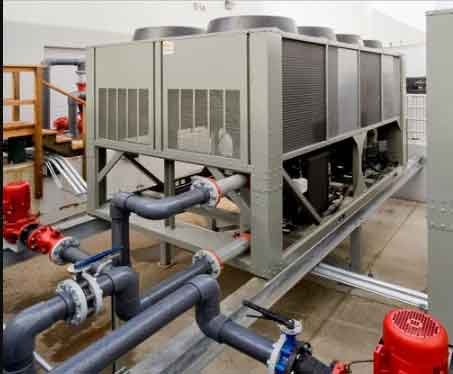

If you run a business in the UAE, you already know that cooling isn’t optional – it’s infrastructure. Between June and September, temperatures routinely climb past 42–45°C, and parts of the country have recorded highs above 50°C. When that happens, the Ministry of Labour tightens rules around outdoor work, and any operation that depends on temperature control – a data center, a cold store, a factory floor, a hospital, or a construction site – has zero margin for a cooling failure. That reality is exactly why chiller rental has become such a practical option for UAE businesses instead of an afterthought.
Why “Renting” Beats “Buying” for a Lot of Businesses
A permanent industrial chiller is a serious capital investment – before you even count installation, ductwork, electrical upgrades, and ongoing maintenance contracts. For a business that only needs extra cooling capacity for a season, a project, or an emergency, that math rarely works out. Rental flips the equation: you pay for cooling only for as long as you actually need it, whether that’s a few days for an event or several months for a construction phase.
This is the core pitch every rental provider in the market makes, and it holds up. Industry providers describe chiller rental in the UAE as a way to avoid the large upfront cost of ownership, with flexible short-term agreements that can be arranged for a matter of days or extended over months as project needs change.
Trane’s UAE rental division frames it in similar terms, and their read on the broader market is worth paying attention to: as the UAE’s economy keeps expanding, industries from healthcare and manufacturing to hospitality and logistics need uninterrupted climate control, and chiller rental has become a critical way for businesses to secure reliable cooling without carrying the burden of heavy capital investment.
They also point to the obvious driver – a desert climate where summer temperatures regularly exceed 45°C puts sustained pressure on any cooling system, and in places like hospitals or data centers, a cooling failure simply isn’t an option.
Where Rental Chillers Actually Get Used
The demand isn’t limited to one type of business. Based on how UAE rental providers position their fleets, the main use cases fall into a few clear categories:
Construction sites. Concrete curing, worker comfort areas, and temporary site offices all need reliable cooling, often on tight timelines with no existing HVAC infrastructure. Rental chillers can be deployed and running quickly, which matters when a project schedule doesn’t allow for delays.
Manufacturing and industrial facilities. Production lines that generate heat, or processes that need tightly controlled temperatures, often need backup or supplemental chiller capacity – especially during equipment maintenance, upgrades, or unexpected breakdowns of a permanent system.
Events and exhibitions. Trade shows, weddings, and outdoor conferences in the UAE are essentially impossible to run comfortably without temporary cooling. Rental providers specifically market portable and mid-size units for this purpose, with setup and teardown handled as part of the service.
Commercial buildings during maintenance windows. When a building’s main chiller plant goes down for repair or a scheduled overhaul, a temporary rental unit keeps operations running rather than forcing a shutdown.
Cold chain and food logistics. Beyond stationary chillers, the UAE market also has a dedicated rental segment for refrigerated vans and trucks, used by restaurants, supermarket chains, frozen food distributors, and pharmaceutical companies that need temperature-controlled transport rather than a fixed cooling installation.
What “Affordable” Actually Means in This Market
A few things consistently show up across UAE rental providers when they talk about cost:
- No large upfront capital outlay. You’re not financing an asset you’ll own – you’re paying an operating cost for the rental period.
- Flexible contract lengths. Short-term hire for a few days is treated the same as longer multi-month agreements, with terms adjusted accordingly rather than forcing a fixed package.
- A range of unit sizes. Fleets typically span small portable chillers for quick, short-term jobs up to large air-cooled industrial units for factories and big commercial spaces – so businesses aren’t paying for more capacity than they need.
- Maintenance and support bundled in. Reputable providers include upkeep and technical support during the rental period, which avoids the businesses having to manage servicing themselves — a cost that would otherwise eat into the “affordable” part of the equation.
- Energy-efficient units. Some providers specifically market rental fleets on energy efficiency, since electricity costs in the UAE’s climate can be substantial over a rental period, and an inefficient unit erodes savings fast.
Choosing a Rental Provider: What Actually Matters
Not all “affordable” providers are equal, and the difference usually shows up during the rental period, not at signing. A few things worth checking before committing:
- Response time for breakdowns. Ask directly what the guaranteed callout time is if a unit fails – this matters far more in July than in January.
- Unit condition and age. A cheaper rental rate on an older, less efficient unit can cost more in electricity than a slightly pricier, well-maintained one.
- Installation and setup included. Confirm whether delivery, installation, and eventual removal are part of the quoted price or billed separately.
- Capacity matching. A provider that genuinely assesses your cooling load (rather than just renting you whatever’s available) will save you from overpaying for unused capacity or underpowering a critical process.
- Coverage across emirates. If your operations span Dubai, Abu Dhabi, Sharjah, or the Northern Emirates, check whether the provider actually services all those locations or just markets itself broadly.
The Bigger Picture
It’s also worth noting that cooling in the UAE isn’t just a facilities issue – it’s tied to the wider economy. The UAE’s construction sector has continued expanding, backed by increased government infrastructure spending, and that growth pulls HVAC and rental cooling demand along with it. Separately, the UAE’s district cooling providers – companies that cool entire developments rather than single buildings – have scaled significantly, a sign of just how central temperature control is to how the country builds and operates. None of that changes the calculation for an individual business, but it explains why the rental chiller market here is mature, competitive, and generally responsive: providers are used to serving everyone from a single event organizer to a large industrial client, often with overlapping fleets and flexible terms.
Bottom Line
For most UAE businesses that need cooling on a temporary, seasonal, or emergency basis, renting a chiller is simply the more rational choice than buying one outright. The savings aren’t just about avoiding a big purchase – they come from paying only for the capacity and duration you need, letting a provider handle maintenance, and being able to scale up or down as your situation changes. The businesses that get the most value out of rental chillers are usually the ones that treat provider selection carefully – checking response times, unit efficiency, and whether the quoted price actually includes setup and support – rather than choosing purely on the lowest daily rate.