
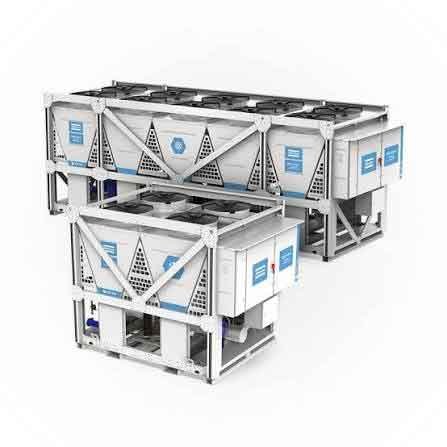

Commercial and industrial projects in the UAE often depend on reliable cooling to maintain comfortable indoor conditions, protect equipment, support manufacturing processes, and keep daily operations running. When a permanent cooling system is unavailable, undergoing maintenance, unable to meet demand, or still waiting to be installed, a rental chiller in UAE can provide temporary cooling capacity for the required period.
Rental chillers are used across a wide range of applications. A commercial building may need additional cooling during peak demand, while an industrial facility may require stable temperatures to support a manufacturing process. A hotel, hospital, warehouse, data centre, construction project, or production facility may also need temporary cooling while permanent equipment is repaired, replaced, tested, or upgraded.
The important point is that a rental chiller is not simply a machine delivered to a site. A complete temporary cooling solution may involve the chiller itself together with pumps, hoses or pipework, buffer tanks, air-handling equipment, electrical connections, controls, and technical commissioning. The exact arrangement depends on the cooling load and the existing infrastructure.
This guide explains how rental chillers support commercial and industrial projects in the UAE, when temporary chiller rental may be required, and what project teams should consider before selecting a system.
What Is a Rental Chiller?
A rental chiller is a temporary cooling unit supplied for a defined period instead of being permanently purchased and installed. Depending on the application, the equipment may be rented for emergency support, scheduled maintenance, seasonal demand, construction work, equipment replacement, or a longer-term project.
A chiller removes heat from water or another process fluid and transfers that heat through its refrigeration system. The cooled fluid can then be circulated through air-handling units, fan coils, process equipment, heat exchangers, or other connected systems.
In a typical temporary cooling solution UAE project, the rental provider may need to consider more than the chiller capacity. The complete system can include:
- A suitable air-cooled or water-cooled chiller
- Chilled-water pumps
- Flexible hoses or temporary pipework
- Buffer tanks where required
- Air-handling units or other cooling distribution equipment
- Electrical distribution and power connections
- Controls and monitoring equipment
- Installation and commissioning support
This system-based approach is particularly important for larger commercial and industrial projects. A chiller with the correct nominal capacity may still fail to meet project requirements if water flow, connection points, electrical supply, heat rejection, or cooling distribution are not properly considered.
Why Commercial and Industrial Projects in the UAE Need Temporary Cooling
The UAE has a high cooling demand for much of the year. Commercial buildings and industrial facilities may depend heavily on HVAC and process cooling systems, which means that an interruption can affect comfort, productivity, equipment performance, or production schedules.
Large chilled-water systems are commonly used to serve substantial cooling loads. ASHRAE guidance highlights the importance of understanding actual cooling loads and operating conditions when selecting liquid-chilling equipment. It also warns that unnecessary oversizing can increase equipment and operating costs and create performance issues at lower loads.
For this reason, a temporary cooling project should begin with the question:
What cooling duty does the site actually need?
The answer may be different for every project. A shopping centre experiencing an HVAC failure has different requirements from a food-processing facility that needs process temperature control. Similarly, a construction project commissioning a new building may need temporary cooling only until its permanent HVAC system becomes operational.
Rental equipment provides flexibility because the cooling capacity can be selected around the actual project requirement rather than requiring the business to purchase permanent equipment for a temporary situation.
How Rental Chillers Support Commercial Projects
Commercial buildings can experience changing cooling requirements throughout the year and throughout the life of their HVAC systems. Temporary chiller rental can support these projects in several situations.
Planned HVAC Maintenance
Large chillers and chilled-water systems require inspection, maintenance, repair, and sometimes major refurbishment. Taking permanent equipment offline may reduce or remove available cooling capacity.
A commercial chiller rental UAE solution can temporarily support the building while maintenance work is completed. The rental system may be connected to the existing chilled-water network or designed as a separate temporary cooling arrangement, depending on the building and project scope.
This approach can be useful for offices, hotels, shopping centres, healthcare facilities, educational buildings, and other properties where completely shutting down cooling may not be practical.
Equipment Replacement and Upgrade Projects
Replacing an existing chiller can involve equipment removal, delivery of new machinery, installation, piping work, electrical work, testing, and commissioning. The permanent system may therefore be unavailable for an extended period.
A temporary chiller can bridge the gap between the removal of old equipment and the successful commissioning of the replacement system.
This type of temporary cooling is particularly useful when a project schedule cannot be delayed simply because the permanent cooling plant is under construction.
Peak and Seasonal Cooling Demand
A building’s installed cooling capacity may normally be sufficient but become limited during periods of unusually high demand.
Additional rental capacity can be used as supplemental cooling when the existing system cannot comfortably meet the required load. Atlas Copco and other major rental providers specifically identify seasonal peaks, emergency failures, planned maintenance, and temporary capacity requirements as common applications for rental cooling systems.
The temporary equipment can be removed when the additional capacity is no longer required, making this approach suitable for project-based or seasonal requirements.
Emergency HVAC Failure
An unexpected chiller or HVAC breakdown can quickly create operational problems in a commercial property.
The objective of an emergency chiller rental is to restore or supplement cooling while the permanent equipment is being diagnosed and repaired. The final arrangement depends on the building’s system design, available access, connection points, electrical capacity, and required cooling load.
For critical facilities, the response plan should ideally be considered before a failure occurs. Identifying potential equipment connections, access routes, and temporary equipment locations in advance can reduce delays when emergency cooling is required.
How Rental Chillers Support Industrial Projects
Industrial cooling requirements can be more complex than ordinary comfort cooling. Some facilities need cooling to control process temperatures, protect products, remove heat from equipment, or maintain stable operating conditions.
An industrial chiller rental UAE solution can provide temporary cooling without requiring the facility to immediately purchase permanent equipment.
Process Cooling
Process cooling is used in many industrial applications where temperature directly affects production, product quality, equipment operation, or safety.
Depending on the process, temporary cooling may support:
- Manufacturing operations
- Food and beverage processing
- Pharmaceutical production
- Chemical and petrochemical applications
- Process-water cooling
- Warehousing and storage
- Refinery and production projects
- Data and critical equipment environments
Major cooling rental providers identify process cooling, manufacturing, food processing, chemical applications, cold storage, and production support as common rental applications.
The required temperature and cooling capacity should be based on the actual process rather than assumptions based only on the size of the facility.
Production Continuity During Equipment Failure
If a permanent process chiller fails, the effect may extend beyond indoor temperature. Production output may be affected if the process depends on a controlled cooling circuit.
A temporary rental system can potentially provide a bridge while repairs or replacement work are completed. However, compatibility is important. The project team may need to confirm:
This information helps engineers determine whether the temporary system can integrate with the existing process.
Plant Shutdowns and Turnarounds
Industrial facilities sometimes plan shutdown periods for maintenance, inspection, equipment replacement, or upgrades. Temporary cooling can support equipment or processes that must remain operational while other parts of the facility are offline.
Rental cooling providers commonly position temporary chillers as support during scheduled outages, maintenance periods, and turnaround projects.
For a planned shutdown, the advantage is that the temporary cooling system can be designed and tested before the permanent equipment is removed from service.
Temporary Expansion and Project-Based Production
A facility may temporarily increase production or introduce additional equipment without permanently expanding its cooling plant.
In these cases, rental chillers can provide additional cooling capacity for the duration of the project. This can be useful when the increased demand is temporary or when management wants to assess long-term cooling requirements before making a major capital investment.
Air-Cooled vs Water-Cooled Rental Chillers
One of the main decisions in a chiller rental project is whether an air-cooled or water-cooled arrangement is more suitable.
Both types perform the basic function of removing heat from a chilled-water or process-fluid circuit. The major difference is how they reject heat.
Air-Cooled Chiller Rental
An air-cooled chiller uses fans to move ambient air across its condenser coils and release heat to the atmosphere.
Air-cooled rental chillers are often useful where a self-contained temporary system is required and the site does not have suitable cooling-tower infrastructure available for the rental arrangement.
Carrier and Trane both describe air-cooled chillers as suitable for applications where avoiding cooling towers and extensive water infrastructure can simplify installation, although high outdoor temperatures must be considered during equipment selection.
Water-Cooled Chiller Rental
A water-cooled chiller rejects heat through a separate condenser-water circuit, which may involve cooling towers and associated pumps.
This type of system may be suitable where the site already has the necessary infrastructure or where the project requires a larger central cooling arrangement.
However, the temporary installation can be more complex because the full condenser-water system must be considered, not only the chiller itself.
The correct choice depends on the site infrastructure and project requirements rather than a universal rule that one type is always better.
How to Choose the Right Chiller Capacity
One of the most important parts of a rental project is determining the required cooling capacity.
A common mistake is to select equipment based only on the size of a building or to assume that a larger chiller is automatically safer. ASHRAE guidance explains that accurate load estimation is central to chiller selection and that unnecessary oversizing can increase costs and create operational inefficiencies.
A proper assessment may consider:
Required Water Temperature
Commercial HVAC and industrial processes may require different chilled-water temperatures.
A process that needs precise temperature control cannot necessarily use the same temporary cooling arrangement as a standard office building.
Required Water Flow
The chiller must work with the system’s required flow conditions. Pumps, pipework, pressure losses, and connection sizes may all influence the final temporary cooling design.
Ambient Conditions
For air-cooled equipment, outdoor temperature affects heat rejection and equipment performance. Equipment selection should therefore reflect the expected site conditions rather than relying only on a nominal capacity figure.
Part-Load Operation
A project may not operate at full cooling demand continuously. Understanding how the load changes can help with equipment selection and system control.
ASHRAE notes that both peak load and the time pattern of loads can be important when designing and operating chilled-water systems.
Commercial Applications for Rental Chillers in the UAE
Temporary cooling can support a wide range of commercial environments.
Hotels and Resorts
Hotels need consistent cooling for guest rooms, public areas, kitchens, event spaces, and back-of-house operations.
A temporary chiller may support the property during maintenance, equipment replacement, or unexpected HVAC problems.
Shopping Centres
Large retail environments can have significant cooling loads due to occupancy, lighting, equipment, and large internal spaces.
Supplemental cooling may help support operations when the existing system is under maintenance or unable to meet temporary demand.
Offices and High-Rise Buildings
Office buildings may require temporary chilled-water capacity during plant-room upgrades, maintenance, or replacement projects.
In high-rise systems, chilled-water design and distribution must be carefully considered because pump energy, supply temperatures, pressure, and system configuration all affect overall performance.
Healthcare and Critical Facilities
Healthcare environments and other critical facilities may have areas where temperature management is particularly important.
Any temporary cooling arrangement should be planned carefully around the facility’s operational requirements, existing infrastructure, safety procedures, and continuity plans.
Warehouses and Commercial Storage
Warehouses may need temporary cooling to protect temperature-sensitive products or maintain suitable conditions for staff and operations.
The exact solution depends on the size of the space, insulation, heat gain, loading activity, and required temperature.
Industrial Applications for Rental Chillers
Manufacturing Facilities
Manufacturing equipment can generate significant heat. A temporary chiller may provide process cooling or supplemental capacity during periods of increased production.
Food and Beverage Processing
Temperature management can be an important part of food and beverage production. Rental cooling may provide temporary support during maintenance, expansion, equipment replacement, or unexpected failures.
Pharmaceutical and Temperature-Sensitive Production
Some processes require controlled temperature conditions. Temporary equipment must therefore be selected according to the specific process requirements and any applicable operational or quality procedures.
Chemical and Petrochemical Operations
Industrial cooling may be used to manage process temperatures or support equipment. The rental system must be engineered for the specific application, required temperatures, pressures, fluid compatibility, and site conditions.
Data Centres and Critical Equipment
Data and critical technology environments can have substantial heat loads. Temporary cooling may be used for maintenance, upgrades, supplemental capacity, or contingency support.
What Should Be Included in a Temporary Chiller Rental System?
The chiller is only one part of the complete cooling arrangement.
Rental providers such as Atlas Copco, Andrews Sykes, and Carrier describe complete temporary cooling packages that can include ancillary equipment and installation support, depending on the project.
Before equipment is delivered, the project team should confirm that access routes can accommodate the equipment and that the selected location provides the required space, airflow, service access, and safe connections.
The Importance of Site Assessment Before Chiller Rental
A site assessment can prevent many problems before the equipment arrives.
The review may include:
Available Space
The chiller and supporting equipment need sufficient installation space. Air-cooled equipment also requires appropriate airflow around the condenser.
Access and Delivery Routes
Large chillers, pumps, and tanks may require cranes, forklifts, or other lifting arrangements. Delivery access should be reviewed in advance.
Electrical Supply
The site must have a suitable electrical supply or a temporary power solution.
Existing Pipework and Connection Points
The project team needs to identify where the temporary system will connect and whether the existing system can accommodate the required flow and pressure.
Drainage and Water Management
Depending on the equipment arrangement, drainage, filling, flushing, and water management requirements may need to be planned.
Operating Conditions
The required cooling temperature, operating hours, peak demand, ambient conditions, and process requirements should all be considered before final equipment selection.
How Rental Chillers Help Reduce Cooling Downtime
The primary advantage of temporary cooling is flexibility.
Instead of waiting until permanent equipment is repaired or replaced, a business may be able to install temporary capacity that supports operations during the interruption.
These applications are consistently identified across major temporary cooling providers and HVAC rental specialists.
The amount of downtime avoided will depend on how quickly the system can be assessed, delivered, installed, connected, tested, and commissioned. For this reason, advance planning is valuable even for facilities that are not currently experiencing a cooling problem.
Rental Chiller vs Buying a Chiller for a Project
Buying may be appropriate when a facility has a permanent, predictable cooling requirement and the equipment will be used throughout its expected service life.
The decision should consider more than the equipment price. Businesses may also need to compare installation requirements, maintenance responsibilities, temporary infrastructure, operating duration, and future cooling requirements.
For short-term or uncertain requirements, rental equipment can provide capacity without committing to a permanent equipment purchase before the long-term requirement is fully understood.
Common Mistakes to Avoid When Renting a Chiller
Choosing Capacity Without a Load Assessment
Nominal chiller capacity alone does not explain whether the system will meet the actual project requirement.
Cooling load, water temperatures, flow, ambient conditions, and operating profile should all be reviewed.
Ignoring Supporting Equipment
A chiller may require pumps, hoses, buffer capacity, electrical distribution, air-handling equipment, or other accessories to create a complete working system.
Focusing Only on the Emergency
Emergency cooling often creates pressure to select equipment quickly. However, confirming connection points, power, flow, and site access can prevent additional delays after the equipment arrives.
Not Planning for Peak Conditions
Equipment should be selected around the expected project conditions, including high ambient temperatures where relevant.
Treating Air-Cooled and Water-Cooled Systems as Direct Replacements
The two systems have different infrastructure and heat-rejection requirements. The site must be evaluated before selecting the equipment.
Frequently Asked Questions
What is a rental chiller used for?
A rental chiller provides temporary chilled-water or process cooling for applications such as HVAC maintenance, emergency breakdowns, equipment replacement, seasonal demand, construction projects, process cooling, and temporary production requirements.
What types of businesses use rental chillers in the UAE?
Rental chillers can be used by commercial buildings, hotels, shopping centres, hospitals, manufacturing facilities, warehouses, food and beverage operations, pharmaceutical facilities, data centres, and other sites that require temporary cooling capacity.
How do I know what size rental chiller I need?
The correct size should be based on an assessment of the cooling load and operating requirements. Important factors include required temperatures, water flow, process heat, ambient conditions, occupancy, equipment loads, and the characteristics of the existing system.
Can a rental chiller support an existing chilled-water system?
In many projects, temporary chillers can be integrated with existing chilled-water infrastructure. However, compatibility with the site’s pipework, pumps, pressure, flow, electrical supply, and controls should be assessed before installation.
Are air-cooled rental chillers suitable for temporary projects?
Air-cooled chillers can be suitable for temporary projects because they use ambient air for heat rejection and generally do not require a cooling tower. However, sufficient outdoor space, airflow, ambient conditions, electrical supply, and noise requirements should be considered.
When is water-cooled chiller rental more suitable?
A water-cooled arrangement may be suitable when the project requires a larger central cooling system or when compatible condenser-water and cooling-tower infrastructure is available. The complete system requirements should be evaluated before selection.
Can rental chillers be used during planned maintenance?
Yes. Planned maintenance is one of the common uses of temporary cooling. A rental system can provide supplemental or replacement cooling while permanent equipment is taken offline for inspection, maintenance, repair, or upgrades.
Can rental chillers be used for industrial process cooling?
Yes, provided the system is selected for the specific process requirements. Required temperatures, fluid type, flow, pressure, heat load, and operating conditions should be reviewed before selecting the temporary cooling equipment.
Final Thoughts
A rental chiller in UAE for commercial and industrial projects can provide a practical way to manage temporary cooling requirements without immediately investing in permanent equipment.
For commercial projects, temporary chillers can support buildings during maintenance, system replacement, peak demand, and unexpected HVAC failures. For industrial facilities, they can provide process cooling, production support, supplemental capacity, and continuity during shutdowns or equipment problems.
The success of the project depends on more than simply renting a machine. An effective temporary cooling solution begins with understanding the actual cooling load, required temperatures, water flow, site infrastructure, ambient conditions, access, electrical requirements, and duration of the project.