
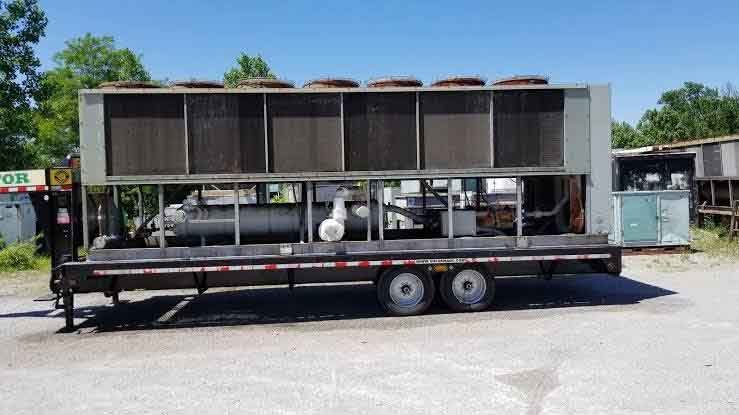

Dubai’s industrial sector operates in an environment where reliable temperature control can be essential for production, equipment performance, storage, employee comfort, and business continuity. During periods of high ambient temperatures, a permanent cooling system may experience additional demand. At the same time, facilities may need to take existing equipment offline for maintenance, repair, replacement, testing, or expansion.
In these situations, industrial chiller rental solutions in Dubai can provide temporary cooling capacity without requiring a business to purchase a permanent system for a short-term requirement.
Temporary cooling is used for many different situations. A factory may need process cooling while its existing chiller is being serviced. A warehouse may require additional capacity during a seasonal peak. A production facility may need backup cooling following an unexpected equipment failure. A new industrial project may also require temporary cooling while a permanent HVAC or process cooling system is being installed and commissioned.
However, choosing an industrial chiller is not simply about selecting the largest available unit. The required cooling capacity, target temperature, water flow, site conditions, electrical supply, existing infrastructure, connection routes, and operating period can all affect the final temporary cooling design.
This guide explains how industrial chiller rental Dubai solutions work, when temporary cooling may be required, the industries that use rental chillers, and the factors that should be considered before selecting a system.
What Are Industrial Chiller Rental Solutions?
An industrial chiller rental solution is a temporary cooling arrangement designed to provide chilled water or process cooling for a facility or project for a defined period.
Depending on the application, the complete system may include more than the chiller itself. Temporary installations can involve supporting equipment such as pumps, hoses or pipework, buffer tanks, heat exchangers, air-handling equipment, electrical connections, controls, and in some situations temporary power.
The exact arrangement depends on the existing system and the cooling objective.
For example, a facility with an existing chilled-water network may require a temporary chiller that can be connected to that network. Another industrial process may require a dedicated cooling loop with specific water temperatures and flow requirements.
This is why a site assessment and cooling-load review are important before equipment is selected.
Why Do Industries in Dubai Need Temporary Chiller Rental?
Industrial facilities can require temporary cooling for several different reasons. The requirement is not always caused by a complete equipment failure. In many cases, rental cooling is part of planned operational management.
Planned Chiller Maintenance
Large cooling systems require inspection, servicing, repair, and maintenance. During planned work, taking a permanent chiller offline may reduce or remove available cooling capacity.
A temporary chiller rental in Dubai can help provide cooling during the maintenance period. This can be particularly important where stopping a production process or allowing temperatures to rise could affect operations.
Temporary equipment can act as a bridge while the permanent system is inspected, repaired, or returned to service.
Emergency Cooling During Equipment Failure
An unexpected chiller or HVAC failure can create an urgent cooling requirement.
The consequences depend on the facility. In some locations, reduced cooling may affect production equipment, process temperatures, stored products, sensitive environments, or working conditions.
Emergency temporary cooling can be designed around the available site infrastructure. However, the actual deployment time depends on factors such as equipment availability, transport access, required capacity, connection requirements, and site readiness.
For this reason, facilities with critical cooling requirements may benefit from having a contingency plan before an emergency occurs.
Increased Cooling Demand During Peak Periods
Cooling requirements do not always remain constant throughout the year.
High outdoor temperatures, increased production, additional machinery, temporary occupancy, or operational expansion can increase the demand placed on an existing cooling system.
If the permanent installation does not have enough spare capacity for a temporary increase in demand, an industrial cooling rental Dubai solution can provide additional capacity for the required period.
This approach may be useful for seasonal demand or short-term production peaks where permanently increasing installed capacity is not necessary.
Cooling During Equipment Replacement
Replacing a major chiller can take time. The existing unit may need to be removed, new equipment installed, connections modified, and the new system tested and commissioned.
During this period, a temporary chilled-water system can provide continuity where ongoing cooling is required.
The temporary installation acts as a bridge between the old and new systems.
New Projects and System Commissioning
Construction and industrial projects may need temporary cooling before a permanent plant is fully operational.
Rental equipment can support commissioning, testing, pre-start-up activities, temporary occupancy, or early-stage operations.
In some cases, temporary cooling also allows different parts of a system to be tested independently before final handover.
How Does an Industrial Chiller Rental System Work?
The basic purpose of a chiller is to remove heat from a fluid, commonly water or a water-based solution, and transfer that heat elsewhere through the refrigeration cycle.
In a temporary cooling arrangement, chilled water can be circulated between the rental equipment and the facility or process that requires cooling.
The exact configuration depends on the application.
A typical temporary cooling setup may involve:
- A rental chiller producing chilled water.
- Pumps circulating water through the system.
- Temporary hoses or pipework connecting equipment.
- A buffer tank where required for water volume or system stability.
- Heat exchangers where separation between systems is required.
- Air-handling units or other terminal equipment for comfort cooling applications.
- Controls and monitoring equipment.
- Electrical infrastructure or temporary power where necessary.
The system should be designed around the actual cooling requirement rather than simply connected based on nominal equipment size.
Understanding Cooling Capacity: Why Size Matters
One of the most important steps in selecting a rental chiller is determining the actual cooling requirement.
Chiller capacity may be expressed in different units, including refrigeration tons or kilowatts of cooling capacity. However, a facility’s requirement cannot always be determined by looking only at the capacity of the existing chiller.
The actual load can vary depending on:
- Required supply-water temperature.
- Required return-water temperature.
- Water flow rate.
- Process heat load.
- Outdoor ambient conditions.
- Building or process demand.
- Operating hours.
- Simultaneous equipment loads.
- Existing cooling capacity.
- Required redundancy.
For example, two facilities may both have chillers with similar nameplate capacities but have completely different actual operating requirements.
Oversizing can create unnecessary costs and operational inefficiencies, while undersizing may leave the facility without enough cooling during peak demand.
A proper cooling assessment is therefore more valuable than selecting equipment based only on the size of the building or the capacity of a previous unit.
Air-Cooled vs Water-Cooled Chillers for Temporary Cooling
Industrial rental chillers are available in different configurations, with air-cooled and water-cooled systems being two common categories.
The most suitable option depends on the project.
Air-Cooled Chiller Rental
An air-cooled chiller rejects heat to the surrounding air through its condenser system.
For temporary applications, air-cooled equipment can be practical because it may reduce the need for a separate cooling tower and associated condenser-water infrastructure.
High outdoor temperatures can influence the operating conditions of any air-cooled equipment, making correct selection and site planning important.
Water-Cooled Chiller Rental
Water-cooled systems use a water circuit to remove heat from the chiller condenser. Depending on the arrangement, this may require cooling towers, pumps, water treatment, and associated infrastructure.
A water-cooled temporary solution may be suitable where the site already has compatible infrastructure or where project conditions make this configuration appropriate.
The choice should be based on engineering requirements rather than assuming one type is always better than the other.
What Industries Use Industrial Chiller Rental in Dubai?
Temporary cooling can be used across a wide range of industrial and commercial applications.
Manufacturing Facilities
Manufacturing processes can generate significant heat, and some operations require controlled temperatures.
Temporary process cooling may support operations during maintenance, production expansion, equipment replacement, or an unexpected interruption to the permanent cooling system.
The required temperature and cooling load can vary considerably depending on the manufacturing process.
Food and Beverage Operations
Food and beverage facilities may have cooling requirements associated with production processes, product handling, storage, and environmental control.
Temporary cooling equipment may be considered during maintenance or when additional capacity is required.
Because temperature requirements can be process-specific, equipment selection should consider the actual application rather than using a general-purpose estimate.
Pharmaceutical and Temperature-Sensitive Production
Some production environments require controlled conditions for processes and equipment.
Temporary cooling may provide support during maintenance shutdowns, commissioning, or equipment replacement.
Applications with strict environmental or process requirements may require additional engineering review, monitoring, or system separation.
Chemical and Process Industries
Industrial processes may require cooling to control temperatures generated by equipment or production activities.
Temporary chillers can be incorporated into process cooling arrangements where the equipment, fluid, temperature, and connection requirements have been properly assessed.
Warehouses and Industrial Facilities
Warehouses and large industrial spaces may require additional cooling capacity during periods of high demand or while permanent HVAC systems are being repaired.
The best solution may involve a chiller connected to existing air-handling infrastructure, although the configuration depends on the individual facility.
Data and Critical Environments
Facilities containing temperature-sensitive equipment may require reliable cooling continuity.
Temporary cooling can support planned maintenance or act as part of a contingency arrangement when existing cooling capacity is unavailable.
Critical environments often require careful planning around redundancy, monitoring, electrical supply, and connection methods.
Temporary Cooling for Planned Maintenance
Planned maintenance is one of the most practical reasons to consider temporary cooling solutions Dubai.
Instead of waiting for equipment to fail, a facility can plan the maintenance period and determine how much temporary capacity is needed.
A planned approach can reduce uncertainty compared with arranging equipment only after a breakdown occurs.
Emergency Chiller Rental and Business Continuity
When cooling equipment fails unexpectedly, the first priority is to understand the operational impact.
Important questions may include:
- Which areas or processes require immediate cooling?
- Is the entire system unavailable or only part of it?
- How much cooling capacity remains?
- What temperature must be maintained?
- Are chilled-water connections available?
- Is temporary power required?
- Is there enough space and access for rental equipment?
- Can the temporary system be isolated from other parts of the plant?
A rental system may then be configured to support the affected operation.
Business continuity planning can be particularly useful for facilities where cooling interruptions could have a significant operational impact.
Rather than deciding every technical detail during an emergency, a facility can review potential connection points and temporary cooling requirements in advance.
How Dubai’s Climate Can Affect Industrial Cooling Planning
Dubai’s climate creates demanding operating conditions, particularly during the hottest parts of the year.
Higher outdoor temperatures can increase the cooling demand placed on buildings and industrial facilities. Equipment selection should therefore consider actual site conditions and expected peak operating temperatures.
Temporary equipment also needs an appropriate installation location.
For air-cooled systems, sufficient airflow and space around the equipment are important. Locating equipment where hot discharge air can recirculate may negatively affect performance.
Other site factors may include dust exposure, access for maintenance, electrical cable routing, drainage, noise limitations, and the distance between the chiller and the facility connection point.
The local environment is therefore part of the engineering assessment, not simply a background consideration.
What Should Be Included in a Temporary Chiller Rental Package?
A complete rental solution may involve much more than delivering a chiller to the site.
Not every project requires all of these components.
For this reason, businesses should compare the complete system scope rather than comparing only the rental price of the chiller unit itself.
How to Prepare a Site for an Industrial Chiller Rental
Good site preparation can make installation smoother and reduce avoidable delays.
Confirm Equipment Access
The supplier may need to deliver large equipment to the installation location. Access roads, gates, turning areas, loading zones, and lifting requirements should be reviewed.
Check Available Space
The chiller and supporting equipment require a suitable location.
Space planning should consider the equipment footprint, service access, airflow requirements, hose or pipe routing, and safe access for technicians.
Review Electrical Supply
Temporary cooling equipment requires an appropriate power supply.
The available voltage, capacity, distribution arrangement, protection, cable routing, and any requirement for temporary generation should be assessed before installation.
Identify Connection Points
The existing chilled-water or process cooling system should be reviewed to identify suitable supply and return connections.
Pressure, flow, isolation valves, pipe sizes, and compatibility may all need to be considered.
Plan Water Management
Depending on the system, water filling, draining, and treatment requirements may need to be addressed.
Consider Monitoring
For critical operations, monitoring can help facility teams track relevant operating conditions and respond to changes.
How Long Can an Industrial Chiller Be Rented?
The rental period depends on the project.
The appropriate arrangement depends on operational requirements and the duration of the cooling need.
For longer projects, planning maintenance and technical support for the temporary equipment is also important.
What Factors Affect Industrial Chiller Rental Costs?
There is no single cost that applies to every industrial chiller rental in Dubai.
Pricing can depend on several factors, including:
A larger project may require multiple pieces of equipment working together, while a smaller requirement may need a relatively simple temporary setup.
The most accurate cost estimate generally requires a review of the actual project requirements.
How to Choose the Right Industrial Chiller Rental Solution
The best approach is to start with the cooling requirement rather than the equipment model.
Step 1: Define the Application
Is the requirement for comfort cooling, process cooling, emergency backup, maintenance support, commissioning, or seasonal capacity?
The answer affects the type of system required.
Step 2: Calculate the Cooling Load
Review the actual load, temperature requirements, water flow, and expected operating conditions.
Avoid relying only on assumptions based on building size or the nameplate rating of old equipment.
Step 3: Review Site Conditions
Check access, available space, airflow, electrical supply, connection routes, and operational restrictions.
Step 4: Identify Supporting Equipment
Determine whether pumps, buffer tanks, heat exchangers, air handlers, pipework, or temporary power are required.
Step 5: Plan Installation and Commissioning
The temporary system should be installed and tested before it becomes operationally critical whenever possible.
Step 6: Establish Monitoring and Support Requirements
Critical facilities may require a clear plan for monitoring, maintenance, and technical response during the rental period.
Benefits of Industrial Chiller Rental for Temporary Projects
Industrial chiller rental can offer operational flexibility when cooling requirements are temporary.
Potential benefits include:
No Permanent Purchase for a Temporary Requirement
A business may not need to invest in permanent equipment for a short-term cooling requirement.
Flexible Capacity
Temporary capacity can be selected according to the project’s cooling load.
Support During Maintenance
Rental equipment can help maintain cooling while permanent equipment is serviced.
Emergency Backup
Temporary cooling can form part of a response plan following equipment failure.
Support for Expansion and Commissioning
Rental systems can provide capacity while new infrastructure is being installed or tested.
The actual benefit depends on whether the selected system is correctly matched to the project.
Common Mistakes to Avoid When Renting an Industrial Chiller
Choosing Equipment Based Only on Capacity
Cooling capacity alone does not define whether a system is suitable.
Temperature requirements, flow, site conditions, and connection methods also matter.
Ignoring Ancillary Equipment
A chiller may require pumps, pipework, tanks, electrical infrastructure, or other supporting equipment.
Leaving Site Preparation Until Delivery Day
Access, electrical supply, and connection points should be reviewed before mobilisation.
Failing to Plan for Peak Conditions
The temporary system should be assessed for the expected operating environment, including periods of high cooling demand.
Treating Every Application the Same
A process cooling requirement can be very different from comfort cooling for a large industrial space.
The system should match the application.
Frequently Asked Questions
What is an industrial chiller rental?
An industrial chiller rental is a temporary cooling arrangement that provides chilled water or process cooling for a specific project, emergency, maintenance period, or temporary increase in demand.
When should a business rent an industrial chiller?
Rental may be considered during equipment breakdowns, planned maintenance, chiller replacement, seasonal demand, temporary production increases, commissioning, or construction projects.
Can a temporary chiller be connected to an existing system?
In many cases, temporary cooling equipment can be integrated with existing infrastructure. However, the connection arrangement should be assessed according to the site’s piping, flow, pressure, temperature, and equipment requirements.
What is the difference between industrial process cooling and comfort cooling?
Process cooling is generally used to control temperatures associated with industrial equipment or production processes. Comfort cooling is designed primarily to manage environmental conditions within occupied spaces.
How is the right chiller size selected?
The selection should be based on the actual cooling load, required temperatures, water flow, operating conditions, and site requirements.
Are air-cooled chillers suitable for temporary cooling?
Air-cooled chillers can be suitable for many temporary applications. Their suitability depends on capacity requirements, ambient conditions, installation space, airflow, electrical supply, and the specific project.
Can temporary chillers be used during planned maintenance?
Yes. Temporary cooling can be used to support operations while permanent cooling equipment is taken offline for inspection, repair, or maintenance.
How long can a temporary chiller remain on site?
The rental period can vary from a short emergency requirement to a longer project-based installation, depending on equipment availability and project needs.
What information should be prepared before requesting a rental solution?
Useful information can include the required cooling load, target temperatures, water flow, existing equipment details, connection points, electrical supply, site access, installation location, and expected rental period.
Final Thoughts
Industrial facilities cannot always predict when additional cooling capacity will be required. Equipment may need scheduled maintenance, a permanent chiller may experience a fault, production demand may increase, or a project may require cooling before permanent infrastructure is completed.
For these situations, industrial chiller rental solutions in Dubai can provide a flexible method of adding temporary cooling capacity.
The key is not simply renting the largest available chiller. A successful temporary cooling project starts with understanding the actual cooling load, temperature requirements, existing infrastructure, site conditions, electrical supply, and required operating period.
Whether the requirement involves emergency cooling, planned maintenance, process cooling, seasonal demand, or a temporary industrial project, a properly assessed system can help support operational continuity while the permanent requirement is resolved.