
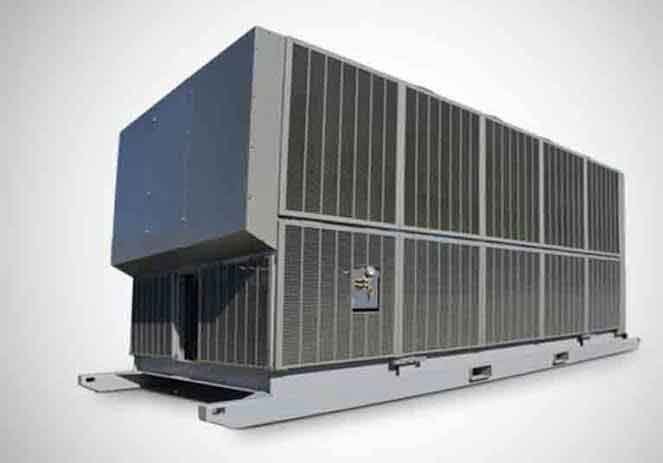

Finding an affordable chiller rental option in Dubai is not simply about choosing the supplier with the lowest HAVC quoted price. The actual cost of a temporary cooling solution can depend on the cooling capacity required, the type of chiller, the rental period, the equipment needed around the chiller, installation requirements, site access, power availability, and the urgency of the project.
This is why two businesses can receive very different quotes for what may initially sound like the same requirement.
A small temporary cooling requirement may need only a compact chiller package, while a hotel, manufacturing facility, data centre, construction project, or large commercial building may require a much larger system with pumps, hoses or piping, air handling equipment, electrical connections, and technical support.
Major rental providers operating in the UAE and internationally also show that temporary cooling can range from relatively small applications to large industrial and multi-unit packages. Aggreko, for example, offers air-cooled and water-cooled industrial chiller rentals for applications including data centres, manufacturing facilities, and events, while Andrews Sykes Climate Rental serves sectors such as construction, facilities management, hospitality, industrial operations, healthcare, and temporary district cooling.
The most affordable solution, therefore, is usually the system that meets the actual cooling requirement without paying for unnecessary capacity, equipment, or rental time.
This guide explains the main affordable chiller rental options in Dubai, what affects chiller rental prices in Dubai, and how businesses can compare quotations more effectively.
Why Are Chiller Rental Prices Different in Dubai?
There is no single standard price for every temporary chiller project.
A rental quote is normally based on the technical requirements of the application. The same supplier may provide one type of solution for temporary comfort cooling and a completely different package for process cooling or emergency replacement of an existing chiller.
Published information from major chiller rental providers confirms that rental pricing can depend on factors such as the length of the hire period and the accessories required. Chiller systems may also be supplied as part of a wider package that includes items such as piping, electrical cables, installation, maintenance, air handlers, or other ancillary equipment.
For this reason, comparing only the headline chiller rental cost Dubai can be misleading.
A lower equipment-only price may not include everything needed to make the system operational. Another quotation may appear more expensive but include delivery, installation, pumps, hoses, technical assistance, or maintenance.
Before comparing prices, businesses should understand what is included in each proposal.
1. Chiller Capacity Has a Major Effect on Rental Cost
One of the most important factors affecting chiller rental prices in Dubai is capacity.
A chiller must provide enough cooling to handle the actual heat load of the application. However, selecting a significantly oversized unit can increase the equipment cost and may also increase the size of supporting equipment required.
Rental fleets can cover a wide range of capacities. Andrews Sykes describes fluid chiller capacities ranging from 30 kW to 750 kW in its wider rental range, while larger multi-megawatt packages are available for bigger requirements. Aggreko also provides industrial chiller solutions for applications ranging from commercial cooling to heavy industrial requirements.
This means a project requiring a modest amount of temporary cooling should not automatically be quoted the same type of equipment used for a large industrial process or district cooling application.
How can businesses avoid paying for unnecessary capacity?
The best approach is to establish the actual cooling requirement before selecting equipment.
A technical assessment may consider factors such as:
- The size and type of the space or process being cooled
- Existing cooling equipment
- Required supply and return temperatures
- Flow requirements
- Heat generated by equipment or processes
- Number of occupants
- Building conditions
- Outdoor temperatures
- Required operating hours
- Whether the cooling requirement is temporary, seasonal, planned, or emergency
Andrews Sykes specifically recommends providing information such as water supply and outlet temperatures, flow rate, and local conditions when determining the most suitable chiller package.
This assessment can help prevent a common mistake: renting more cooling capacity than the project actually requires.
2. Air-Cooled vs Water-Cooled Chiller Rental
Another important factor is the type of chiller required.
Air-cooled chiller rental
Air-cooled chillers reject heat through the surrounding air. They can be a practical option where a project needs a self-contained temporary cooling system and where the site conditions are suitable for outdoor equipment installation.
Rental providers such as Aggreko offer air-cooled chiller solutions as part of their industrial cooling range.
For some projects, an air-cooled unit can reduce the amount of additional infrastructure required. However, the actual suitability depends on the cooling load, available installation space, ambient conditions, and connection requirements.
Water-cooled chiller rental
Water-cooled systems can require additional components depending on the project configuration. These may include cooling towers, pumps, water circuits, or other supporting infrastructure.
Aggreko also offers water-cooled chiller rental solutions, particularly for larger and specialised cooling applications.
The important point is that air-cooled is not automatically cheaper than water-cooled in every situation.
The most cost-effective choice depends on the complete project, not only the rental rate of the chiller itself.
A business should compare the total package, including equipment, installation, supporting systems, operating requirements, and rental duration.
3. Rental Duration Can Change the Total Chiller Rental Cost
The length of the rental period can significantly affect the overall cost.
Rental companies commonly offer short-term and longer-term arrangements. Andrews Sykes Climate Rental states that its UAE operations provide both small and long-term rental solutions, while its wider chiller hire information explains that pricing can depend on the length of the hire period.
For a short requirement, a project may need equipment for only a limited period. For a longer project, businesses should ask whether a different rental structure is available.
Daily cost versus total project cost
A lower daily rate does not always mean the lowest total cost.
For example, a project requiring cooling for several months may need a different commercial arrangement from a project requiring emergency cooling for a few days.
The correct question is not simply:
“What is the cheapest chiller per day?”
A more useful question is:
“What is the total cost of the cooling package for the entire project?”
This comparison should include delivery, installation, supporting equipment, service, maintenance, demobilisation, and any operating costs that are the customer’s responsibility.
4. What Equipment Is Included in the Chiller Rental Package?
A chiller is often only one part of a complete temporary cooling system.
Andrews Sykes describes complete rental packages that can include chillers together with piping, electrical cables, installation, set-up, maintenance, and other services, depending on the rental arrangement. Its UAE operation also describes providing design, installation, commissioning, periodic maintenance, and technical assistance as part of its climate rental services.
This is one of the biggest reasons why chiller rental rates Dubai can vary.
When requesting quotations, businesses should ask for a clear breakdown of what is included.
5. Emergency Chiller Rental May Have Different Requirements
Emergency cooling is different from planned rental.
If an existing HVAC system or chiller fails, the business may need to restore cooling quickly to protect operations, equipment, products, occupants, or critical environments.
Rental providers position temporary chillers as a solution for emergency cooling and planned maintenance. Aggreko states that its rental chillers can support temporary and emergency cooling, while Andrews Sykes provides emergency chiller solutions and 24/7 support for urgent requirements.
However, emergency projects can create additional challenges.
For this reason, businesses with critical cooling requirements may benefit from contingency planning rather than waiting until a failure occurs.
Planning the possible connection points and cooling requirements in advance can make it easier to deploy temporary equipment when it is needed.
6. Dubai’s Climate and Site Conditions Matter
Dubai projects operate in a hot climate, and temporary cooling equipment must be selected according to actual site conditions.
The UAE operation of Andrews Sykes specifically highlights the region’s hot and humid conditions and its role in providing temporary cooling across the UAE and GCC.
These factors can affect the final temporary cooling rental cost.
A unit that appears affordable based on its basic rental price may require additional work if the installation location is difficult to access or if long temporary pipe runs and extra pumping are required.
How to Find Affordable Chiller Rental Options in Dubai
Finding an affordable option does not necessarily mean choosing the cheapest initial quotation.
A better approach is to compare suppliers and proposals using the same project information.
Step 1: Define the actual cooling requirement
Before contacting suppliers, gather as much information as possible about the application.
The more accurate the project information, the easier it is for a supplier to recommend an appropriate system.
Step 2: Request the right capacity, not simply the biggest unit
Oversizing equipment can increase rental costs.
At the same time, undersizing can create performance problems.
The goal should be to select a system that matches the calculated or assessed cooling requirement.
Where the project is complex, a site survey or technical assessment can be valuable. Andrews Sykes Climate Rental states that it provides site surveys to analyse customer requirements and recommend suitable solutions.
Step 3: Compare complete packages
A complete quotation makes it easier to compare the real project cost.
Step 4: Consider the full rental period
Explain the expected project duration clearly.
A short emergency requirement and a six-month temporary cooling project should not necessarily be priced or structured in the same way.
Ask suppliers to provide the commercial arrangement that best matches the required duration.
Affordable Chiller Rental Options for Different Applications
The right cooling solution depends heavily on the application.
Commercial buildings
Commercial properties may require temporary cooling during planned maintenance, replacement of existing HVAC equipment, seasonal demand, or unexpected failures.
The correct solution may involve a temporary chiller connected to the existing chilled-water system or a separate package with air handling equipment.
Hotels and hospitality
Hotels require consistent guest comfort, making planned maintenance and emergency cooling particularly important.
Andrews Sykes identifies hospitality as one of the sectors served by its UAE chiller rental operation.
A rental solution should consider guest areas, kitchens, back-of-house spaces, and the existing cooling infrastructure.
Construction projects
Construction sites may require temporary cooling for workers, temporary facilities, equipment, or specific project activities.
The requirement may change as the project progresses, so flexible rental capacity can be useful.
Manufacturing and industrial facilities
Industrial operations may require cooling for machinery, production processes, moulding, liquids, or controlled environments.
Aggreko and Andrews Sykes both identify industrial and manufacturing applications as part of their temporary cooling offerings.
For these applications, the required temperatures, flow rates, process load, and continuity requirements should be assessed carefully.
Data centres and critical environments
Data centres and similar facilities may need temporary cooling during maintenance, upgrades, or equipment failures.
Aggreko specifically identifies data centres among the applications for its industrial chiller rental solutions.
In these environments, reliability and contingency planning may be as important as the initial rental price.
Events and temporary venues
Events may need cooling for temporary structures, exhibition areas, large halls, tents, or high-occupancy spaces.
Because the cooling period may be limited, renting can provide temporary capacity without purchasing permanent equipment.
Chiller Rental vs Buying: Which Can Be More Cost-Effective?
Buying a chiller may be appropriate for a permanent, long-term cooling requirement.
However, rental can be useful when the need is temporary, uncertain, seasonal, or emergency-based.
Rental can also be relevant when:
- Existing equipment is being repaired
- A permanent chiller is being replaced
- Cooling demand is temporarily higher than normal
- A construction project has a limited duration
- An event requires short-term cooling
- A business wants additional capacity without immediately purchasing equipment
Major rental providers emphasise the flexibility of adding temporary cooling capacity when it is needed. Aggreko notes that rental equipment can support temporary and emergency requirements and can add capacity for specific applications, while Andrews Sykes describes scalable rental solutions for changing project requirements.
The decision should therefore be based on the expected duration and long-term purpose of the cooling requirement.
Common Mistakes That Increase Chiller Rental Costs
Choosing equipment based only on price
The cheapest unit may not provide enough capacity or may require additional equipment that was not included in the initial estimate.
Renting an oversized chiller
More capacity is not always better. A properly assessed cooling load can help avoid unnecessary rental costs.
Ignoring supporting equipment
A chiller may require pumps, hoses, piping, air handling equipment, or electrical connections.
Waiting until the last minute
Emergency situations can limit the time available for site planning and technical assessment.
Comparing incomplete quotations
Always compare like-for-like packages.
One quote may include installation and maintenance while another covers only the equipment.
Using the wrong type of cooling system
The application should determine whether an air-cooled, water-cooled, low-temperature, or other specialised chiller solution is required.
Rental providers offer different equipment categories because different applications have different cooling requirements.
How to Choose the Most Cost-Effective Chiller Rental Solution
The most cost-effective rental solution is usually based on five key factors:
Correct capacity: The system should match the real cooling load.
Correct equipment type: The chiller configuration should suit the application and site.
Correct rental duration: The commercial arrangement should match the actual project timeline.
Complete package comparison: Supporting equipment and services should be included when comparing quotes.
Reliable technical support: Temporary cooling can be critical, particularly during maintenance or emergency situations.
Aggreko and Andrews Sykes both position their rental chiller services around customised temporary cooling solutions rather than a one-size-fits-all approach, reflecting the fact that different industries and sites require different equipment configurations.
Frequently Asked Questions
How much does chiller rental cost in Dubai?
There is no single standard price because chiller rental costs can depend on capacity, equipment type, rental duration, accessories, installation requirements, and the application. Requesting a quotation based on the actual cooling load and site conditions is more reliable than comparing only a general advertised price.
What affects chiller rental prices in Dubai?
The main factors include chiller capacity, air-cooled or water-cooled configuration, rental duration, supporting equipment, installation requirements, site access, technical support, and whether the requirement is planned or emergency-based.
Is short-term or long-term chiller rental more affordable?
The answer depends on the project. A short requirement may need a short-term arrangement, while a longer project may benefit from a different commercial structure. The total project cost should be compared rather than only the daily rental rate.
What is included in a chiller rental package?
This varies by supplier and project. Depending on the arrangement, a package may include the chiller and supporting items such as piping, electrical cables, installation, maintenance, technical assistance, or air handling equipment.
Should I choose an air-cooled or water-cooled rental chiller?
The choice depends on the cooling load, site conditions, available infrastructure, installation space, and technical requirements. Both air-cooled and water-cooled industrial chiller rental solutions are available for different applications.
Can a rental chiller be used during planned HVAC maintenance?
Yes. Temporary chillers are commonly used to maintain cooling while permanent equipment is being maintained, repaired, upgraded, or replaced. Rental providers specifically offer temporary and emergency cooling solutions for these situations.
Can rental chillers be used for industrial applications?
Yes. Industrial rental chillers are used for applications such as manufacturing, process cooling, data centres, construction, hospitality, and other commercial or industrial requirements, depending on the equipment and technical design.
Conclusion
Affordable chiller rental in Dubai is not simply about finding the lowest number on a quotation.
The real goal is to find a cost-effective cooling solution that provides the required capacity, includes the necessary supporting equipment, matches the project duration, and can operate reliably under the site’s actual conditions.
Before selecting a rental solution, assess the cooling requirement, compare complete quotations, check what services and equipment are included, and avoid paying for unnecessary capacity.
Whether the requirement is for planned maintenance, emergency cooling, a construction project, hospitality facility, industrial process, event, or temporary commercial cooling, the right approach is to match the rental package to the actual project requirements.
A properly sized and properly planned temporary cooling system can provide the flexibility businesses need while helping them control unnecessary equipment and project costs.