
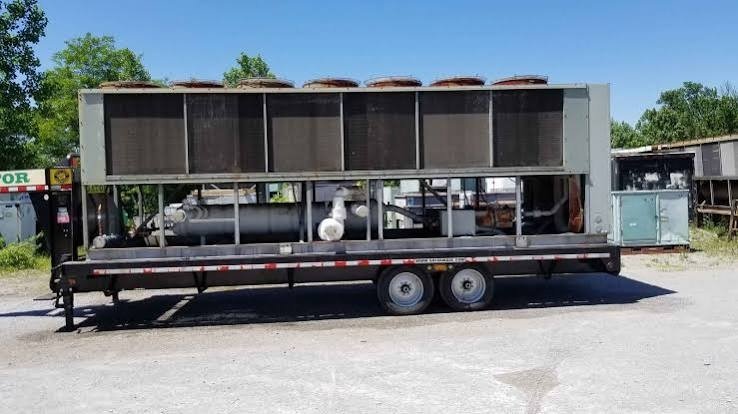

For commercial businesses in the UAE, reliable cooling is not simply a matter of comfort. Offices, hotels, shopping centres, retail outlets, healthcare facilities, warehouses, restaurants, data facilities and other commercial properties can depend heavily on central cooling systems to maintain suitable indoor conditions and keep normal operations running.
When a permanent chiller maintenance, or cannot provide enough capacity during a period of high demand, waiting weeks for a replacement or permanent upgrade may not be practical. This is where rapid chiller hire in the UAE can provide a temporary solution.
Rapid chiller hire means arranging a temporary chiller system that can be delivered, connected and commissioned for a commercial site when additional or replacement cooling is required. Depending on the application, the rented equipment can operate alongside an existing system, replace unavailable capacity temporarily, or support a temporary facility.
Chillers work by removing heat from water, which can then be circulated through a building’s cooling system. DEWA’s energy-efficiency guidance describes chillers as systems that use the refrigeration cycle to cool water, which subsequently cools building air through air-side equipment.
For UAE businesses, the important advantage of chiller hire is flexibility. Instead of purchasing permanent equipment for a temporary problem, HVAC a business can arrange cooling capacity for the period it actually needs it.
What Is Rapid Chiller Hire in the UAE?
Rapid chiller hire is the short-notice rental of a chiller system for temporary or additional cooling requirements.
Unlike purchasing a permanent chiller, the business hires the equipment for an agreed period. The rental provider normally assesses the required cooling capacity, equipment type, site conditions and connection requirements before delivering the system.
A typical rapid chiller hire arrangement may include the chiller itself, transportation, temporary pipework or hoses, pumps, electrical connections or power requirements, installation, commissioning and technical support. The exact package depends on the project.
The term “rapid” relates primarily to the speed of response and deployment. It does not mean that every chiller can be installed immediately regardless of the site. Commercial cooling systems require correct sizing, suitable access, electrical capacity, hydraulic connections and safe installation.
This distinction is important. A fast response is valuable, but the equipment still needs to be correctly selected and commissioned.
Current UAE rental providers advertise temporary, emergency and commercial chiller services for situations including breakdowns, planned maintenance, seasonal demand increases, construction projects, events and additional cooling requirements.
How Does a Rental Chiller Work?
The basic operating principle of a rental chiller is similar to that of a permanent chilled-water system.
The chiller uses a refrigeration cycle to remove heat from water. The cooled water is then circulated to cooling coils or other heat-transfer equipment. In a commercial building, air passes over cooling coils, allowing heat to be removed from the indoor air.
DEWA explains the distinction between air-cooled and water-cooled chillers according to how the chiller condenser is cooled. Air-cooled chillers reject heat using air, while water-cooled chillers use water for condenser cooling.
When a rental chiller is brought to a commercial property, the practical process usually involves several stages.
First, the cooling requirement is assessed. The provider needs to understand the building or application, required capacity, existing chilled-water system, operating temperatures, connection points and site conditions.
Next, the appropriate chiller configuration is selected. Depending on the application, this may involve an air-cooled, water-cooled, portable or larger temporary chiller system.
The equipment is then transported to the site. The installation team positions the chiller, connects the required pipework and services, checks the system and commissions the equipment.
Once operating conditions have been verified, the temporary chiller supplies chilled water to the building’s cooling system or designated temporary cooling circuit.
At the end of the rental period, the equipment can be disconnected and removed, allowing the commercial property to return to its normal cooling arrangement.
Why Do Commercial Businesses Need Rapid Chiller Hire?
Commercial cooling problems can occur for several reasons. A permanent chiller may fail unexpectedly, planned maintenance may require equipment to be taken offline, or a building may experience cooling demand that exceeds its available capacity.
Rapid chiller hire can therefore be useful in several different circumstances.
Emergency Chiller Replacement
An unexpected chiller failure can create an immediate cooling problem, particularly during periods of high outdoor temperatures.
Instead of leaving the building without adequate cooling while engineers repair the permanent system, a temporary chiller can provide replacement capacity.
UAE rental providers specifically market emergency chiller services for unexpected breakdowns and temporary replacement requirements.
The exact response time depends on equipment availability, location, site access, required capacity and installation conditions. Therefore, businesses should avoid assuming that every emergency chiller can be installed within the same number of hours.
Planned Chiller Maintenance
Major maintenance can require a permanent chiller to be taken offline.
For a commercial facility that must remain operational, this creates a temporary gap in cooling capacity. A hired chiller can bridge that gap while maintenance teams service or repair the permanent system.
This approach can be particularly useful where shutting down cooling would affect employees, customers, tenants, equipment or business operations.
Seasonal Cooling Demand
Some commercial buildings require additional capacity during periods of higher cooling demand.
Instead of permanently increasing installed capacity to accommodate a temporary peak, a business may consider rental cooling equipment.
This can provide a more flexible option where the additional demand is seasonal or uncertain.
Building Expansion or Fit-Out
A commercial property undergoing expansion, refurbishment or fit-out may temporarily need additional cooling before its final HVAC system is completed.
A rental chiller can act as a bridge during this transition.
Temporary Commercial Facilities
Temporary offices, event venues, exhibitions, construction-related facilities and other short-term commercial environments may not justify permanent chiller installation.
For these situations, temporary cooling equipment can be matched to the project’s duration.
Air-Cooled vs Water-Cooled Chiller Hire
One of the most important decisions when arranging chiller hire in the UAE is choosing the appropriate type of equipment.
Air-Cooled Chiller Hire
An air-cooled chiller rejects condenser heat directly to the surrounding air.
One major practical advantage is that it does not require a cooling tower and condenser-water circuit in the same way as a water-cooled system.
This can make air-cooled chillers attractive for temporary installations where quick deployment and simpler site requirements are important.
UAE rental providers commonly position air-cooled chillers for temporary, outdoor, emergency, commercial and project applications. Al Shola, for example, lists air-cooled rental chillers in the 50–400 TR range for temporary, process, commercial and emergency applications.
However, the actual suitability of an air-cooled unit depends on ambient conditions, required capacity, equipment specifications and site configuration.
Water-Cooled Chiller Hire
Water-cooled chillers use water to remove heat from the condenser side of the refrigeration system.
They can be appropriate for larger, continuous cooling applications where the required infrastructure is available.
Water-cooled temporary systems can involve additional equipment and connections, including condenser-water arrangements and cooling-tower infrastructure depending on the setup.
For that reason, they are not automatically the fastest choice for every emergency application.
The correct selection should be based on the cooling load, operating conditions, available infrastructure, project duration and installation requirements rather than simply choosing the largest available chiller.
How Is the Right Chiller Size Selected?
Choosing the correct capacity is one of the most important parts of rapid chiller hire.
A chiller that is too small may fail to meet the required cooling demand. An unnecessarily large system can increase rental, transport and operating costs without providing useful additional capacity.
Cooling capacity is normally expressed in refrigeration tons, commonly abbreviated as TR, although other capacity units such as kW are also used.
The required capacity depends on factors including building size, occupancy, equipment heat loads, solar gains, operating hours, required indoor conditions, process requirements and the existing HVAC configuration.
Rental Power’s UAE chiller guidance similarly identifies space, heat load and application type as important factors when determining chiller capacity and warns that illustrative capacity ranges should not replace an actual site assessment.
For this reason, a commercial business should not select a rental chiller purely from the floor area of the building.
Two buildings with similar floor areas can have very different cooling requirements.
For example, an office with moderate occupancy may have a different cooling load from a retail space with large glass areas, a restaurant with significant kitchen heat, or a facility containing heat-generating equipment.
What Information Does a Chiller Hire Company Need?
The faster a commercial business can provide accurate site information, the easier it can be to plan a rapid deployment.
A rental provider may ask for:
- Required cooling capacity, if already known
- Building or facility type
- Location
- Existing chiller capacity
- Chilled-water supply and return temperatures
- Flow requirements
- Available electrical supply
- Existing pipework and connection points
- Available installation area
- Access for delivery vehicles
- Required rental period
- Whether the requirement is emergency, planned or seasonal
- Any special operating or environmental conditions
If the required tonnage is not known, a site assessment may be necessary.
Providing an existing chiller’s model, capacity and technical information can also help the rental provider understand what is being replaced or supplemented.
How Rapid Chiller Hire Works: From Enquiry to Operation
A commercial chiller rental project normally follows a structured process.
Step 1: Explain the Cooling Requirement
The business contacts a rental provider and explains why temporary cooling is needed.
This could be an emergency breakdown, maintenance shutdown, additional cooling requirement or temporary project.
Step 2: Assess the Cooling Load
The provider determines the approximate cooling requirement and checks the existing system.
Where necessary, technical staff may conduct a site assessment.
Step 3: Select the Chiller
The provider chooses an appropriate chiller based on capacity, type, ambient conditions, available power, water requirements and site constraints.
Step 4: Plan Delivery
Delivery planning considers the physical location of the equipment, access routes, lifting requirements, installation area and connection points.
This stage can be especially important for large commercial chillers.
Step 5: Install and Connect
The rental chiller is positioned and connected to the temporary or existing chilled-water system.
Depending on the project, additional equipment such as pumps, hoses, temporary pipework, buffer tanks or electrical equipment may be required.
Step 6: Commission the System
Before normal operation begins, the system should be checked and commissioned.
The objective is to verify that the equipment is operating correctly and that the temporary cooling arrangement is suitable for the intended application.
Step 7: Operate With Technical Support
During the rental period, the business can receive technical support according to the rental agreement.
Step 8: Disconnect and Collect
When permanent cooling is restored or the temporary project ends, the rental equipment is disconnected and collected.
This allows the commercial site to return to its normal HVAC arrangement.
What Are the Benefits of Rapid Chiller Hire for UAE Businesses?
The main benefit is flexibility.
Reduced Capital Commitment
Purchasing a permanent commercial chiller requires a significant capital investment. If the cooling requirement exists only for a limited period, renting can avoid purchasing equipment that may not be needed later.
Faster Access to Temporary Capacity
When cooling is required urgently, an available rental fleet can provide an alternative to waiting for permanent equipment procurement and installation.
The actual deployment time still depends on capacity, availability, logistics and site requirements.
Support During Maintenance
Businesses can continue using temporary cooling while their permanent chiller undergoes major maintenance or repair.
Flexible Rental Duration
Rental arrangements can be structured around the project. UAE providers advertise short-term daily or weekly requirements as well as monthly, seasonal and longer-term arrangements.
Scalable Cooling
A business facing temporary additional demand can potentially add rented capacity without permanently changing the building’s cooling infrastructure.
Reduced Operational Disruption
Maintaining cooling during repairs, upgrades or unexpected failures can help reduce disruption to employees, tenants, customers and business operations.
What Does Rapid Chiller Hire Cost in the UAE?
There is no single price for rapid chiller hire in the UAE because the cost depends heavily on the specific project.
Current UAE rental providers identify factors such as cooling capacity, rental duration, transportation, installation complexity, accessories, hoses, pumps and site requirements as cost factors.
For a commercial business, a rental quotation may therefore include more than the daily equipment rate.
Possible cost components include the chiller, delivery, installation, temporary pipework, pumps, electrical requirements, commissioning, technicians and collection.
Emergency requirements can also involve additional logistical considerations because equipment may need to be mobilised outside normal project planning windows.
The best way to compare quotations is to ask providers to clearly separate equipment, installation, transportation, accessories and support costs.
Is Rapid Chiller Hire More Cost-Effective Than Buying?
That depends on the duration and purpose of the cooling requirement.
If a business needs permanent cooling for many years and has predictable demand, purchasing a permanent chiller may make more sense.
If the requirement is temporary, seasonal, emergency or uncertain, rental can be more practical because the business does not need to purchase equipment for a short-term need.
The comparison should consider the total cost rather than only the equipment purchase price.
A purchase may involve capital expenditure, installation, maintenance, repairs, depreciation and eventual replacement.
Rental shifts much of the equipment ownership responsibility to the rental provider, although businesses should always check exactly what maintenance and support are included in the rental contract.
Rapid Chiller Hire During UAE Summer
Cooling requirements become particularly important in the UAE’s hot climate.
Commercial cooling systems must operate under demanding ambient conditions, and chilled-water system efficiency is an important consideration.
ASHRAE has specifically examined chilled-water system design in hot, humid climates, noting that chilled-water cooling can represent a substantial portion of building energy use and that chilled-water supply temperature and system design influence efficiency.
This is why commercial businesses should not select rental equipment based solely on nominal cooling capacity.
The chiller must be suitable for the expected ambient conditions and operating requirements.
High-ambient performance, condenser conditions, water temperatures, electrical supply and installation location can all affect practical performance.
Rapid Chiller Hire and Energy Efficiency
Hiring a chiller does not automatically mean that a building will use less electricity.
The efficiency of the overall cooling system depends on the equipment, load, operating conditions, controls, chilled-water temperatures, pumps and other components.
Dubai’s authorities have placed significant emphasis on efficient cooling. The Dubai Supreme Council of Energy’s efficient-cooling programme focuses on improving the efficient delivery of cooling in buildings during planning, construction and retrofit projects.
For commercial businesses, this means that temporary cooling should be selected with efficiency in mind rather than treating rental equipment as a simple emergency appliance.
Correct sizing is particularly important. Oversized or poorly integrated equipment may not deliver the expected operational efficiency.
Can Rental Chillers Work With Existing Commercial HVAC Systems?
In many cases, yes, but compatibility must be checked before installation.
A rental chiller can be connected to existing chilled-water pipework or a temporary cooling loop depending on the building’s configuration.
The provider needs to verify connection sizes, flow rates, supply and return temperatures, pressure requirements, electrical characteristics and available installation space.
A technically suitable chiller can still be unsuitable if the site does not have the required connections or infrastructure.
This is one reason professional site assessment is important for commercial chiller rental.
Rapid Chiller Hire for Different Commercial Businesses
Different businesses have different temporary cooling requirements.
Offices
An office may require temporary cooling during a central chiller failure, refurbishment or HVAC upgrade.
Hotels
Hotels have strong cooling requirements because guest comfort and common areas must remain operational. Temporary cooling can be used during maintenance or unexpected equipment failure.
Shopping Centres and Retail Facilities
Retail environments can experience significant internal heat loads from lighting, occupants and equipment. Additional cooling capacity may be required during system problems or high-demand periods.
Restaurants
Restaurants can have substantial heat loads from kitchens and cooking equipment. Temporary cooling may be required during HVAC maintenance or capacity problems.
Healthcare Facilities
Cooling requirements can be especially important in healthcare environments. Any temporary cooling arrangement must be properly assessed for the facility’s operational requirements and applicable technical standards.
Warehouses and Commercial Storage
Some warehouses need temperature control for products, equipment or working conditions. The appropriate solution depends on the type of goods and required temperature range.
Data and Technical Facilities
Technical environments may require continuous cooling. Rental chillers can sometimes provide temporary or backup capacity during planned maintenance or cooling-system upgrades.
What Should Businesses Check Before Hiring a Chiller?
Before signing a rental agreement, commercial businesses should check several technical and commercial points.
Confirm the cooling capacity and operating conditions rather than accepting a generic “one-size-fits-all” recommendation.
Ask which type of chiller is being supplied and why it is appropriate for the application.
Confirm whether delivery, installation, commissioning and collection are included.
Check whether pumps, hoses, temporary pipework and other accessories are included.
Confirm the electrical requirements.
Ask about technical support and emergency response during the rental period.
Confirm the minimum rental period and what happens if the project finishes earlier or continues longer.
Most importantly, make sure the rental provider understands the actual commercial cooling requirement before equipment is dispatched.
Rapid Chiller Hire vs Portable AC Rental
Rapid chiller hire and portable AC rental are not interchangeable.
Portable AC units can be useful for individual rooms, small temporary areas or applications where a chilled-water system is not required.
A chiller, on the other hand, is generally used where chilled water is required to serve a central or process cooling system.
For a large commercial building already designed around chilled-water HVAC, renting a compatible chiller can be more appropriate than attempting to cool the entire building with numerous portable AC units.
The correct solution depends on the building and cooling requirement.
Why UAE Businesses Use Temporary Chillers Instead
The main reason is continuity.
A commercial building can continue operating while the permanent cooling system is being repaired or upgraded.
For businesses where cooling is closely linked to occupancy, equipment, production or customer experience, maintaining temporary capacity can be preferable to accepting a prolonged cooling interruption.
Rental chiller services are therefore best viewed as a temporary bridge between the current cooling problem and the permanent solution.
They do not necessarily replace permanent HVAC infrastructure. Instead, they provide flexibility when that infrastructure is unavailable or insufficient.
How to Choose a Rapid Chiller Hire Company in the UAE
Choosing the cheapest rental quotation is not always the best approach.
A commercial business should look at the provider’s equipment range, technical capabilities, response arrangements, installation experience and ability to support the required capacity.
A suitable provider should be able to explain why a particular chiller has been selected and how it will connect to the existing system.
Businesses should also ask whether the provider can support emergency requirements and whether technical assistance is available throughout the rental period.
For large or critical commercial applications, the ability to provide the correct equipment and installation support can be more important than a small difference in the quoted rental rate.
Rapid Chiller Hire and Dubai District Cooling
District cooling is an important part of Dubai’s cooling infrastructure.
DEWA describes district cooling as chilled water supplied to groups of buildings through insulated underground networks, with heat exchangers and secondary pumps used in customer buildings.
Dubai also has a regulatory framework covering district cooling services, while the Dubai Supreme Council of Energy continues to emphasize cooling efficiency.
For certain facilities, temporary rental cooling may be considered during maintenance, upgrades or interruptions, but the exact arrangement depends on the building’s cooling system and the relevant district-cooling provider and technical requirements.
A rental chiller should therefore be integrated carefully rather than treated as a standalone replacement without checking the existing infrastructure.
Frequently Asked Questions
What is rapid chiller hire?
Rapid chiller hire is the short-notice rental of temporary chiller equipment to provide additional or replacement cooling capacity for a commercial, industrial or temporary application.
How does a rental chiller provide cooling?
A chiller removes heat from water through a refrigeration cycle. The chilled water is then circulated through cooling equipment to remove heat from indoor air or another application.
Why would a UAE business hire a chiller?
Common reasons include unexpected chiller breakdowns, planned maintenance, seasonal demand, temporary projects, building expansion and insufficient existing cooling capacity.
How quickly can a rental chiller be installed?
The time varies according to equipment availability, required capacity, site location, access, connections, electrical requirements and installation complexity. Some UAE providers advertise same-day or emergency deployment for certain standard requirements, but businesses should confirm the actual response time for their specific project.
What size rental chiller do I need?
The required capacity depends on the building’s cooling load, occupancy, equipment, operating conditions and existing HVAC system. A professional assessment is preferable to selecting capacity based only on floor area.
Is an air-cooled chiller better for rapid deployment?
Air-cooled chillers can be advantageous for temporary applications because they do not require the same condenser-water and cooling-tower arrangement as water-cooled systems. However, the best option depends on the project’s capacity, ambient conditions, efficiency requirements and available infrastructure.
Can I hire a chiller for a few days?
Yes. UAE rental providers offer short-term arrangements for applications such as emergencies, events and maintenance periods, alongside longer-term rental options.
Can a rental chiller replace a failed permanent chiller?
A rental chiller can provide temporary replacement capacity while the permanent chiller is repaired or replaced, provided the rental equipment is correctly sized and compatible with the site’s cooling system.
Does chiller hire include installation?
This depends on the rental agreement. Many commercial rental packages can include delivery, installation and commissioning, but these services should be confirmed in the quotation.
How much does chiller hire cost in the UAE?
There is no universal rental price. Capacity, rental duration, transportation, installation, accessories, site conditions and technical support can all influence the final quotation.
Is rapid chiller hire suitable for commercial buildings?
Yes. Temporary chillers can support offices, hotels, retail facilities, shopping centres, warehouses, healthcare facilities and other commercial properties when additional or replacement cooling capacity is required.
Final Thoughts
Rapid chiller hire in the UAE gives commercial businesses a flexible way to respond when their existing cooling capacity is unavailable, insufficient or temporarily required.
The concept is straightforward: assess the cooling requirement, select suitable equipment, deliver and connect the temporary chiller, commission the system, operate it for the required period and remove it when the permanent cooling arrangement is restored.
However, rapid deployment should never mean skipping technical assessment. Correct capacity, chiller type, ambient conditions, water flow, electrical supply, connection requirements and site access all need to be considered.
For UAE commercial businesses, the most useful approach is to treat temporary chiller hire as a carefully planned continuity solution rather than simply an emergency piece of equipment. With the right chiller and proper installation, a temporary system can help bridge the gap between an unexpected cooling problem and the restoration or upgrade of the permanent HVAC system.