
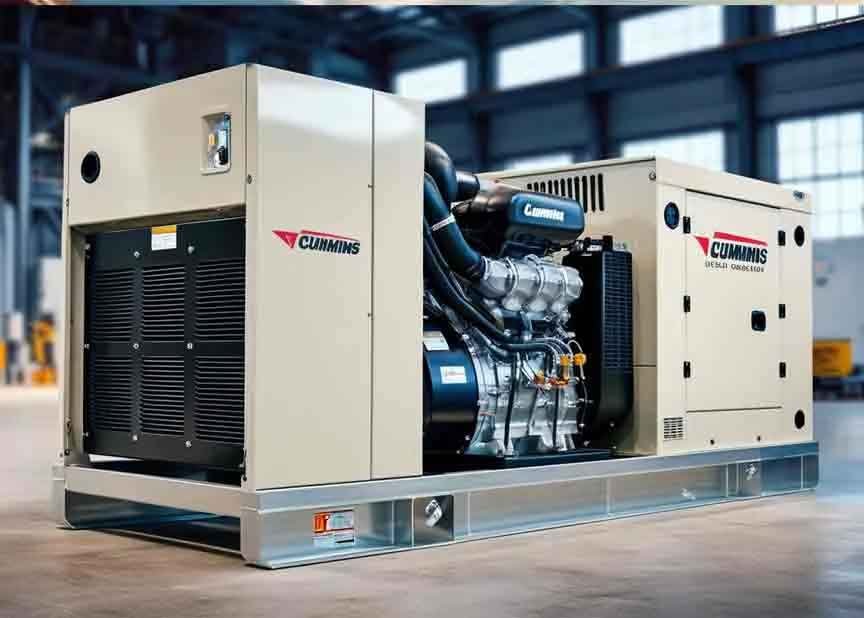

In the UAE, reliable cooling is not simply a comfort requirement. For many businesses, it is essential to maintaining operations, protecting equipment, meeting production requirements, and keeping customers and employees comfortable. Cooling is also one of the largest energy demands in the country. According to the Abu Dhabi Department of Energy, air-conditioning systems account for around 60–70% of electricity consumption in UAE buildings.
This high dependence on cooling explains why businesses increasingly consider temporary and rental cooling solutions when permanent systems are unavailable, insufficient, under maintenance, or unable to handle a temporary increase in demand.
Rental chillers provide businesses with access to temporary chilled-water capacity without requiring them to purchase and install a permanent chiller plant. Depending on the project, they can be used for planned maintenance, emergency cooling, construction projects, seasonal demand, industrial processes, commercial buildings, hotels, events, and other applications where dependable cooling is required for a limited period.
What Is a Rental Chiller?
A rental chiller is a temporary cooling system supplied for a specific project or operating period. Instead of purchasing a chiller and taking responsibility for its long-term ownership, the customer rents the required equipment from a specialist provider.
The system generally consists of a chiller and the associated equipment required to deliver chilled water to the building or process. Depending on the installation, this can include pumps, hoses or temporary pipework, control equipment, electrical connections, and other accessories.
Rental chillers are available in different capacities and configurations, allowing businesses to select equipment according to their cooling load rather than committing to a permanent system that may not be needed throughout the year.
Why Is Cooling So Important for UAE Businesses?
The UAE’s climate creates a substantial and sustained demand for air conditioning. Cooling is particularly important during the summer, when high outdoor temperatures increase the load placed on HVAC systems.
Dubai’s energy regulator states that cooling represents almost half of the emirate’s total electricity demand, highlighting how important cooling infrastructure is to businesses, residents, and visitors.
The scale of cooling demand is also reflected in Dubai’s district cooling sector. Empower reported a 20% increase in its customers’ district cooling consumption during the first half of 2024 compared with the same period in 2023, driven partly by high occupancy and the growth of large real-estate developments.
For businesses, the practical implication is straightforward: a cooling failure can become an operational problem very quickly. Rental chillers provide a way to add temporary capacity or maintain cooling while a permanent system is unavailable.
1. Rental Chillers Reduce the Need for Large Capital Investment
Purchasing a commercial or industrial chiller involves considerably more than the equipment itself. Businesses may also need to account for installation, electrical infrastructure, pumps, pipework, controls, commissioning, maintenance, and future replacement.
A rental model changes this financial structure. Instead of making a large upfront investment in equipment that may only be required for a specific project or occasional peak demand, a business can rent the required cooling capacity for the period it actually needs it.
This can be particularly useful for companies working on short-term projects, temporary facilities, construction sites, seasonal operations, or planned shutdowns.
The financial decision should still be based on a proper comparison of rental costs, operating costs, expected utilisation, installation requirements, and the long-term cost of ownership. Rental is not automatically cheaper in every situation; its advantage is flexibility and avoiding unnecessary long-term capital expenditure.
2. Businesses Can Respond Quickly to Cooling Emergencies
Chiller failure can create serious operational challenges, particularly in facilities where cooling is critical to daily activities.
A permanent replacement chiller may require time for specification, procurement, delivery, installation, and commissioning. A temporary rental chiller can act as a bridge while the permanent system is repaired or replaced.
Temporary HVAC systems are widely used for situations such as equipment replacement and facility requirements where existing cooling capacity is temporarily unavailable.
For UAE businesses, this flexibility can be particularly valuable during periods of high cooling demand. Rather than allowing a failed cooling system to interrupt operations, companies can use temporary capacity while permanent corrective work takes place.
3. Rental Chillers Support Planned Maintenance
Preventive maintenance is essential for large HVAC systems, but taking a chiller offline can create a difficult operational situation.
A business may need to shut down one or more chillers to carry out inspection, servicing, repair, cleaning, component replacement, or other maintenance work. If there is no adequate standby capacity, this work can affect building operations.
A rental chiller can provide temporary cooling during the maintenance period.
This allows maintenance teams to work on the permanent system while the temporary system supports the required cooling load. Once the permanent equipment has been restored and tested, the rental equipment can be removed.
For facilities where continuous cooling is important, this approach can help reduce the operational impact of planned maintenance.
4. Rental Cooling Provides Flexibility for Construction Projects
Construction and development projects often have changing cooling requirements.
A temporary facility may require cooling before the permanent HVAC system is commissioned. Alternatively, parts of a building may become operational before the entire mechanical system is completed.
Installing a permanent chiller plant solely to cover an interim construction phase may not make financial sense. A rental chiller can provide temporary capacity until the permanent system is ready.
This flexibility is particularly relevant in the UAE, where commercial, hospitality, residential, industrial, and mixed-use developments continue to create substantial demand for cooling infrastructure. Empower, for example, reported continued expansion of Dubai’s district cooling infrastructure in response to urban growth and increasing cooling requirements.
5. Businesses Can Handle Temporary Increases in Cooling Demand
Cooling requirements are not always constant.
A hotel may experience increased occupancy. A commercial building may add new tenants. An industrial facility may increase production. An event venue may require additional cooling capacity for a major event.
Installing a permanent chiller for a temporary increase in demand can result in equipment being underutilised once the peak period ends.
Rental chillers allow businesses to add capacity when required and remove it when demand returns to normal.
This makes temporary cooling particularly useful where demand is seasonal, project-based, or difficult to predict.
6. Rental Chillers Can Help Maintain Business Continuity
For many companies, the biggest cost associated with a cooling failure is not the cooling equipment itself but the potential disruption to operations.
Depending on the facility, inadequate cooling can affect employees, customers, production processes, equipment, inventory, or temperature-sensitive environments.
A temporary chiller can serve as an additional layer of operational resilience. It can maintain required cooling while engineers investigate the underlying problem with the permanent HVAC system.
However, businesses should not wait until a major failure occurs before considering temporary cooling. Facilities with critical cooling requirements can benefit from having an emergency response plan that identifies the required cooling capacity, connection points, access requirements, and installation arrangements in advance.
7. Businesses Can Select Cooling Capacity According to Their Requirements
One of the major advantages of renting is the ability to match the equipment to the project.
A business does not necessarily need the same cooling capacity for every situation. The required capacity depends on factors such as building size, heat load, process requirements, outdoor conditions, internal heat gains, operating hours, and the required chilled-water temperature.
Correct sizing is especially important because oversized cooling equipment can increase unnecessary costs, while undersized equipment may fail to meet the required load.
The importance of accurate cooling-load calculations has recently been highlighted by Abu Dhabi’s Department of Energy. Its 2026 Cooling Load Manual was introduced to support more accurate system sizing and energy-efficient building design. The department noted that AC systems in UAE buildings are often oversized by 25–35%.
For rental applications, businesses should therefore provide the supplier with accurate information about the required cooling load rather than simply selecting equipment based on building size or a previous chiller’s capacity.
8. Rental Chillers Are Useful for Industrial Applications
Cooling is not limited to maintaining comfortable indoor temperatures. Many industrial processes depend on controlled temperatures.
Manufacturing facilities, process industries, warehouses, food-related operations, and other industrial environments may require chilled water for specific processes or equipment.
When existing cooling capacity is insufficient or a process is being expanded, rental chillers can provide additional temporary capacity without requiring a permanent plant expansion.
This can be particularly valuable when a company wants to test increased production capacity before committing to a permanent cooling investment.
9. Rental Chillers Offer a Practical Option for Events and Temporary Facilities
Events, exhibitions, temporary structures, and large gatherings can create short-term cooling requirements.
A temporary venue may not have sufficient permanent HVAC capacity, or its cooling infrastructure may not be designed for the additional heat load generated by large numbers of visitors and equipment.
A rental chiller can provide additional cooling for the duration of the event or temporary operation.
Once the event is complete, the equipment can be removed instead of becoming a permanent asset that requires storage and maintenance.
10. Businesses Avoid Long-Term Equipment Ownership
Owning a chiller means taking responsibility for the equipment throughout its useful life.
That can include preventive maintenance, repairs, spare parts, inspections, major component replacement, efficiency management, and eventual replacement.
Rental shifts much of the equipment responsibility to the rental provider, depending on the commercial agreement.
For businesses whose core activities are not HVAC-related, this can simplify the management of temporary cooling requirements. However, companies should carefully review the rental agreement to understand exactly what is included, such as transportation, installation, commissioning, monitoring, maintenance, breakdown support, fuel or electricity requirements, and removal.
11. Rental Chillers Can Support Energy-Conscious Cooling Strategies
Energy efficiency is increasingly important in the UAE’s cooling sector.
Dubai’s regulatory authorities identify efficient cooling as an important part of the emirate’s sustainability strategy, while district cooling has been promoted as one approach to improving cooling efficiency at scale.
For rental applications, efficiency should also be considered when selecting equipment. A business should evaluate the chiller’s efficiency under the expected operating conditions rather than focusing only on nominal capacity.
A correctly sized and properly operated chiller can help avoid unnecessary energy consumption. DEWA also recommends practical measures such as maintaining appropriate temperature settings and keeping AC systems properly maintained to improve cooling efficiency.
When Should a UAE Business Consider a Rental Chiller?
Rental cooling can make sense in several situations. A business may consider it when an existing chiller has failed, when a permanent system is undergoing major maintenance, when a building needs additional cooling capacity, or when a new facility requires temporary cooling before its permanent HVAC infrastructure is operational.
It can also be appropriate for construction projects, industrial processes, hotels, commercial buildings, events, temporary facilities, and seasonal cooling requirements.
The key consideration is duration and requirement. If the additional cooling is temporary, unpredictable, or needed urgently, renting can provide greater flexibility than purchasing new equipment.
How to Choose the Right Rental Chiller in the UAE
Choosing the right equipment requires more than selecting a chiller with a high tonnage rating.
Businesses should first establish the actual cooling load. The supplier should then assess the required chilled-water supply and return temperatures, flow rate, operating conditions, available electrical supply, installation location, access for delivery, and connection requirements.
The business should also clarify whether the rental package includes transportation, installation, commissioning, hoses or temporary pipework, pumps, electrical connections, maintenance, technical support, and removal.
Reliability is another important consideration. A low rental price is of limited value if the equipment cannot maintain the required cooling load or technical support is unavailable when needed.
For critical facilities, businesses should also ask about backup arrangements and emergency response times.
Rental vs Buying: Which Is Better?
Neither rental nor ownership is universally better. The right choice depends on how long the cooling capacity is required and how frequently the equipment will be used.
Buying may be appropriate when a company has a long-term, predictable cooling requirement and wants to control its own permanent HVAC asset. Rental can be more attractive when cooling is required for a limited period, when additional capacity is temporary, or when a business needs emergency or standby cooling.
The decision should consider the total cost rather than the equipment price alone. Installation, maintenance, electricity consumption, downtime risk, financing, depreciation, storage, and eventual replacement can all influence the overall economics.
Final Thoughts
Businesses choose rental chillers in the UAE primarily because they provide flexibility, temporary capacity, and a practical response to changing cooling requirements.
The UAE’s strong dependence on air conditioning makes reliable cooling an important operational consideration. With cooling representing a substantial share of electricity demand and continued development across commercial, hospitality, industrial, and mixed-use sectors, businesses need cooling solutions that can adapt to both planned and unexpected requirements.
A rental chiller can provide that flexibility without requiring a business to immediately invest in permanent additional cooling infrastructure. Whether the requirement is an emergency replacement, planned maintenance, construction project, seasonal demand increase, industrial process, or temporary facility, the right rental system can help maintain cooling while keeping the business moving.
The most important step is to assess the actual cooling load and operating conditions before selecting equipment. Working with an experienced rental provider can help ensure that the chiller capacity, installation method, operating requirements, and support arrangements are appropriate for the application.