

Dubai’s hospitality industry depends heavily on indoor comfort. Guests may accept the intense outdoor heat as part of visiting the UAE, but once they enter a hotel lobby, guest room, restaurant, ballroom, spa, or other indoor space, they expect a stable and comfortable environment.
That expectation becomes more challenging during Dubai’s extreme summer months.
Dubai has a tropical desert climate with hot and humid summers. Dubai Government information reports an average summer high of around 41.8°C, while the UAE’s climate authorities describe hot-month average temperatures of approximately 30°C to 40°C and summer humidity that can become very high.
For hotels and resorts, these conditions can place significant demand on air-conditioning and chilled-water systems. A permanent chiller plant may also require maintenance, repair, replacement, or additional capacity during periods of unusually high cooling demand.
This is where rental chillers for hotels and resorts in Dubai can provide a practical temporary cooling solution.
A properly planned rental system can add temporary cooling capacity, support an existing HVAC system during maintenance, or provide backup cooling when a critical part of the permanent system is unavailable. However, the right solution is not simply about selecting the largest available chiller. The actual cooling requirement depends on the building, existing HVAC system, outdoor conditions, occupancy, water flow, temperature requirements, and many other factors.
This guide explains how temporary chiller rental can support Dubai hotels and resorts during extreme summer heat and what facility managers should consider before implementing a temporary cooling solution.
Why Extreme Summer Heat Creates a Major Cooling Challenge for Dubai Hotels
Hotels operate differently from many ordinary commercial buildings.
A hotel may have hundreds of guest rooms, large lobbies, restaurants, kitchens, meeting rooms, ballrooms, gyms, spas, swimming-pool facilities, corridors, staff areas, and other spaces with different cooling requirements.
ASHRAE’s hospitality guidance notes that hotel HVAC systems must address factors including individual temperature control, ventilation, humidity control, acceptable noise levels, reliability, maintenance, operating efficiency, and changing load conditions.
During summer, the challenge becomes greater because the HVAC system must continuously remove heat from the building while outdoor temperatures remain high.
Several factors can increase the cooling demand.
High outdoor temperatures
The building envelope absorbs heat from the surrounding environment. Guest rooms are commonly exposed to exterior walls, windows, and roofs, making outdoor conditions an important part of the cooling load.
ASHRAE identifies outdoor temperature as an important factor affecting cooling loads, equipment capacity, and equipment efficiency. It also notes that extreme summer conditions are particularly important when sizing air-cooled equipment because high ambient temperatures can reduce available capacity and efficiency.
For a hotel in Dubai, this means the cooling system may experience significantly greater demand during the hottest periods of the year than during milder months.
High humidity
Temperature is only part of the comfort challenge.
The UAE government describes the country’s summer climate as hot and humid, while the UAE climate atlas reports that summer humidity can reach very high levels.
Humidity affects how occupants experience indoor conditions and also creates an additional HVAC requirement because cooling systems may need to remove moisture as well as sensible heat.
ASHRAE notes that hotel HVAC systems in humid climates require careful humidity management and that ventilation and latent loads are important considerations.
A temporary cooling plan for a hotel should therefore consider more than temperature alone.
Changing occupancy levels
Hotels do not have a perfectly constant cooling load.
Guest rooms may be occupied at different times, while restaurants, conference spaces, ballrooms, and event areas can experience sudden increases in occupancy.
ASHRAE explains that hotels experience significant load diversity and changing occupancy patterns. Cooling requirements can therefore vary across different spaces and throughout the day.
A ballroom hosting a large event, for example, may require substantially more cooling than when it is empty. Likewise, a hotel experiencing high seasonal occupancy may place more demand on its central cooling infrastructure.
This is one reason temporary cooling capacity can be useful. Instead of permanently installing additional capacity for a short-term requirement, a hotel may be able to use a temporary system when the additional load actually occurs.
What Is a Rental Chiller?
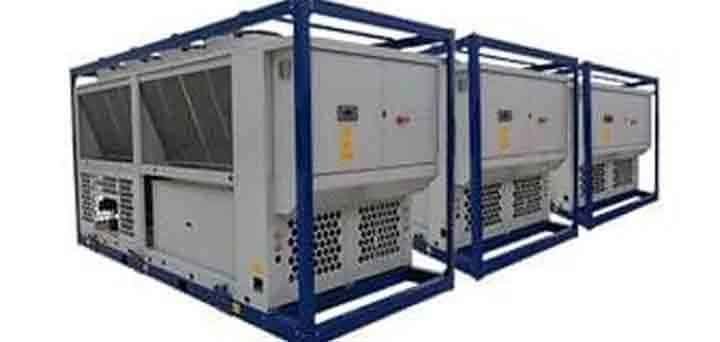
A rental chiller is a temporary cooling unit supplied for a defined period rather than permanently purchased and installed.
Depending on the application, the rental package may involve more than the chiller itself. A complete temporary chilled-water system can require supporting equipment such as pumps, hoses or temporary pipework, air-handling equipment, electrical distribution, controls, and other accessories.
The exact configuration depends on the existing hotel HVAC system and the purpose of the rental.
For example, the temporary chiller may be connected to an existing chilled-water network, or it may support a separate temporary air-handling system.
Commercial rental providers in the UAE commonly describe temporary chillers as solutions for emergency breakdowns, planned maintenance, peak demand, and temporary projects.
The important point is that the equipment should be selected as part of a complete cooling plan rather than based on cooling capacity alone.
One UAE chiller rental provider specifically lists factors such as cooling load, temperature, water flow, power availability, site access, and connection routes as part of planning a rental installation.
These considerations are especially important for hotels because temporary equipment must often be installed without creating unnecessary disruption for guests.
How Rental Chillers Can Support Hotels During Extreme Summer Heat
1. Providing temporary cooling during an emergency chiller failure
A central chiller failure can quickly become an operational problem during Dubai’s summer.
If a permanent cooling system loses capacity unexpectedly, indoor temperatures can begin rising while the maintenance team investigates the problem.
A rental chiller can potentially provide temporary cooling capacity while repairs are completed, depending on the system configuration and the site’s ability to accommodate and connect the equipment.
Temporary cooling providers specifically identify emergency breakdown support as one of the major applications for rental chillers.
For a hotel, the objective is not simply to “bring in a chiller.” The priority is to restore an appropriate level of cooling with the least possible disruption.
The response plan may involve:
- assessing the available permanent cooling capacity;
- identifying which areas require priority cooling;
- determining the temporary load requirement;
- reviewing the existing chilled-water system;
- checking electrical capacity;
- planning equipment access and positioning;
The exact approach depends on the property and the nature of the equipment failure.
2. Maintaining guest comfort during planned maintenance
Emergency breakdowns are not the only reason a hotel may need temporary cooling.
Chillers and other HVAC equipment periodically require inspection, maintenance, overhaul, repair, or replacement. Taking a major piece of cooling equipment offline during the hottest period of the year may reduce the remaining system capacity.
Temporary rental cooling can help bridge this period.
Rental providers in the UAE and internationally specifically position temporary chillers as support during planned maintenance and while permanent installations are unavailable.
For a hotel, this can allow planned maintenance to proceed while maintaining cooling in priority areas.
The facility team may decide to prioritise:
- occupied guest rooms;
- hotel lobbies;
- restaurants;
- banquet and conference facilities;
The priority should be based on the actual hotel operation and available cooling capacity.
3. Adding capacity during peak cooling demand
A hotel’s permanent chiller system may be adequate for normal operation but experience high demand during extreme weather or periods of increased occupancy.
Temporary chillers can provide additional capacity for these periods without requiring a permanent expansion of the cooling plant.
This type of application is commonly described by rental providers as peak-load or seasonal support.
For example, a hotel may require additional cooling when:
- outdoor temperatures are exceptionally high;
- occupancy is unusually high;
- a major conference or event is taking place;
- multiple ballrooms or meeting spaces are operating simultaneously;
A proper load assessment is essential before selecting temporary capacity.
Why Hotel Cooling Requires More Than a Simple Chiller Size Estimate
One of the most important mistakes to avoid is assuming that a hotel needs a particular chiller size based only on the number of rooms or total floor area.
ASHRAE states that heating and cooling load calculations are the primary basis for sizing HVAC components. Cooling requirements depend on both external and internal factors.
For a hotel or resort, the assessment may consider factors such as:
Building characteristics
The size, layout, orientation, glazing, insulation, roof exposure, and other building characteristics can influence cooling demand.
Outdoor conditions
Dubai’s high summer temperatures and humidity are important environmental inputs for cooling-system planning.
Occupancy
Guest-room occupancy, restaurant activity, conferences, weddings, and other events can change the internal heat load.
Equipment and lighting
Commercial kitchens, lighting, IT equipment, appliances, and other internal equipment contribute to the overall cooling requirement.
Ventilation requirements
ASHRAE notes that ventilation is an important consideration in hotel HVAC design and that ventilation can represent a significant portion of the cooling load in guest-room applications.
Existing system configuration
The temporary cooling system must work with the actual hotel infrastructure. This may include existing chilled-water loops, air-handling units, pumps, valves, controls, and electrical systems.
For this reason, the final selection should be based on engineering or qualified HVAC assessment rather than a generic “one-size-fits-all” capacity figure.
Temporary Cooling for Hotel Lobbies and Public Areas
The hotel lobby is often one of the most important guest-facing spaces in the building.
It may have large entrances, frequent door openings, high ceilings, glass façades, and continuous foot traffic. During Dubai’s summer, these characteristics can increase the cooling challenge.
A documented case study from Andrews Sykes describes a temporary cooling solution provided for a luxury hotel lobby in Dubai after the property required additional cooling during the summer.
This type of application demonstrates an important point: temporary cooling does not always have to mean replacing an entire hotel cooling plant.
Sometimes the requirement is limited to a particular area experiencing insufficient capacity.
A temporary solution may therefore be designed to support:
- a lobby;
- a restaurant;
- a ballroom;
- a conference space;
Targeting the affected area can sometimes be more practical than attempting to temporarily replace the entire central plant.
Supporting Hotel Renovation, Fit-Out, and Opening Projects
Hotels and resorts may also need temporary cooling before the permanent HVAC system is fully available.
This can happen during:
- refurbishment projects;
- fit-outs;
- system replacement;
- commissioning;
- delayed equipment delivery; or
- new property openings.
A published UAE hospitality case study describes a hotel, resort, and spa that required temporary cooling and dehumidification when its permanent system was delayed before opening. The solution described included a temporary chiller, air-handling capacity, dehumidification, and supporting power equipment.
Another case involving temporary district cooling at a Dubai beach club described the use of temporary chilled-water support during fit-out stages to help maintain suitable conditions for interiors and furnishings.
These examples show why temporary cooling projects may require a combination of equipment rather than a chiller alone.
Air-Cooled and Water-Cooled Rental Chillers: What Hotels Should Consider
The best type of temporary chiller depends on the site and existing infrastructure.
An air-cooled chiller rejects heat directly to the outdoor air. These units can be useful where the installation needs a self-contained solution, but extreme outdoor temperatures must be considered because high ambient conditions can affect equipment capacity and efficiency. ASHRAE specifically identifies this as an important issue for air-cooled refrigeration equipment.
A water-cooled chiller generally requires a separate heat-rejection arrangement, such as a cooling tower or another compatible system. This may make integration more complex, depending on the property.
The decision should consider:
- available installation space;
- ambient conditions;
- existing cooling infrastructure;
- required cooling capacity;
The right choice is therefore site-specific.
The Importance of Humidity Control in Hotels and Resorts
Cooling is not only about reducing air temperature.
In a hot and humid climate, moisture control can also influence guest comfort and building conditions.
ASHRAE’s hospitality guidance identifies humidity control as an important hotel HVAC requirement. It also warns that humid conditions and poorly managed outdoor-air treatment can contribute to high indoor humidity and related problems.
A hotel experiencing a temporary cooling problem may therefore need to evaluate whether the issue involves:
- insufficient cooling capacity;
- inadequate dehumidification;
- ventilation conditions;
- airflow problems;
- a combination of cooling and humidity issues.
In some situations, the temporary solution may need supporting air-handling or dehumidification equipment.
A temporary system should therefore be designed around the actual indoor environmental requirement rather than simply adding cooling capacity.
Planning a Temporary Chiller Installation at a Hotel
A successful rental project usually begins with a detailed site assessment.
Before equipment is delivered, the facility team and HVAC provider should review several practical issues.
Cooling requirement
The first question is how much additional or replacement cooling is actually required.
This should be based on the affected areas and actual load conditions.
Connection to the existing system
The team must determine how the temporary chiller will connect to the building’s cooling infrastructure.
Possible requirements can include temporary pipework, hoses, pumps, valves, and other connection equipment.
Electrical supply
The available electrical infrastructure must be reviewed to ensure that the temporary equipment can be safely supported.
If sufficient power is not available, a separate temporary power solution may be required.
Equipment location
The proposed location should provide suitable access for delivery, installation, operation, and maintenance.
Hotels may have limited back-of-house space, busy service roads, rooftop restrictions, or other logistical challenges.
Guest impact
Temporary equipment should be planned to minimise unnecessary disruption from:
- noise;
- vehicle movement;
- temporary pipework;
- installation activity; and
- restricted access.
ASHRAE also identifies noise and reliability as important considerations for hotel HVAC systems.
Controls and monitoring
The temporary system should be commissioned and monitored according to the project requirements.
The objective is to confirm that the system is providing the intended cooling performance and operating safely with the existing infrastructure.
How Hotels Can Prepare Before a Cooling Emergency
The best time to think about emergency cooling is before a major failure occurs.
A hotel facility-management team can develop a basic contingency plan that identifies:
- Critical areas that must remain cooled.
- Existing chiller capacity and redundancy.
- Important chilled-water connection points.
- Available electrical capacity.
- Suitable locations for temporary equipment.
- Delivery and access routes.
- Required internal approvals and safety procedures.
- Contact information for qualified HVAC and temporary-cooling providers.
ASHRAE notes that reliability and redundancy are important considerations in central hotel mechanical plants. Its hospitality guidance discusses the value of considering spare critical equipment and system configurations that can maintain partial cooling capacity when equipment is unavailable.
Even where permanent redundancy is limited, advance planning can make it easier to implement a temporary solution.
When Should a Hotel Consider Renting a Chiller?
Commercial rental providers consistently identify emergency failures, planned maintenance, peak demand, and temporary projects as common applications for rental cooling equipment.
The exact solution, however, should be based on a site-specific assessment.
Rental Chillers as Part of a Hotel Cooling Strategy
A rental chiller should not be viewed only as emergency equipment.
For hotels and resorts in Dubai, temporary cooling can also be part of a broader operational strategy.
The flexibility of rental cooling is particularly useful when the additional requirement is temporary and does not justify permanent investment.
However, rental equipment is not a substitute for proper system design or maintenance. The temporary solution must still be correctly assessed, sized, connected, commissioned, and monitored.
Frequently Asked Questions
Can a rental chiller keep a hotel operating during a chiller failure?
It can provide temporary cooling support when the system is properly assessed and configured for the hotel’s existing infrastructure. The available cooling capacity, connection method, electrical supply, and priority areas must all be evaluated before installation.
How quickly can temporary cooling be installed?
The timeframe depends on equipment availability, site access, the required capacity, electrical requirements, connection complexity, and the level of preparation already completed. Emergency cooling providers advertise rapid mobilisation, but the actual installation time should be confirmed for the specific project.
Can a rental chiller support only one part of a hotel?
Yes, depending on the HVAC configuration. Temporary cooling may be designed for a particular area, such as a lobby, ballroom, restaurant, event space, or another zone. A Dubai hotel lobby case study demonstrates this type of targeted temporary cooling application.
Does a hotel need additional equipment besides the chiller?
Possibly. Depending on the site, the temporary system may require pumps, temporary pipework, air-handling equipment, electrical distribution, controls, or other accessories.
How is the correct rental chiller size determined?
The correct size should be determined through a cooling-load and system assessment. ASHRAE identifies load calculations as the basis for sizing HVAC equipment and notes that external conditions and internal loads can significantly affect cooling requirements.
Are rental chillers useful only for emergencies?
No. Rental chillers are also used for planned maintenance, peak-demand support, permanent-equipment replacement, commissioning, and other temporary cooling requirements.
Conclusion
Dubai’s extreme summer temperatures and humid conditions can place substantial demands on hotel and resort cooling systems. Maintaining a comfortable indoor environment requires more than simply installing a large HVAC system. Hotels must manage changing occupancy, ventilation, humidity, equipment reliability, maintenance, and periods of peak cooling demand.
Rental chillers for hotels and resorts in Dubai can provide a flexible temporary solution when permanent cooling capacity is unavailable or temporarily insufficient.
They can support emergency chiller failures, planned maintenance, equipment replacement, renovation projects, high-demand periods, and targeted cooling requirements in areas such as hotel lobbies and event spaces.
The most important step is proper planning.
A successful temporary cooling project should begin with an assessment of the actual cooling load, outdoor conditions, humidity requirements, existing HVAC infrastructure, water flow, electrical capacity, equipment location, access, and guest-impact considerations.
When temporary cooling is designed around these real operating conditions, rental chillers can help hotels and resorts maintain continuity and protect indoor comfort even during Dubai’s most demanding summer conditions.