
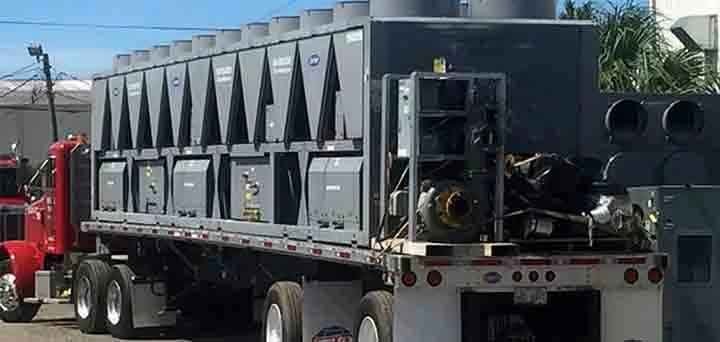

Cooling is an essential part of many commercial, industrial, construction, hospitality, and event operations in the United Arab Emirates. When a permanent chiller stops working, requires planned maintenance, or cannot provide enough cooling during periods of high demand, businesses may need additional cooling capacity without waiting for a permanent HVAC solution.
This is where temporary chiller rental solutions in the UAE can be useful. Instead of purchasing and permanently installing another chiller, a business can hire a suitable temporary cooling system for the period required. Depending on the project, rental chillers can support emergency cooling, planned maintenance, seasonal demand, construction projects, commissioning, industrial processes, and other short- or medium-term requirements.
UAE rental providers offer different temporary cooling configurations, including air-cooled chillers, water-cooled systems, pumps, air handling units, packaged air-conditioning equipment, and other supporting equipment. The appropriate arrangement depends on the required cooling capacity, existing HVAC infrastructure, available power, site conditions, application, and rental duration.
Understanding what temporary chiller rental means and when it is appropriate can help facility managers, contractors, engineers, and business owners make a better decision before arranging a rental system.
What Is a Temporary Chiller Rental Solution?
A temporary chiller rental is a cooling system hired for a specific period instead of being purchased as a permanent part of a building or industrial facility.
A rental chiller can be connected to an existing chilled-water system or incorporated into a temporary cooling arrangement, depending on the project. It can operate as a replacement for failed equipment, provide additional capacity alongside existing chillers, or support a temporary facility where permanent cooling is not yet available.
The basic purpose is straightforward: provide the cooling capacity required for a limited period without requiring the customer to make the capital investment associated with buying and permanently installing a new chiller.
UAE rental companies commonly provide short-term and longer-term arrangements. These can range from emergency requirements and maintenance periods to seasonal or project-based cooling requirements lasting considerably longer.
Temporary cooling does not necessarily mean a small or low-capacity system. Rental fleets can include commercial and industrial equipment in different capacities. For example, Al Shola currently lists air-cooled rental chillers from 50 TR to 400 TR, while Foster International lists air-cooled rental chillers from 100 TR to 250 TR. These figures demonstrate that temporary cooling can be suitable for substantial commercial and industrial applications, although the correct capacity must be determined from the actual project requirements.
How Does Temporary Chiller Rental Work in the UAE?
The rental process normally begins by identifying the cooling requirement. A provider needs information about the application, existing HVAC system, required temperature, cooling load, available power, site access, connection points, rental duration, and other project conditions.
The provider can then recommend an appropriate chiller and supporting equipment.
A typical temporary cooling project can involve several stages.
1. Assessing the Cooling Requirement
The first step is determining how much cooling the facility or process actually needs.
Cooling capacity is commonly expressed in tons of refrigeration, or TR. However, the physical size of a building alone does not determine the correct chiller capacity. Heat generated by people, equipment, lighting, processes, outdoor conditions, building characteristics, operating schedules, and other factors can influence the load.
For industrial applications, the temperature and flow requirements of the process may be particularly important.
This is why published capacity ranges should be treated as equipment availability rather than a universal sizing recommendation. Al Shola, for example, states that rental configurations are planned around factors such as cooling load, temperature, water flow, power, access, and connection routes.
2. Selecting the Chiller Type
The next consideration is the type of temporary chiller required.
An air-cooled chiller rejects heat directly to the surrounding air and generally does not require a cooling tower. This can make air-cooled systems practical for outdoor installations, temporary projects, emergencies, and locations where a suitable cooling-water infrastructure is unavailable.
A water-cooled chiller uses water as part of the heat-rejection arrangement and can be appropriate for larger or more continuous applications when the required supporting infrastructure is available.
The choice should not be based simply on the name of the equipment. Site conditions, available utilities, cooling load, operating temperatures, installation requirements, and project duration all matter.
3. Planning the Temporary Connection
The rental chiller needs to be connected to the building’s existing chilled-water network or to a temporary cooling circuit.
Depending on the project, additional equipment such as pumps, hoses, temporary pipework, heat exchangers, cooling towers, or air handling units may be required.
The connection arrangement is therefore an important part of the project rather than an afterthought.
4. Delivery, Installation and Commissioning
After the equipment has been selected, the temporary system is delivered to the site and installed.
Professional rental providers may handle equipment delivery, installation, commissioning, operation, and removal as part of the rental arrangement. Foster International, for example, describes its rental offering as including supply, installation, operation, and removal, while Stout Energy describes a process involving site assessment, deployment and installation, followed by operational support.
Commissioning allows the system to be checked before normal operation begins.
5. Operation and Support During the Rental Period
Once commissioned, the temporary chiller operates for the agreed period.
Depending on the provider and contract, technical support, monitoring, maintenance, or operational assistance may be included. For industrial cooling, some rental solutions can also incorporate remote monitoring and supporting equipment. Atlas Copco UAE, for example, describes temporary industrial cooling packages that can include chillers, pumps, buffer tanks, heat exchangers, and power integration, depending on the application.
When Are Temporary Chiller Rental Solutions Needed in the UAE?
There is no single situation that requires temporary chiller rental. Businesses use temporary cooling for several different reasons.
Emergency Chiller Breakdown
One of the most common reasons is an unexpected failure of a permanent chiller.
A failed chiller can affect indoor temperatures, production processes, equipment, occupant comfort, and business operations. Waiting for a major repair or replacement may not be practical, particularly when cooling is required continuously.
A temporary rental chiller can provide replacement or supplemental capacity while the permanent equipment is repaired.
UAE cooling providers specifically identify emergency breakdowns as a major application for rental chillers. Atlas Copco UAE also describes temporary industrial cooling for chiller or HVAC failures where a temporary solution can help prevent production losses.
Planned Chiller Maintenance
Temporary cooling is also useful when an existing chiller needs to be taken offline for scheduled maintenance.
Major maintenance, refurbishment, cleaning, upgrades, or replacement work can require equipment to remain unavailable for a certain period. Rather than allowing the facility to operate without sufficient cooling, a temporary system can provide capacity while the permanent equipment is offline.
This approach can be especially useful for facilities where maintaining temperature control is important during planned shutdowns.
Seasonal Cooling Demand
The UAE experiences periods of very high cooling demand, particularly during the hotter months.
A building may have sufficient installed capacity under normal conditions but experience higher demand during peak periods. Instead of permanently increasing the size of the HVAC plant for a temporary increase in demand, some businesses may consider additional rental capacity.
Rental cooling can therefore act as a flexible way of supplementing existing systems during seasonal peaks. Atlas Copco identifies seasonal and peak-demand requirements as an application for temporary industrial cooling.
Construction and Fit-Out Projects
New buildings and facilities may need cooling before their permanent HVAC system is fully operational.
Construction, fit-out, testing, commissioning, and phased development can create temporary cooling requirements. A rental chiller can help bridge the period between project stages.
Temporary cooling can also be used for construction-related environments where temperature control is required during specific phases of a project.
New HVAC Installation Delays
A permanent chiller installation can involve equipment procurement, delivery, construction work, electrical connections, pipework, commissioning, and other activities.
If the permanent system is delayed but the building still requires cooling, a temporary rental system can act as a bridge.
This is one of the applications identified by Atlas Copco’s UAE rental operation, which describes temporary cooling as a way of bridging the time until permanent equipment installation.
Commercial Events and Temporary Facilities
Events, exhibitions, temporary venues, and other short-term facilities can have substantial cooling requirements.
The cooling requirement may last only for the duration of an event or project, making permanent HVAC equipment impractical.
Rental cooling providers in the UAE list events, tents, temporary facilities, and commercial applications among their cooling requirements.
Industrial Process Cooling
Temporary chillers are not limited to comfort cooling.
Industrial facilities may require controlled temperatures for manufacturing processes, process water, equipment, testing, commissioning, or production operations.
Atlas Copco UAE identifies manufacturing, pharmaceutical production, food and beverage processing, chemical and petrochemical plants, process water cooling, data centres, and offshore and marine applications among temporary process-cooling requirements.
For process cooling, the required supply and return temperatures, flow rate, heat load, operating schedule, and process characteristics need to be considered carefully.
Why Is Temporary Chiller Rental Useful in the UAE?
The main advantage of renting is flexibility.
A company that needs cooling for a limited period does not necessarily need to purchase permanent equipment. Rental allows access to cooling capacity while avoiding the long-term commitment associated with ownership.
Lower Upfront Capital Requirement
Buying a large commercial or industrial chiller involves equipment costs as well as installation, electrical infrastructure, pipework, controls, commissioning, and ongoing maintenance.
Temporary rental replaces much of that long-term ownership commitment with a project-specific arrangement.
This can be particularly relevant when the cooling requirement is temporary or uncertain.
Faster Response to Cooling Problems
A permanent replacement can take time because equipment must be selected, purchased, delivered, installed, and commissioned.
Rental equipment can provide an alternative when temporary capacity is required while a permanent solution is being arranged.
The actual deployment time depends on equipment availability, location, site access, connection requirements, and the complexity of the project. Therefore, businesses should confirm the expected mobilisation schedule with the rental provider rather than assuming that every system can be installed immediately.
Flexible Rental Periods
Different projects require cooling for different lengths of time.
A business may need a chiller for a short maintenance shutdown, while a construction or industrial project may need cooling for months.
UAE providers advertise both short- and long-term rental arrangements, allowing the rental period to be matched with the project requirement.
Temporary Additional Capacity
Rental equipment can also supplement an existing HVAC plant.
This can be useful when a facility needs additional cooling temporarily but does not want to permanently expand its installed chiller capacity.
Support During Critical Periods
For businesses where cooling is important to normal operations, temporary equipment can provide an additional layer of resilience during maintenance, failures, or capacity constraints.
This is particularly relevant for facilities where loss of temperature control can affect people, products, processes, equipment, or operations.
What Types of Temporary Chillers Are Available in the UAE?
The appropriate temporary cooling system depends on the application.
Air-Cooled Chillers
Air-cooled chillers reject heat using ambient air rather than a cooling tower.
They can be useful for temporary installations because they can avoid some of the infrastructure associated with water-cooled systems.
UAE providers currently list air-cooled rental chillers in a range of capacities. Al Shola lists 50 TR to 400 TR air-cooled chillers for temporary and process applications.
Water-Cooled Chillers
Water-cooled systems can be suitable for applications where the required supporting infrastructure is available.
They may be considered for larger commercial or industrial requirements, although the complete installation needs to account for the cooling tower or other heat-rejection arrangement, water availability, pumps, connections, and site conditions.
Portable or Packaged Cooling Equipment
Not every temporary cooling requirement needs a large central chiller.
Depending on the application, providers may offer packaged air-conditioning units, portable AC units, air handling units, or other temporary HVAC equipment.
Al Shola’s current rental range, for example, includes air-cooled chillers, AHUs, packaged AC units, portable AC units, and reefer containers.
The right solution depends on the actual cooling requirement rather than simply selecting the largest available chiller.
How Is Temporary Chiller Capacity Determined?
Selecting the correct capacity is one of the most important parts of a temporary chiller project.
The capacity required is influenced by the actual heat load rather than just floor area.
Important considerations can include the size and characteristics of the cooled space, number of occupants, equipment loads, lighting, solar heat gain, outdoor temperature, operating hours, process requirements, required chilled-water temperature, flow rate, and existing HVAC configuration.
For industrial applications, the heat produced by machinery or production processes can be a major factor.
A simple online tonnage estimate can therefore be useful only as an initial indication. Final equipment selection should be based on engineering assessment and the specific conditions of the site.
Al Shola explicitly notes that rental configurations are planned around cooling load, temperature, water flow, power, access, and connection routes.
What Factors Affect Temporary Chiller Rental Cost in the UAE?
There is no universal rental price for a temporary chiller because the total cost depends on the project.
Important factors can include:
Cooling capacity: Larger cooling requirements generally require larger or multiple units.
Rental duration: Daily, weekly, monthly, seasonal, and long-term arrangements can have different commercial structures.
Chiller type: Air-cooled and water-cooled systems can have different installation and infrastructure requirements.
Location: Delivery and mobilisation requirements vary between sites and Emirates.
Installation complexity: Pipework, electrical connections, pumps, hoses, controls, and other accessories can affect the overall project.
Site access: Equipment placement and delivery conditions can influence mobilisation requirements.
Supporting equipment: Some projects require pumps, AHUs, cooling towers, temporary pipework, or other equipment in addition to the chiller.
Technical support: Installation, commissioning, monitoring, operation, maintenance, and emergency support may form part of the rental arrangement.
Current UAE rental providers generally quote according to project requirements rather than publishing one fixed rental price.
Temporary Chiller Rental vs Buying a Chiller
The decision between renting and purchasing depends largely on how long the equipment is needed and what the business expects from the investment.
Buying can make sense when a facility has a predictable, long-term cooling requirement and wants permanent ownership of the equipment.
Temporary rental can make more sense when cooling is needed for a limited period, during an emergency, for planned maintenance, during construction, or to cover a temporary increase in demand.
For example, purchasing an additional permanent chiller solely to cover a short maintenance period may not be economically appropriate. A rental system can provide the required capacity without turning a temporary requirement into a permanent capital asset.
The decision should consider more than the equipment purchase price. Businesses should also compare installation, maintenance, energy consumption, replacement planning, storage, depreciation, and the expected period of use.
What Should You Check Before Renting a Temporary Chiller?
Before agreeing to a rental, businesses should confirm the technical requirements of the site.
The required cooling capacity should be established first. The team should then verify the required chilled-water temperatures, flow rates, connection sizes, electrical requirements, physical space, access route, and operating conditions.
It is also important to understand what is included in the quotation.
A complete quotation may need to identify the chiller, delivery, installation, commissioning, pipework, pumps, accessories, technical support, operation, maintenance, removal, and any other project-specific services.
Businesses should also ask about equipment condition, testing, backup arrangements, response procedures, and support during the rental period.
These details can help prevent a situation where the chiller itself is available but the supporting infrastructure required to operate it is not.
Can Temporary Chillers Be Used During UAE Summer?
Yes, temporary chillers can be used to provide additional or replacement cooling during periods of high ambient temperature, but the selected equipment must be appropriate for the expected site conditions.
The UAE’s high summer temperatures can place significant demand on cooling systems. A chiller selected for a temporary project therefore needs to be suitable for the expected ambient conditions and required cooling load.
This is one reason high-ambient performance should be discussed with the rental provider before equipment is selected.
The issue is not simply whether a chiller has a particular tonnage rating. Its performance at the expected ambient temperature, required leaving-water temperature, operating conditions, and system configuration all need to be considered.
UAE cooling providers specifically market high-ambient equipment and temporary cooling solutions for summer conditions.
Where Are Temporary Chiller Rental Solutions Used Across the UAE?
Temporary chillers can support projects in different Emirates, including Dubai, Abu Dhabi, Sharjah, Ajman, Umm Al Quwain, Ras Al Khaimah, and Fujairah, depending on provider coverage and equipment availability.
The applications can range from commercial buildings and hotels to industrial facilities, construction projects, events, warehouses, data centres, and process-cooling operations.
The requirement is not necessarily the same in every location. Site access, available utilities, building infrastructure, environmental conditions, and project requirements need to be assessed individually.
For large or complex projects, the cooling provider may need to conduct a site assessment before recommending a complete temporary cooling configuration.
Temporary Chiller Rental for Commercial Buildings
Commercial properties depend heavily on reliable cooling, particularly during periods of high outdoor temperatures.
Offices, shopping facilities, hotels, retail properties, and other commercial buildings may require temporary cooling during chiller maintenance, equipment failures, renovations, or periods of unusually high demand.
In these situations, temporary cooling can help maintain indoor conditions while the permanent HVAC system is restored or upgraded.
For a commercial facility, the rental system also needs to integrate correctly with the building’s existing chilled-water network and controls.
Temporary Chiller Rental for Industrial Facilities
Industrial cooling requirements can be more technically demanding than standard comfort cooling.
Manufacturing facilities and process industries may need chilled water at specific temperatures and flow rates. A temporary system therefore needs to be selected according to the process rather than simply the size of the building.
Industrial rental packages can potentially include chillers, pumps, heat exchangers, buffer tanks, and power integration depending on the application. Atlas Copco UAE describes this type of complete temporary process-cooling approach for industrial facilities.
Temporary Chiller Rental for Data Centres and Critical Environments
Some facilities require continuous temperature management because cooling is directly related to equipment operation.
Data centres and other critical environments can therefore use temporary cooling as part of a contingency or maintenance strategy.
A temporary cooling solution for such an environment needs careful planning. Capacity, redundancy, connection points, electrical supply, monitoring, temperature requirements, and installation procedures should all be considered before the permanent system is taken offline.
Temporary cooling has also been used at a much larger scale in the UAE. RSS documents a 10,000 TR temporary cooling plant project serving several mixed-use high-rise buildings during development of district cooling facilities.
This demonstrates that temporary cooling can range from individual rental chillers to engineered temporary cooling plants for major infrastructure projects.
What Is the Difference Between Temporary and Emergency Chiller Rental?
The terms are related but do not always describe exactly the same situation.
Temporary chiller rental refers broadly to cooling equipment hired for a limited or defined period. It can be required for planned maintenance, construction, seasonal demand, additional capacity, commissioning, events, or other projects.
Emergency chiller rental generally refers to temporary cooling arranged because of an unexpected failure or urgent loss of cooling capacity.
In other words, emergency rental is one type of temporary chiller requirement.
This distinction is useful because not every temporary cooling project requires an emergency response. A construction project may plan its rental months in advance, while a failed chiller may require urgent replacement capacity.
How Long Can a Temporary Chiller Be Rented?
The rental period depends on the provider and project.
Some businesses need cooling for a short maintenance window, while others require temporary equipment throughout a construction or infrastructure project.
UAE providers advertise short-term and long-term rental arrangements, including daily, weekly, monthly, seasonal, and extended project requirements.
The best rental period is the one that matches the actual requirement. If the permanent chiller is expected to return to service within a defined period, a shorter contract may be suitable. If the project schedule is uncertain, the business may want flexibility to extend the rental period.
What Makes a Good Temporary Chiller Rental Provider?
Choosing the equipment is only part of the decision. The provider’s ability to manage the complete temporary cooling project is also important.
A suitable provider should be able to understand the required cooling load, recommend appropriate equipment, plan the installation, coordinate delivery, commission the system, and provide technical support during operation.
For larger projects, the provider should also be able to coordinate supporting equipment and temporary infrastructure.
A good rental arrangement should clearly explain what equipment and services are included, how technical support is handled, what happens if the cooling requirement changes, and how the equipment will be removed at the end of the project.
Frequently Asked Questions
What are temporary chiller rental solutions in the UAE?
Temporary chiller rental solutions provide cooling equipment for a limited period instead of requiring a business to purchase and permanently install a chiller. They can be used for emergency breakdowns, planned maintenance, seasonal demand, construction, events, commissioning, and industrial process cooling.
When should a business rent a temporary chiller?
A business may consider temporary chiller rental when its permanent cooling equipment has failed, is undergoing maintenance, cannot meet peak demand, or has not yet been installed. Rental can also be appropriate for temporary construction, event, or industrial cooling requirements.
Are temporary chillers suitable for UAE summer conditions?
They can be, provided the selected equipment is appropriate for the expected ambient temperature and cooling load. High-ambient conditions should be considered during equipment selection because outdoor temperature can affect chiller performance.
What is the difference between air-cooled and water-cooled temporary chillers?
Air-cooled chillers reject heat directly to ambient air and generally do not require a cooling tower. Water-cooled systems use a water-based heat-rejection arrangement and can require additional infrastructure. The appropriate type depends on the application, site, cooling load, available utilities, and project requirements.
How is temporary chiller capacity calculated?
Capacity is determined from the actual cooling load rather than building size alone. Factors can include occupancy, equipment heat, lighting, outdoor conditions, process loads, chilled-water temperatures, and flow requirements. A qualified assessment is recommended for commercial and industrial projects.
How much does temporary chiller rental cost in the UAE?
There is no single standard price. Cost can depend on chiller capacity, rental duration, location, equipment type, delivery, installation, supporting equipment, connection requirements, and technical services. UAE rental providers generally prepare quotations based on project requirements.
Can a rental chiller replace a failed permanent chiller?
Yes, a temporary rental chiller can sometimes provide replacement cooling while the permanent unit is repaired or replaced. The rental equipment must be compatible with the required capacity, temperatures, flow rates, connections, and available power.
Can temporary chillers be used for industrial process cooling?
Yes. Temporary industrial cooling can support manufacturing, process water, pharmaceutical, food and beverage, chemical, petrochemical, and other applications. Process requirements need to be assessed carefully before selecting the equipment.
Do temporary chiller rentals include installation?
This depends on the provider and contract. Some UAE rental providers offer complete services covering delivery, installation, commissioning, operation, support, and removal, while other quotations may separate equipment and installation. The scope should be confirmed before the rental agreement is finalized.
Final Thoughts
Temporary chiller rental solutions in the UAE provide businesses with a flexible way to maintain cooling when permanent HVAC capacity is unavailable, insufficient, or temporarily unsuitable.
They can support an unexpected chiller breakdown, planned maintenance, summer peak demand, construction and fit-out work, delayed HVAC installation, commercial events, and industrial process cooling. The most suitable solution depends on the project’s cooling load, operating temperatures, chiller type, site conditions, available utilities, connection requirements, and rental duration.
The key point is that temporary cooling should be treated as an engineered solution rather than simply hiring a chiller by tonnage. A properly planned system considers the complete cooling requirement, including the chiller, connections, pumps, power, controls, installation, commissioning, and technical support where required.
For UAE businesses facing temporary or unexpected cooling requirements, assessing the application early can make it easier to identify the appropriate equipment and avoid unnecessary disruption to normal operation